China says it has successfully tested new fins on its Long March rockets to help guide spent boosters away from populated areas, possibly paving the way for the development of reusable technology like SpaceX’s Falcon 9.
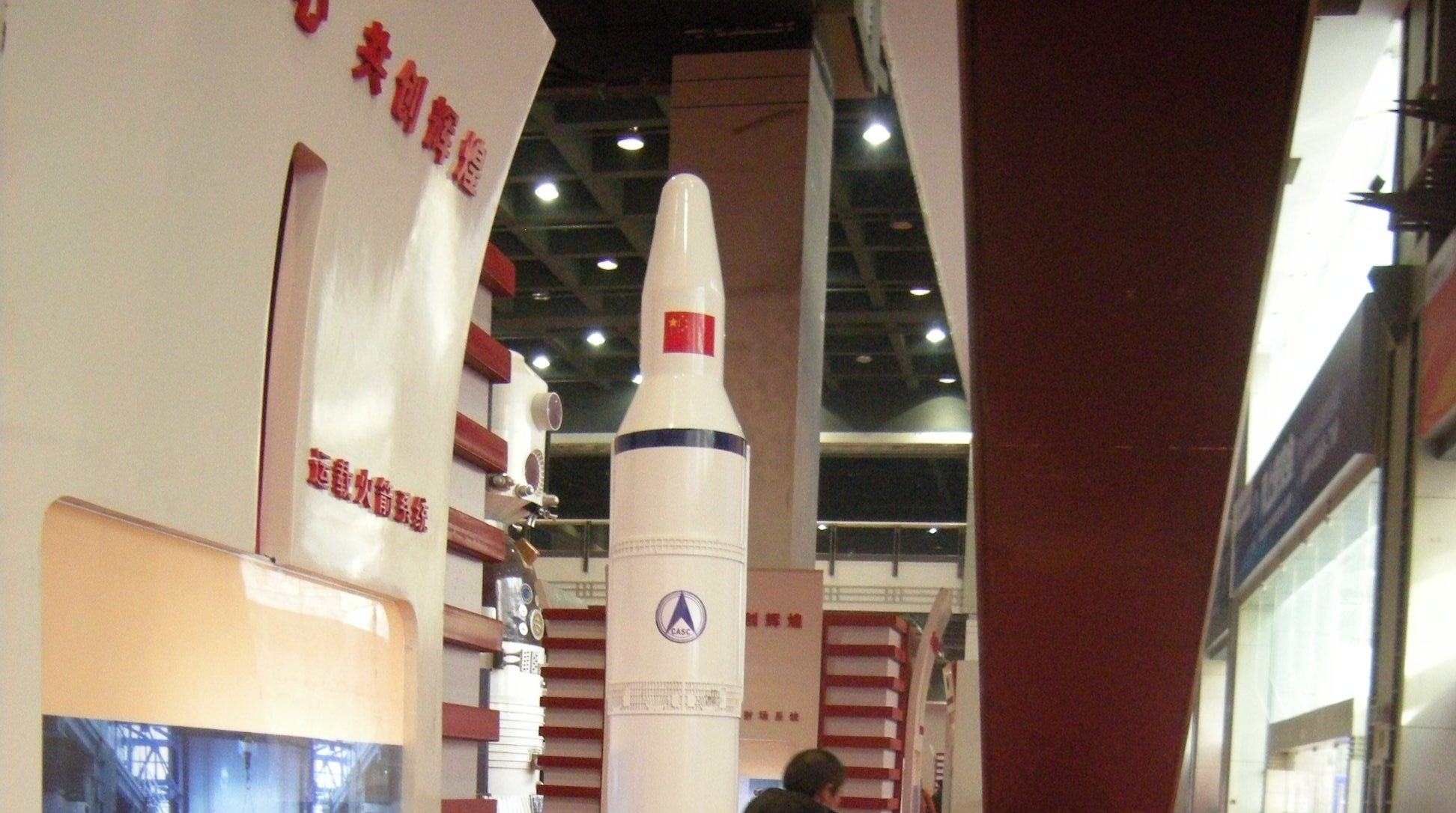
A CZ-2C launch vehicle model / Photo credit: 风之清扬
China successfully launched a Long March 2C rocket on Friday using grid-fin technology to guide its spent booster to a landing spot in Guizhou province in the country’s southwest, state-run Science and Technology Daily reported on Sunday, citing China Aerospace Science and Technology Corporation (CASC), a key contractor for the Chinese space program.
The report said China was the second country to master the technology, after the US.
Grid fins are aerodynamic control surfaces that are folded during the launch but deployed in flight. In the more sophisticated applications such as the Falcon 9, the fins manipulate the direction of the rocket during re-entry.
Shanghai-based online news outlet The Paper reported that the 2C’s grid fins were developed by a team of about a dozen engineers, all under the age of 35.
The team also designed a new companion electrical control system to control the fins, taking about six months to complete the task.
China has conducted frequent satellite launches in recent years, including 38 last year, the highest total for any country in 2018. But landing safety has become an issue as traditional zones grow more populated.
Chinese media reported in January 2018 that a booster from a Long March 3B rocket created a massive fireball after it fell from the sky and exploded in a residential area, though no casualties were reported.
And Shaanxi Television reported in May this year that debris was found on a motorway in northwestern China’s Shaanxi province, with residents saying they heard a loud noise and saw an object fall to the ground.
Under existing arrangements, authorities in projected landing zones have to evacuate the areas each time, not only inconveniencing residents but also adding to the economic cost and difficulty of the work, according to the The Paper. The grid fins are expected to help ease some of those problems.
“The successful test of the [grid-fin] technology is of great significance to solving the landing issue,” the report quoted CASC assistant director He Wei as saying.
“It also lays a solid foundation for recoverable and reusable technologies.”
Long Lehao, chief commander and designer of Long March 3A rocket series, said the development of reusable technologies could support large-scale development and use of space in the future, as well as make the space programs more commercially competitive, The Beijing News reported.





Stay updated on the go with our mobile app.
Get latest insights with smoother, more personalized experience through TIA mobile app.