- Insights This article was written by a TIA community member. Insights pieces undergo the same rigorous editorial process that newsroom-produced articles have.
 Anthony Oundjian · · 5 min read
Why China’s tech giants are focusing on platforms and B2B solutions
China’s key tech players tower over the nation’s internet landscape. Giants Baidu, Alibaba, and Tencent have a combined market valuation of roughly US$1 trillion and a commanding market share of China’s consumer internet industry.
But the complex roots of China’s internet giants reach far beyond the nation’s borders. Southeast Asia is fertile ground for their corporate growth, with numerous companies owned, part-owned, or invested in by these companies.
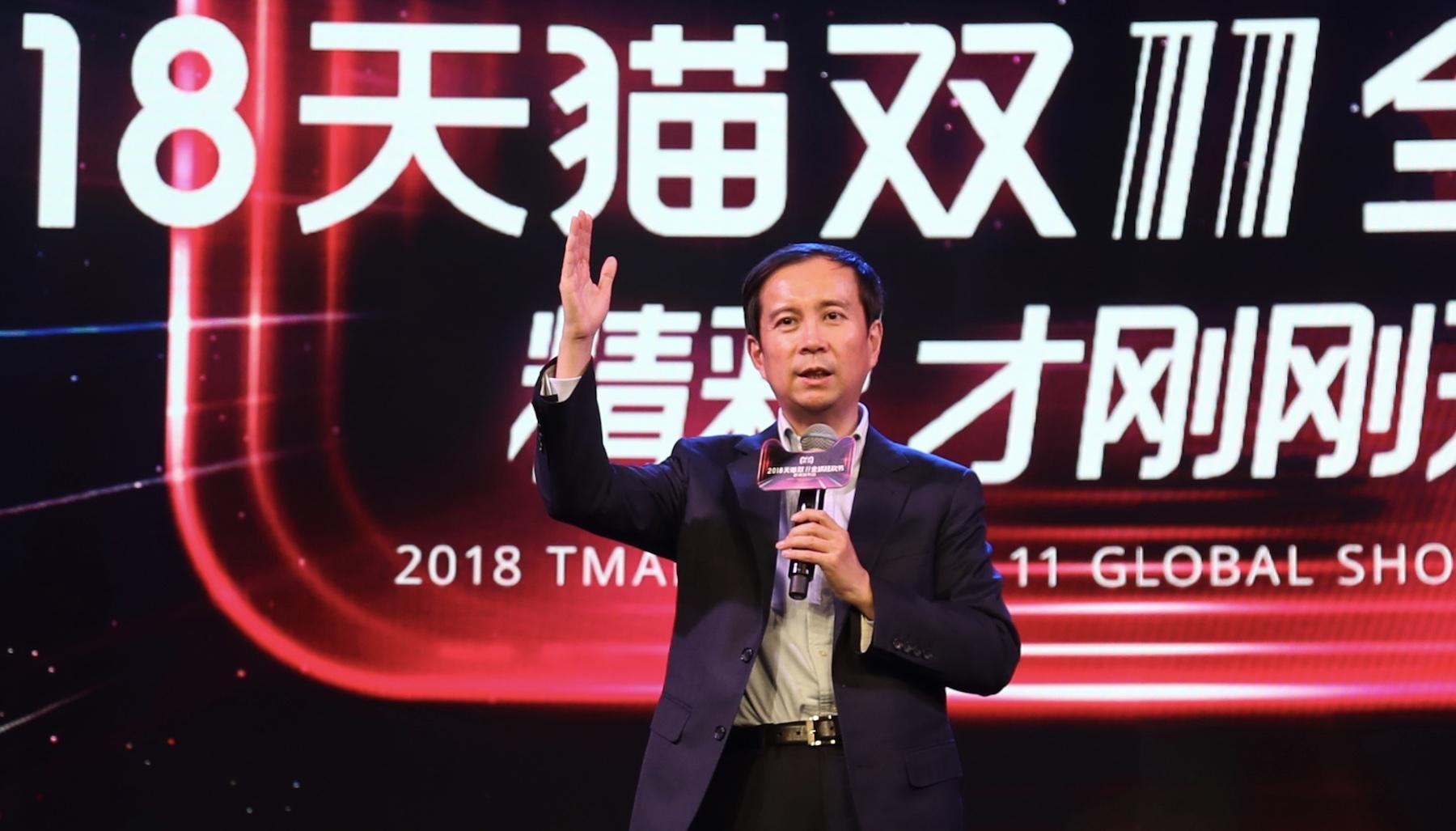
Alibaba Group CEO Daniel Zhang at a Singles Day preview event in October 2018 / Photo credit: Alibaba
Alibaba enjoys a controlling stake in iconic Southeast Asian ecommerce company Lazada, as well as a minority stake in Indonesian ecommerce unicorn Tokopedia.
Fellow Indonesian unicorn Gojek recently closed a US$1.2 billion funding round that saw Chinese giant Tencent as its lead investor. Baidu solidified its own presence in Southeast Asia following a US$200 million joint venture fund with Asia Mobility Industry, making clear its ambitions to be a regional leader in autonomous driving.
Now, these giants are moving into the next phase.
In a report we did at Boston Consulting Group, together with AliResearch and Baidu Development Research Center, we explored the emerging reality of China’s great foray into the internet world.
With solutions poised to transform the global industry, what does this next chapter mean in practice? What impact could it have on Southeast Asia?
The evolving industrial internet
The Fourth Industrial Revolution is delivering a seismic digital transformation to our global industry. The ability to gather and analyze massive amounts of data provides faster, more flexible, and more efficient processes that reduce costs while enhancing the quality of goods.
In 2016, the World Economic Forum estimated that the digitization of industry could generate a global dividend of US$100 trillion by 2026.
While China is an inspiring trailblazer in consumer internet, it lags behind the leading pack when it comes to this huge emerging opportunity. Our research identifies four areas where China’s digital pioneers are failing to keep up:
- Smart connectivity: Industrial internet is built on a world of smart insight. Yet, China’s investment in industrial sensors stood at just US$3 billion in 2016, compared to US$4 billion in the US. Only 5% of industrial sensors included smart sensors, compared to 12% in the US.
- Data integration: It’s not enough to compile data; you need a platform to connect it. Only one-third of Chinese companies used private or public cloud, compared to 80% in the US.
- Smart decision-making: Smart data means smart decisions, but only 10% of China’s Industry 4.0 patents covered smart data analytics, compared to 34% in the US.
- Human-robot collaboration: In 2017, China accounted for 36% of global industrial robot sales, up from 21% in 2013, but still behind penetration in the US and Germany.
China’s lag in adoption of Industry 4.0 technologies is a result of its young and maturing manufacturing sector. High-end manufacturing accounts for just 21% of all manufacturing, compared to 37% in the US. The focus on prioritizing development of consumer products and services also contributes to slow digitization in upstream processes.
With a 5.6% year-on-year growth in Chinese internet users representing a 10-year low in 2017, the importance of the industrial internet’s fresh frontier is more immediate than ever.
Chinese pilots and potential in Southeast Asia
A shift to platform business
Finding your feet in the emerging Industry 4.0 world





Stay updated on the go with our mobile app.
Get latest insights with smoother, more personalized experience through TIA mobile app.