 Steven Millward · · 2 min read
China preps for biggest-ever Singles Day as ecommerce market tops $1.5t
What’s huge yet short, and worth tens of billions of dollars? No, it’s not Jack Ma. It’s Singles Day, the world’s biggest shopping spree.
Every year on November 11, China’s netizens dive into an online shopfest of discounts and special deals. After surpassing the US’ Black Friday and Cyber Monday in scale back in 2012, China’s 24-hour shopapolooza is poised for yet more growth this year.
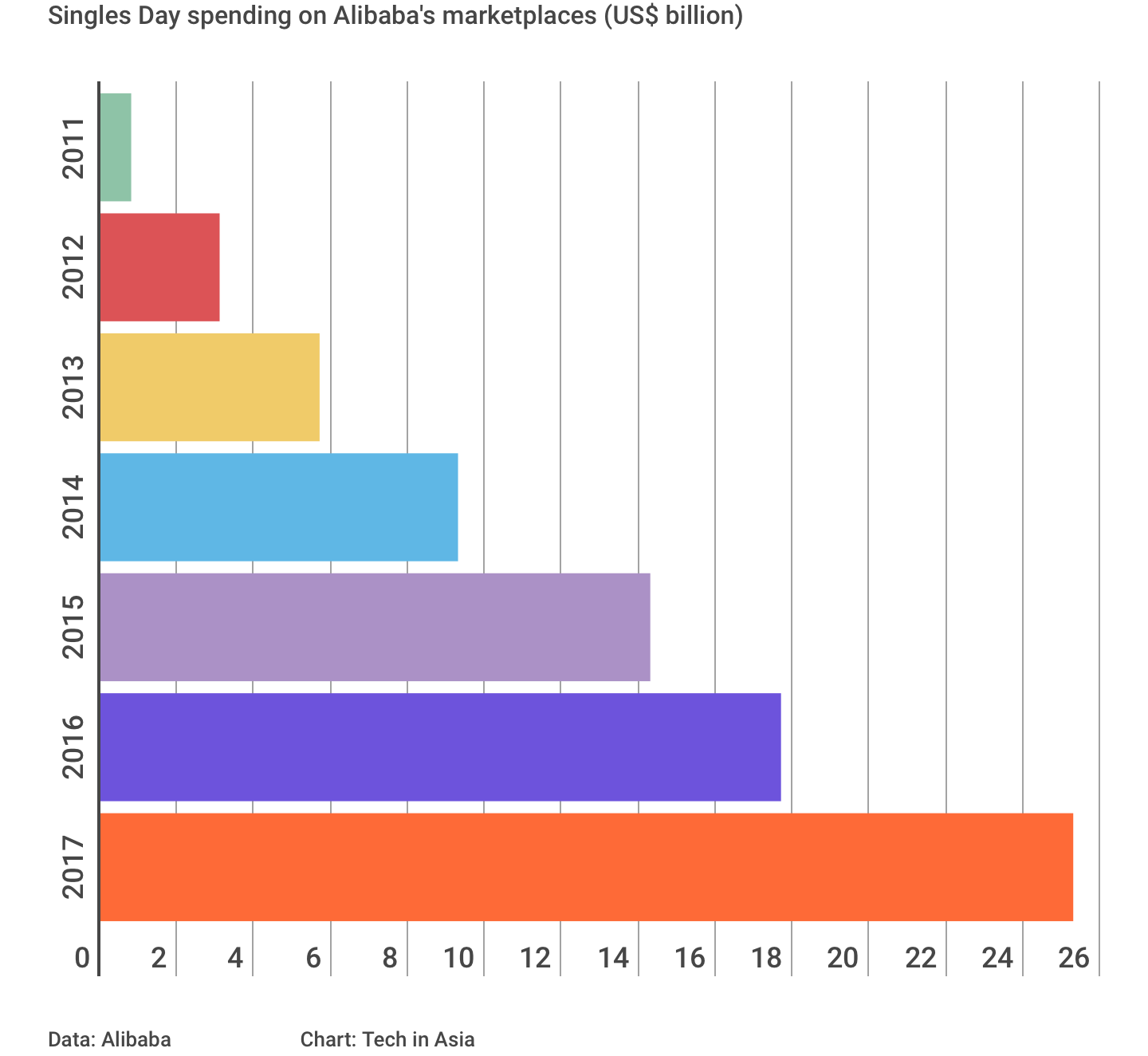
China’s first Singles Day in 2009 saw US$7.8 million spent on Alibaba’s marketplaces, while last year’s hit US$25.3 billion. That means the entire 2009 tally was spent approximately every 30 seconds during 2017’s Singles Day.
Here’s how that growth has shaped out:
JD, Alibaba’s closest rival, saw US$19.1 billion spent during its sales event, which actually started earlier in November.
This year, 140,000 brands on Alibaba’s marketplaces are offering Singles Day promotions for more than 15 million product listings. JD started its sales on November 1, and is vowing that, thanks to its own delivery network, it’ll deliver 90 percent of orders on the same or next day – even during the heat and fury of Singles Day.
New records
Despite its staggering scale, Singles Day is a small part of China’s overall ecommerce expenditure – which is projected to hit a record US$1.5 trillion for 2018, representing 29.1 percent of total retail sales, says the research team at Emarketer. About 78.8 percent of that tally will come from shoppers on phones and tablets.
Globally, Emarketer sees online shopping rising to a new high of US$2.9 trillion in 2018, which is 12 percent of total retail sales. China alone will rack up 52.6 percent of that sum.
Here are China’s top three online stores in 2018:
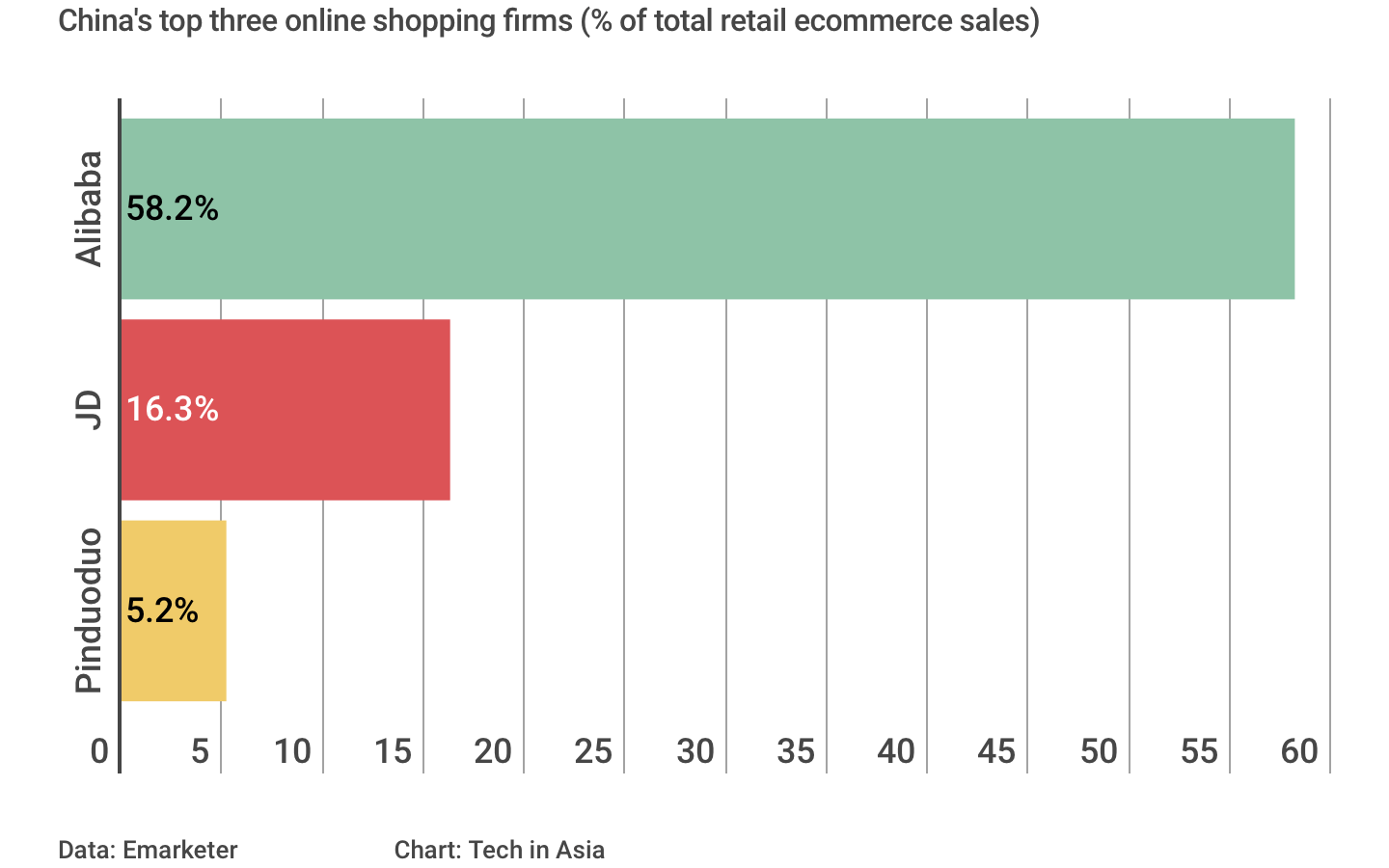
If you’re looking for Amazon, it’s down in seventh place with 0.7 percent.
Updated at 9pm: Added the sentence about JD’s activities this month.





Stay updated on the go with our mobile app.
Get latest insights with smoother, more personalized experience through TIA mobile app.









