Minghe Hu · · 3 min read
China’s robotics industry needs to ‘think independently,’ expert says
The Chinese government sees the use of robots as a way to upgrade the nation’s manufacturing industry, with a goal of producing 100,000 locally made industrial robots annually by 2020 – equal to a robot density of 150 for every 10,000 employees.
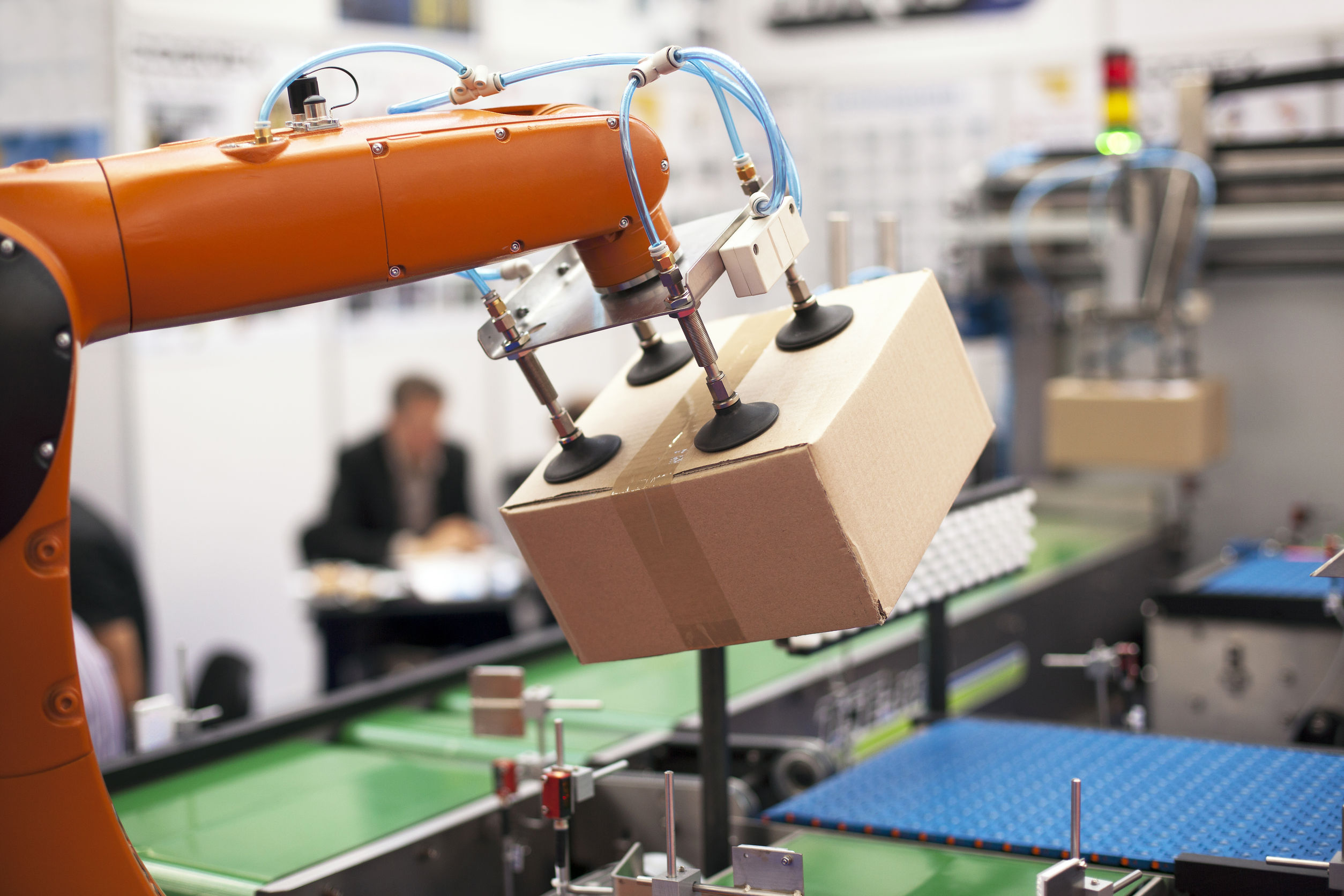
Photo credit: Macoe / 123RF
To reach that goal, the government has been financially supporting the domestic robotic industry for the past five years, with the subsidies accounting for 20% of the industry’s net profit in China, according to Sinolink Securities.
Dai Zhendong, director at the Institute of Bio-inspired Structure and Surface Engineering and a robotics professor at Nanjing University of Aeronautics and Astronautics, spoke to the Post about the state of the industry in light of the trade war tensions.
In 2018, China ranked 20th in the world in robot density. What does the current development of China’s robotics industry look like?
Although many robotics companies are able to produce various kinds of robots, the reliability and the quality of core components need further improvement. For example, microchips used in robots depend on imports from overseas. Once trade conflict occurs, like the situation ZTE faced in 2018, the robotics industry will face serious pressure.
Hardware may not be a problem since its production is huge in China, but the application of core components, like mechanical sensing and algorithms for the control system, are lagging behind foreign peers, which account for one-third of the Chinese market for industrial robots.
Chinese companies are facing problems on how to cooperate with peers as most of the industry leaders are not opening up to third parties.
What is the biggest challenge for the Chinese robotics industry?
Currently, there’s an excess supply of robot bodies because all the companies flocked to produce them, especially after smaller players saw business opportunities, which is pushing margins further down. With lower profits and the tariff pressure from the ongoing trade war, it’s unlikely that companies can focus on technology innovation. It’s a serious problem for the industry.
To ease the problem and prevent “bad money” from driving out the good, individual robot makers should find and develop their own advantage in the industry and make it the best, instead of competing on price for a few types of products. The industry needs the ability to think independently.
The Chinese government is providing subsidies to the industry but if companies still do not have an incentive to innovate, should more subsidies be offered to encourage technology innovation?
The support should mainly come from the market instead of government, because the subsidies the government is offering are not enough compared to what a company needs to put into research and development.
It’s unrealistic to count on a government grant because product development from design to production is a long process, and a company can never be sure of the timing of the grant and if it can be used in technology development at the right time.





Stay updated on the go with our mobile app.
Get latest insights with smoother, more personalized experience through TIA mobile app.