- Premium Content It takes our newsroom weeks - if not months - to investigate and produce stories for our premium content. You can’t find them anywhere else.
 Evan See · · 6 min read
China races ahead in AI robotics while SEA plays catch-up
With additional reporting from Peter Cowan
Jensen Huang reckons 2026 will be a big year for physical AI. How big? He believes the sector is poised for its “ChatGPT moment.”
The Nvidia founder and CEO made the prediction at the Consumer Electronics Show earlier this month, noting that AI-powered robots with human-like movement and fine motor skills will emerge within the year.
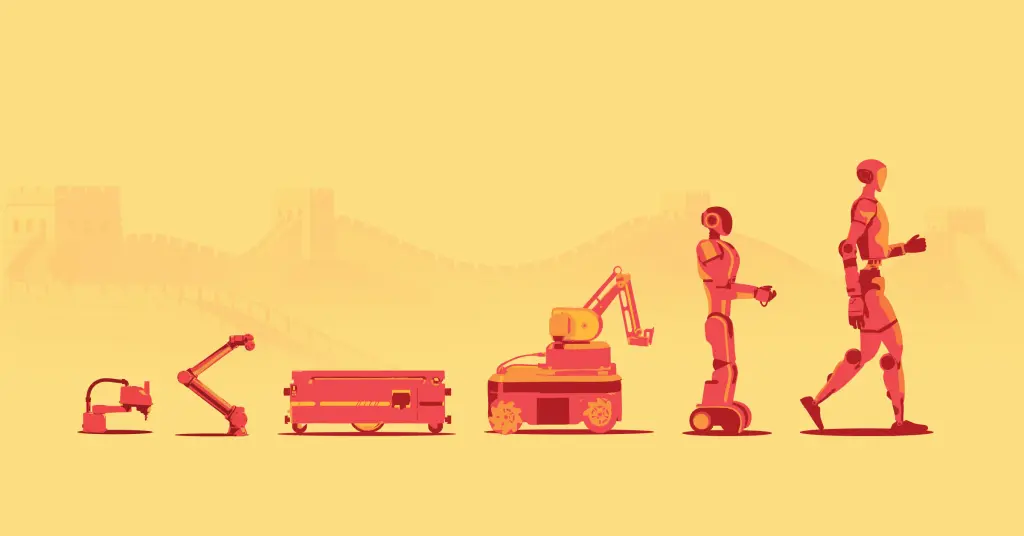
Image credit: Arsal Ysfin
Embodied AI, which means incorporating AI into physical machines, has drawn investor interest lately. Some see it as the next leap in both robotics and AI innovation.
The promise stems largely from China’s world-leading robotics sector, where technological breakthroughs have sparked hopes that AI could transform factory floors and retail spaces.
“Digital services have been the focus of much of the AI-driven transformation to date,” says Jochen Wirtz, professor of marketing at the National University of Singapore (NUS) Business School. “But physical services at restaurants, hotels, hospitals, and retail stores have remained stubbornly human.”
See also: The companies making China a robotics powerhouse
That gap between digital and physical services could soon narrow, he adds.
With the addition of AI through large language models (LLMs), large behavioral models, and agentic AI, robots can receive visual or language inputs and translate them into physical actions. Wirtz projects that these systems could be widespread in just two to three years.
China on top
Chinese firms and manufacturers lead Asia’s robotics sector, with the country holding an estimated 40% of the global market.
China’s nascent humanoid robot sector has sparked considerable interest, logging 400% year-on-year growth in hiring in the sector in just the first five months of 2025. Designed to resemble humans, these robots are being developed to replace traditional labor.
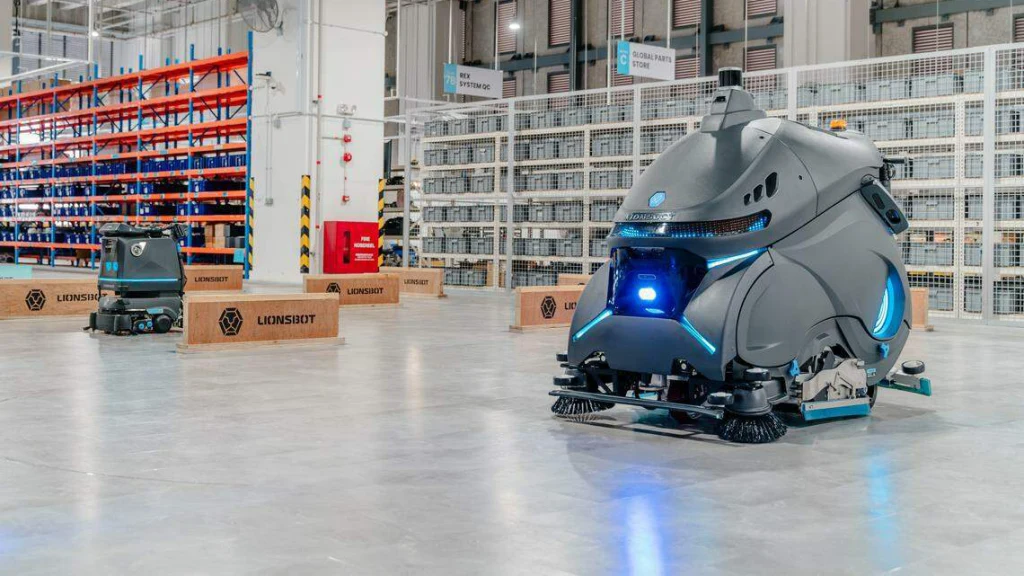
The biggest advantage of a robot with a human-like design is its ability to use its hands and legs, Raphael Yee, director of embodied AI at Lionsbot, which designs commercial cleaning robots, tells The Business Times.
Regional adoption
Stay ahead in Asia’s tech landscape
This is premium content. Subscribe to read the full story.
AI-powered robots work in China, where scale, labor economics, and policy align. See why Southeast Asia hasn’t hit that point yet.
We know this is not ideal. ⌛ Sign up in 20 seconds. Cancel anytime.
Our subscriber community includes professionals from these companies:





Stay updated on the go with our mobile app.
Get latest insights with smoother, more personalized experience through TIA mobile app.