You’d think the idea of playing any game on any device would be something gamers are interested in. Google and Microsoft, among many others, are investing heavily in the hope that they will be. But many are wary of cloud gaming.
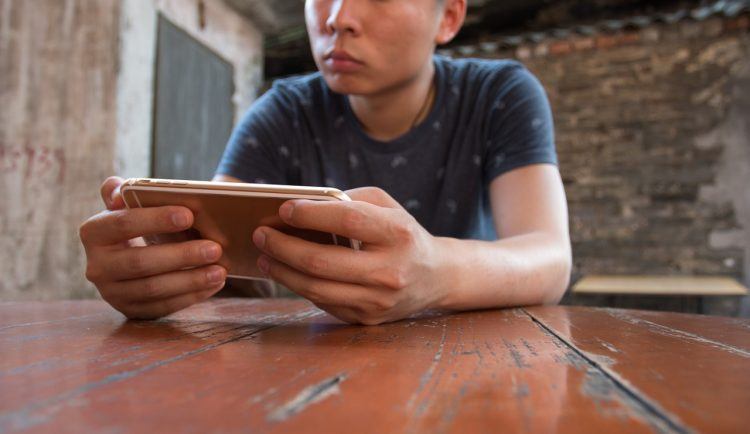
Photo credit: Chanzj
Cloud gaming means you never have to download a game again. Instead of running on the PC in your house or the iPhone in your hand, games run on servers in the cloud. Your device sends your commands – run, jump, shoot – over the internet to those servers, while they send video back to your screens.
Some say that the latency of playing games in the cloud just won’t be fast enough. Others argue not about the technical aspect, but rather the point of it all. Who wants to play a big, sprawling PC game on a tiny smartphone?
But there’s one country that has all the pieces in place for cloud gaming to take off: China.
While most of the attention has been on Google Stadia and Microsoft xCloud, Tencent has also been working on cloud gaming. China’s biggest gaming company has been talking about letting people go from viewing livestreams to playing along with the same streamer with just a click – without ever having to download the game.
One of the big reasons China is perfect for cloud gaming? 5G.
To say China is investing heavily in 5G would be an understatement. It’s been a key focus and a point of pride to get there before the West. (You might have heard a little bit of chatter about Huawei’s 5G network equipment.) Local brands are already selling 5G handsets, and telecom providers have begun trials in more than a dozen cities – with a population of over 167 million people.
Now, 5G has had its share of detractors, as well. Tech columnist Charles Arthur is skeptical, questioning whether we’ll be able to truly perceive the upgrade in speed. But that speed is critical to solving the most important issue with cloud gaming, which is latency.
Think about it this way: Right now, your controller, TV, and PlayStation 4 are in the same room as you are. Signals between all three only have a short distance to travel. But cloud gaming effectively takes that PS4 away from your room and puts it in a server farm, likely dozens of kilometers away. The signals from your controller and to your TV simply have much farther to travel, and that increased distance results in lag, or latency.
Faster speeds offer another huge advantage with visual fidelity. You’ve likely already seen this yourself with video-streaming services like Netflix – the better your internet connection, the better the video quality.
The difference is that hardcore gamers are notoriously picky about visuals. And I sympathize. If your Netflix stream briefly suffers a drop in quality, well, Chandler’s face looks blurry for a few seconds. But if your game gets blurry in the few seconds that you’re ambushed by an enemy, well… you’re dead.
China’s advantages aren’t just technical, though. There’s also a cultural element at play, because gamers in China actually like playing big PC games on smartphones. There are 459 million mobile gamers in China, and they’re not just playing simple games like Candy Crush.
China is the country that pioneered mobile battle royale. It took NetEase mere months to release a clone of PUBG for smartphones. And there are also mobile clones of League of Legends, World of Warcraft, Diablo… you name it. Chinese developers have done it.





Stay updated on the go with our mobile app.
Get latest insights with smoother, more personalized experience through TIA mobile app.









📅 Upcoming Events
22 October 2026
Payoneer x CSPN Summit 2026