Punnamas Vichitkulwongsa · · 4 min read
There are 438m ‘unbanked’ people in Southeast Asia. Here’s how fintech can help.
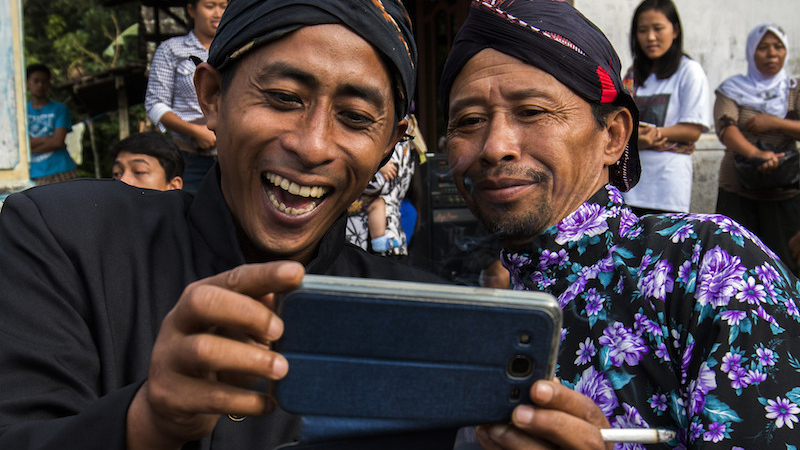
Photo credit: Eko Susanto
When I first embarked on my career in e-payments many years ago, I was surprised to learn that banking services, which most people in take for granted, are far from available to bulk of Southeast Asia’s 600 million plus population.
According to KPMG, in 2016, only 27 per cent of Southeast Asia’s population have a bank account. That’s some 438 million unbanked. In poor countries like Cambodia, this number falls to just 5 per cent.
McKinsey did a similar study in 2010 on the world’s 2.5 billion unbanked. Asia’s emerging markets were identified as a hotbed of unbanked. The same study suggests that reaching the unbanked population in ASEAN could increase the economic contribution of the region from $17 billion to $52 billion by 2030.
The struggle is real. Southeast Asia has been trying for decades to raise its population’s standard of living, narrow its huge income gap, and tackle the problem of poverty amongst our people.
Financial access should be a basic right.
KPMG argues that a lack of access to basic financial services has created major barriers for people to overcome poverty by making it almost impossible for them to borrow or save money. This serves to deny them the most basic services and opportunities. This is neither right nor smart.
But where traditional financial services players are limited in execution – the region is, after all, notoriously fragmented, there lies hope in fintech companies to bring financial access to these 438 million.
Fintech companies can make it their mission to help improve the livelihoods of the unbanked by providing them with innovative financial platforms that will create opportunities for them to improve their standard of living. Financial access should be a basic right.
With the right innovative technology solutions delivered over mobile and agent networks, these unbanked will finally be able to access financial services anytime, anywhere. Their standard of living will improve as a direct result. And, most importantly, they won’t have to rely on banks who are unlikely to reach them.
Mobile device dominance
The good news is that mobile device dominance is rampant in Southeast Asia, with over four in five online consumers accessing the internet daily on their smartphones, as estimated by research firm GfK.
Mobile connections in the region is actually higher (124 per cent) than the global average (103 per cent). The result is mass consumer readiness to adopt financial solutions on mobile: ecommerce, payments, P2P transfers, lending, etc.
The first step to address the problem around financial inclusion is to make cash digital – enabling the sending and receiving of currency via the internet – and mobile-based.
Many fintech startups are leading the way, relying on tokenized form factors, bitcoin, and the blockchain to enable the transfer of money over mobile. But the hard tech must be coupled with offline elements: the ability to cash in and out via vast agent networks.
With fintech and mobile, the “unbanked” will gain life opportunities
Finally, financial inclusion





Stay updated on the go with our mobile app.
Get latest insights with smoother, more personalized experience through TIA mobile app.