
Augmented reality turns your phone and its camera into a new kind of view. Here a subway passenger checks out Baidu’s AR simulation of historic Beijing. Photo credit: Baidu.
Chinese tech giant Baidu is making use of its artificial intelligence research – through augmented reality.
Today, the top search engine firm unveiled its AR Lab, a spin-off from its Institute for Deep Learning. Baidu plans to use its new Beijing lab, as well as technology from its AI research – image recognition, object detection, and more – to build smartphone-based AR applications.
“Our cell phone-based approach has enabled us to ship augmented reality experiences to a significant number of users in a very short amount of time,” says Andrew Ng, chief scientist at Baidu, in a press release. “There is an appetite for this technology; we are seeing rapid adoption by our partners in a range of industries.”
It signals a future in which your phone’s camera and AR – popularized by Pokemon Go – could become one method of navigating the internet.

Photo credit: Baidu.
Last August, Baidu launched DuSee, an AR platform that integrates with the company’s smartphone apps. It’s primarily used as a marketing and sales tool for Baidu’s brand partners, such as KFC and L’Oreal. Over Christmas it was used to create an AR marketing campaign for Lancôme in which customers could win gifts by tapping on virtual reindeer running around an in-store Christmas tree.
“It’s not only a research lab – [the AR Lab] can also help Baidu explore new businesses,” Wu Zhongqin, head of Baidu’s new AR Lab, tells Tech in Asia.
AR-enabled search
One of the main goals of Baidu’s AR Lab is to help it find new commercial opportunities. Baidu just saw its quarterly revenue drop for the first time ever, a consequence of the government’s crackdown on Baidu’s lucrative healthcare advertising business after multiple medical scandals last year, including the death of a 21-year-old after undergoing experimental cancer treatment he found advertised on Baidu.
AR products, especially AR marketing, could be a new channel of revenue for the Chinese tech firm. That’s why Baidu is focusing on smartphones, which are not only more accessible than hardware like Microsoft’s HoloLens, but can connect to Baidu’s existing online services. Several Baidu apps already have AR functionality, including Mobile Baidu, its Siri-esque app.
“We don’t just use the camera to [display] objects from a specific image,” says Zhongqin. “When users are searching online, we […] encourage them to use AR.”
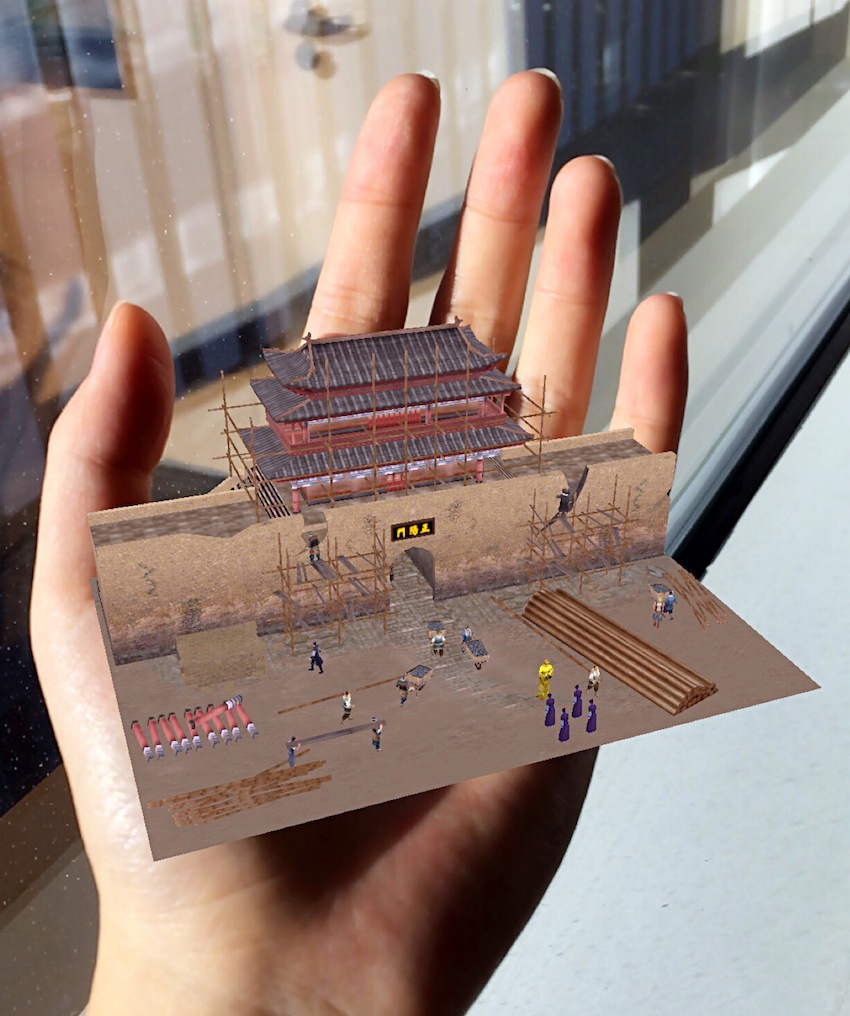
One of Beijing’s ancient gates. Photo credit: Baidu.





Stay updated on the go with our mobile app.
Get latest insights with smoother, more personalized experience through TIA mobile app.












📅 Upcoming Events
22 October 2026
Payoneer x CSPN Summit 2026