Zap wants to change the Philippines’ retail landscape using NFC tags.
The Philippines is ripe for disruption. With its economy soaring, consumer spend rising, and investment money flowing in, the nation’s tech startups are put in position to shape a new normal across industries and sectors.
Leading the charge is a posse of young entrepreneurs, defined not just by geography, but by the fact that they’ve received a lease of life from Kickstart Ventures, a PHP100M (USD2.45M) early stage fund that began setting its wheels in motion last year.
With 10 investments so far, Kickstart has become one of the most important catalysts for the country’s startup aspirations.
One of its investees is Zap, a company that, while shy to reveal its exact investment sum, gladly laid out its plans to transform how retail rewards is done in the Philippines.
Founded by Dustin Cheng, Justin Lim, Terence Lok and Angelique Uy, Zap is a marketing platform that connects retail businesses to consumers through web and mobile technology. It benefits businesses by making marketing as painless and targeted as possible, while at the same time giving them tools to gauge their marketing spend and track customer data.
These alone won’t make the service particularly special. What’s unique about Zap’s approach occurs on the consumer side.
In a two-sided platform business, getting merchants onto it is just half the battle won — what’s the use of building a huge shopping mall if footfall is non-existent?
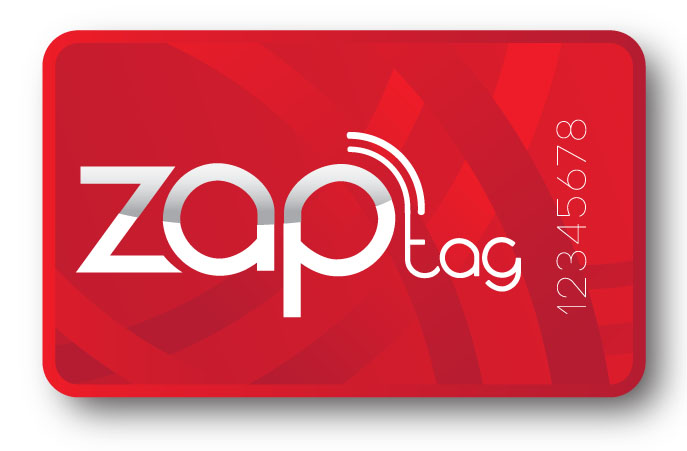
Similarly, Zap needs to drive consumers to its platform. To do so, it will sell novel NFC stickers which can be placed on mobile phones, wallets, or even bags.
The Zaptag, as it is called, is a passport into the startup’s network of retailers — allowing consumers to earn cashback points and rewards with every spend. What this means is that Zaptag has the potential to even become a mobile payment system — should the company eventually decide to go down that route and allow users to top up cash into the system.
The sticker is a thoughtful implementation of technology. It is platform agnostic, which means users don’t need to own an NFC-enabled phone or even a smartphone to be a Zapper. They don’t even need access to the Internet. This lessens risk for the company too, as it becomes less of a slave to external factors.
Priced at a mere PHP100, or less than a typical daily minimum wage, Zaptag is easily affordable to consumers while businesses join the program free-of-charge.
The Zaptag is an attempt to circumvent the lack of a mature mobile ecosystem in the country. The NFC sticker is just part of a larger ecosystem that consists of Zap terminals that are supplied to merchants free-of-charge (throw in some free marketing collateral too).





Stay updated on the go with our mobile app.
Get latest insights with smoother, more personalized experience through TIA mobile app.