Anh-Minh Do · · 4 min read
The chat app battle is no battle, it’s just more toys for adults

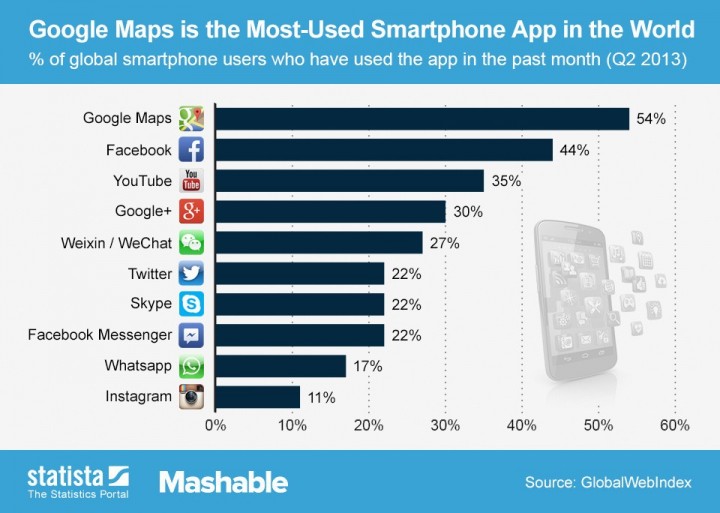
Whoop dee doo, you got 300 million, most of your users also use your competitors.
Today there are over a dozen messaging apps on app stores across the world. Many of them have more than a million registered users and are consistently reporting strong growth numbers. It’s a battle that is closely watched by us at Tech In Asia and tech-interested folks across Asia.
But is it really anything to huff and puff about? I don’t think chat apps are the battle that we think they are.
Tech In Asia has plenty of articles on the chat app battle. From KakaoTalk entering the Philippines to the peculiarities of the walled gardens that chat apps create, to the potentials of m-commerce – we’ve covered the gamut.
The underlying thesis of these articles and what is perpetuated by press releases by companies like Line, KakaoTalk, WeChat, and their competitors is that this a battle with a winner. We assume that this battle will be like Facebook trouncing Friendster and MySpace in the social media battle or Google thumping Yahoo and Altavista in search. But the nature of chat apps is profoundly different from search and social media.
Why chat apps are not search engines and social networks
Most kids born in the 90s probably don’t even remember a day when Google was not the dominant platform. Back then the field was littered with competitors, including Yahoo, AskJeeves, and Altavista. Google came at just the right time, the number of websites on the internet was becoming increasingly overwhelming for users, and internet users in the mid–90’s were desperate for a way to organize all the content exploding on the internet. In 1998, Google blindsided everyone with a user interface that was simple, neat, and super fast. In 2000, it launched AdWords, becoming the cash cow that continues to power the search giant’s investments in self-driving cars, Google Glass, and Android.
Google won the battle for the most efficient reorganization of the internet and the quickest avenue to relevant information. Larry and Sergey’s masterstroke was when they decided that they would measure the success rate of their site by looking at how long users stayed on the first page and jumped away to the result they wanted. In other words, it was a race to who could get the results fastest and best. This battle had a clear winner.
In the case of Facebook, it’s quite similar to Google in that the social network battle was bound to have a clear victor, even more so than search. With Facebook, social networks like MySpace and Friendster were incumbent but still growing. Their positioning came during the mid–2000’s, a time when the reorganization of the internet was solved by Google and internet users were desperate for connection and community. Chatting applications like AOL Instant Messenger and MSN Messenger were just not comprehensive enough, and were unable to suit the growing network needs of internet users. Forums were burdened by incontinuity, anonymity, and fragmentation.
Facebook had to build a place that was easy enough for new users to get into and friends to connect with each other. There had to be a clear winner since multiples of friends had to be in one central place to start groups and connect with each other. It’s the basic principle of network effects at work – Facebook is more relevant and more useful with more users together. That’s an imperative for them to survive.
Chat apps do not work that way and should not be treated like Facebook nor Google. Chat apps do not depend on multiple groups of users to know each other to work. In fact, two users is enough. With chat apps, there won’t be a clear winner.
Chat apps can co-exist, social networks can’t
Google and Facebook, whether they want to admit it or not, are monopolies of their respective genres. Google and Facebook both came out of an era that was dominated by the web browser. This is exactly why these two companies focused on dominating the browser.
Apps are totally different. The key reason for this is the nature of mobile. With mobile you’ve got badge app icons, notifications, notification center, the ability to have multiple apps, and mobility. Browser tabs just do not have this level of influence over the overall user experience of your computer. Ironically, with notifications, this allows users to have multiple apps running on one mobile. Coupled with this, chat apps can be run simultaneously and are separate from each other. In fact, I can chat with different friends on different platforms at will without being encumbered. With desktop chat applications, Skype was the winner because users eventually prefer to have just one interface.





Stay updated on the go with our mobile app.
Get latest insights with smoother, more personalized experience through TIA mobile app.