Red, orange, yellow, purple, green … a total of 18 varieties of tomatoes from around the world can be seen in one bright, intelligent glass greenhouse, powered by a 5G network, at the newly opened Wuzhen International Internet Agriculture Expo Park.
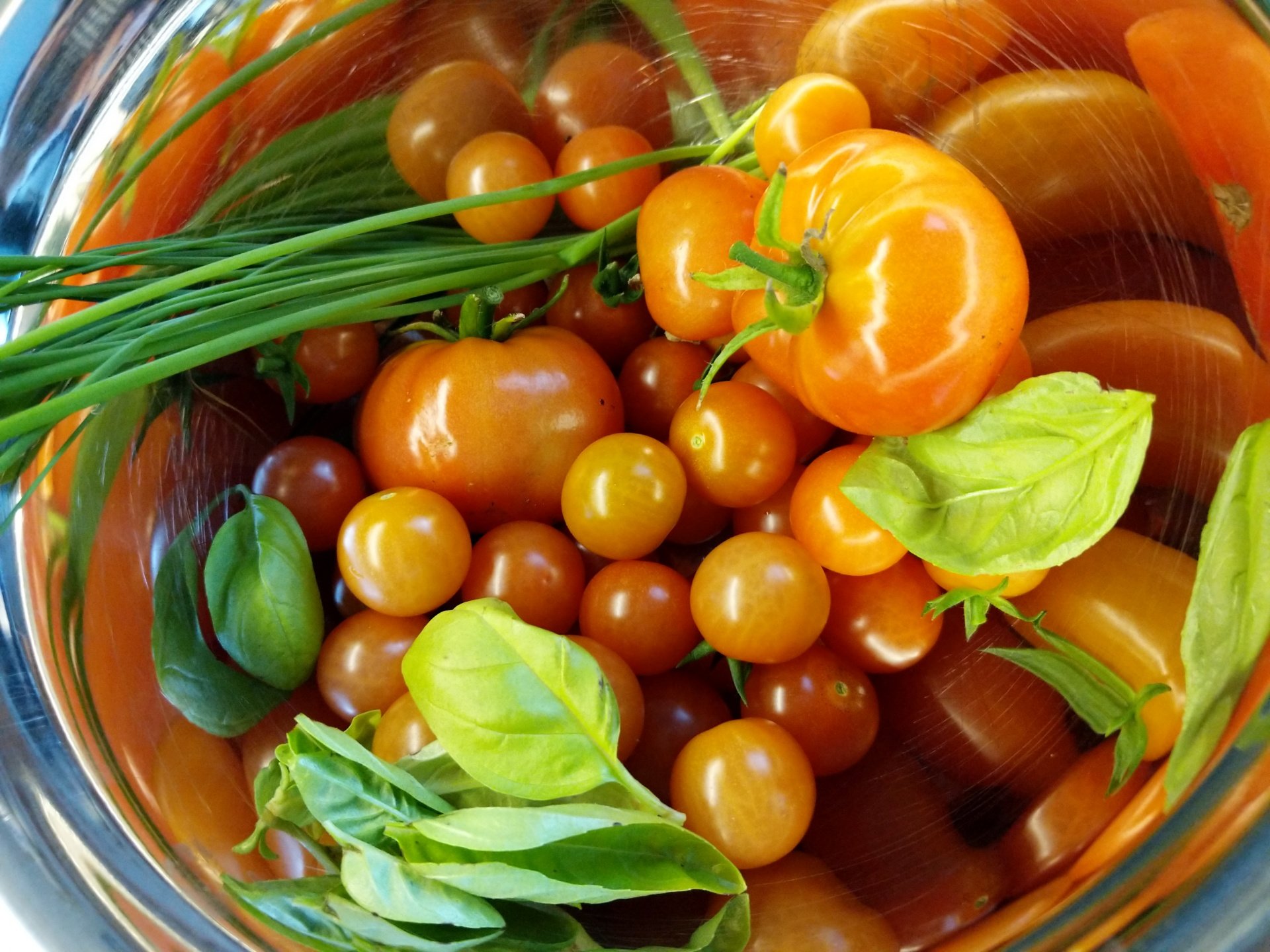
Photo credit: Claudine Lebeau
Located in a small town in east China’s Zhejiang province, where the World Internet Conference takes place once a year, about 2,800 tomato plants are receiving a five-star treatment in a special greenhouse.
It includes ideal temperature and humidity settings, customized nutrition fed to the plants through small black pipes, and even background music – thanks to sensors linked to a 5G network operated by China Mobile, one of China’s largest telecommunication companies.
Each tomato plant is set in a hydroponic rockwool cube, with a catheter to transport water and nutrients. A variety of sensors monitor temperature, light, water, humidity, and fertilizer levels and send that data over the 5G network in real time, which allows a control system to adjust settings more accurately to maximize crop yields.
There is also a 5G-linked pest and disease control system in the greenhouse that can kill bugs with ozone spray, Dong Yongze, chief executive of Daoji Agriculture – which has invested in the smart farm – said in an interview with the Post this week.
“We are all exploring 5G applications at the present time as there is not much 5G equipment available yet,” said Zhao Yu, who runs the smart farm program at Daoji Agriculture. “5G networks are faster and more accurate. With 4G, the [management] system froze frequently and we needed to wait for the analysis. 5G gives us the result immediately.”
Zhao added that in the past they needed to have a stand-alone control panel near the greenhouse, which could not be accessed via a smartphone. Now all the systems can be managed remotely via a 5G handset.
The planting density is much higher at the smart farm compared with traditional greenhouses, and the new technology helps to eliminate seasonality factors. Dong said that crop outputs have doubled and even tripled in some cases. Manpower is also a consideration.
“The reduction in manpower [with a smart farm] is very big,” Dong said. “Using the traditional method, we may need over 10 people to manage our tomato crops […] but two people can manage four smart greenhouses now.”
China is in a race with countries around the world to roll out 5G wireless networks, which offer faster data rates, reduced latency, energy savings, and a massive device connectivity. The mobile technology is seen as key to dominance in fields such as factory automation, robotics, and autonomous driving.
Huawei Technologies, the biggest network gear maker in the world, is considered the industry leader, but its efforts to expand overseas have been hampered by a US move to blacklist the Chinese champion on national security grounds.
In June, China granted commercial 5G licenses to the country’s three telecommunications network operators – China Mobile, China Unicom, and China Telecom – as well as the nation’s cable network giant, China Broadcasting Network, amid efforts by Beijing to kick-start implementation of the new technology.
Wuzhen, one of several pilot zones, installed its first commercial 5G base station in March this year, and now the whole town has network coverage.





Stay updated on the go with our mobile app.
Get latest insights with smoother, more personalized experience through TIA mobile app.