Sign up for the Daily Newsletter, sent exclusively to our premium subscribers. We break down the big and messy topics of Asia’s tech and startup community. Get the newsletter in your inbox everyday with a premium subscription.
Hello reader,
I love PayNow. For those unfamiliar with it, it’s a peer-to-peer funds transfer service here in Singapore where you can easily send someone money using just their mobile phone number. It’s transformed the way we pay and I think it’s made life significantly more convenient.
What’s cool about PayNow is that it’s also got linkages to other payment systems elsewhere in Asia. You can use it to pay people in Thailand via PromptPay, and just last month, the Monetary Authority of Singapore (MAS) announced a new linkage between PayNow and India’s United Payments Interface (UPI).
This does beg the question – how will it affect the way we go about our cross-border payments today? My colleague Melissa goes a little deeper in today’s premium story.
Today we look at:
- The winners and losers in the PayNow-UPI linkage
- InsuranceDekho’s acquisition of an SME-focused insurance distribution startup
- Other newsy highlights such as Byju’s fundraising plans and crypto exchange OKX’s new tech
Premium summary
Winner winner, payments dinner

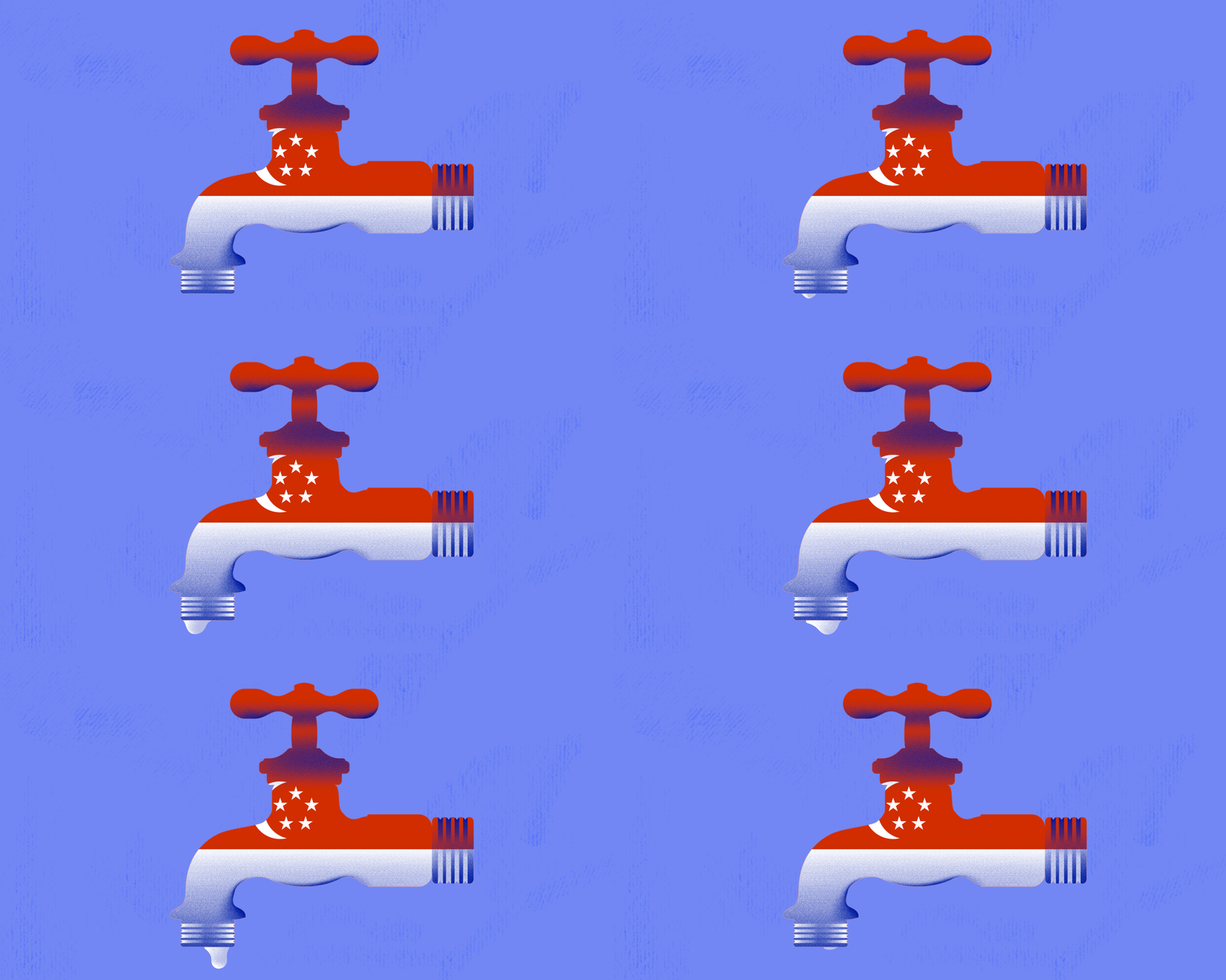
Image credit: Timmy Loen
In February, MAS rolled out the new real-time payment linkage between PayNow and UPI. This is pretty significant, given that more than US$1 billion in payments and remittances flow between Singapore and India annually.
Here’s a look at the linkage’s impact:
- Opens opportunities: While access to the PayNow-UPI linkage in Singapore is limited to customers of DBS Bank and Liquid Group for a start, it will progressively roll out to more financial institutions, though no further details have been released on the when and whom. When that happens, firms that want to launch cross-border payment services for their users could significantly reduce their time to market and the cost of doing so.
- Not that new: To established fintech firms, the new linkage doesn’t bring much to the table. Global payments major Wise, for one, has been facilitating transactions between UPI and PayNow for over a year.
- What’s next: Players in the cross-border payments space may see their competitive advantages weaken as national payment infrastructures become available to more companies. However, fintech executives believe there is room for the private sector to address special use cases, which can add value to the customer experience.
Read more: Winners and losers of SG and India’s novel PayNow-UPI linkage
Startup spotlight
Making insurance better
Join us and share the hardest challenges you’ve faced as a founder
Quick bytes





Stay updated on the go with our mobile app.
Get latest insights with smoother, more personalized experience through TIA mobile app.









📅 Upcoming Events
22 October 2026
Payoneer x CSPN Summit 2026