Welcome to the Opening Bell 🔔! Delivered every other Monday via email and through the Tech in Asia website, this free newsletter breaks down the biggest stories and latest trends on Asia’s publicly listed tech companies. Get it in your email inbox by registering here.
Hello reader,
To be honest, I don’t really understand all the hype about IPOs. Sure, I get that it’s a milestone for a company and its shareholders. But I don’t understand why the media loves reporting about when IPOs are likely to happen or not.
As Carsome’s CEO and co-founder Eric Cheng noted at the Tech in Asia conference in Kuala Lumpur last week, an IPO is “not an end destination.” It will happen when it does, and that’s a good time to take a closer look at its financials. But why make a fuss over the timing of the listing?
Yet as I sat there listening to his session, I couldn’t help but notice the buzz among the audience when Cheng was asked about Carsome’s IPO plans and whether it was aiming to go public before rival platform Carro.
I suppose people love a good story about a big pay day and competition.
So with some sense of how this may seem hypocritical, this week’s featured story is on Carsome’s listing plans. Cheng revealed that the company is looking to go public within the next two years. More interestingly, he said that Bursa Malaysia “has a slight edge” at the moment in terms of where Carsome might list, although no decisions have been made.
The story also looks at how two other Southeast Asian startups, Julo and Sunday, are eyeing IPOs. While large players like Grab and Sea chose a US listing, it makes sense for startups from the region to consider going public in markets where investors are already familiar with their product.
— Simon
THE BIG STORY

Image credit: Timmy Loen
Unicorn Carsome prefers Malaysia over US for future IPO
Listings on Bursa Malaysia have raised US$723 million this year, 43% more than the same period in 2023.
3 Trends to keep an eye on
Hot stocks, earnings reports, restructuring, pressure from activist investors, and more.
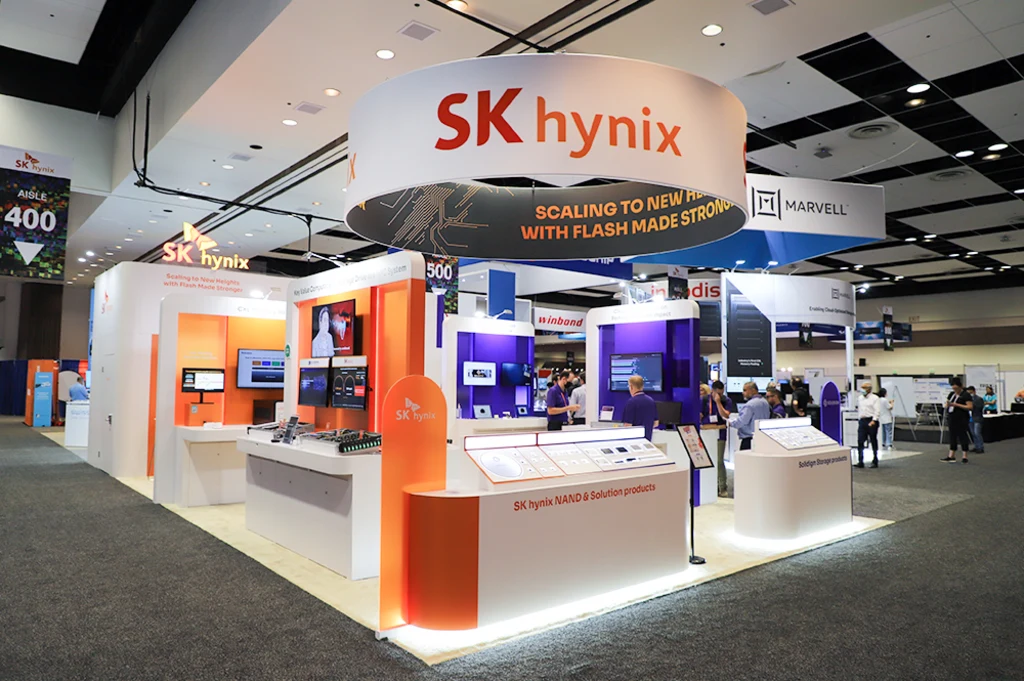
SK Hynix / Photo credit: SK Hynix
1️⃣ SK Hynix on six-year high: South Korean chip company SK Hynix (000660, KRX) reported US$4 billion in operating profit for the April to June quarter. This was the highest since Q3 2018, reversing a loss during the previous year.
Growth was driven by generative AI chipsets made by Nvidia (NVDA, NDAQ), which gets high-bandwidth memory chips from SK Hynix.
However, SK Hynix’s shares dropped by over 8% in the trading session that followed, as investors fretted over the longer-term commercial outlook for genAI.
2️⃣ Tesla profit margins at five-year lows : US-based Tesla’s (TSLA, NDAQ) profit margins for its second quarter this year were the lowest in five years as it had to cut prices to stimulate demand for its electric vehicles.
Sales of its China-made EVs, which are also exported to other regions including Europe, fell from a year earlier. In comparison, Chinese EV makers like BYD (002594, SHE) have posted strong growth.
Tesla shares fell by over 12%, contributing to the overall gloom over tech stock valuations.
3️⃣ Same script, different cast: Another day, another fallen South Korean tech tycoon. Kim Beom-su (also known as Brian Kim), founder of internet conglomerate Kakao Corp. (035720, KRX), was arrested last week on allegations that he manipulated the stock price of SM Entertainment, a leading entertainment agency.
Kakao is the company behind KakoTalk, South Korea’s most popular messaging app. It is also a significant shareholder in KakaoBank (323410, KRX), the leading digital bank in the country.
Of course, this isn’t the first time a South Korean billionaire has run afoul of the law. Lee Jae-yong, executive chairman of Samsung Electronics (005930, KRX), was convicted and imprisoned in 2021 for bribing associates of the country’s former president in exchange for government help over a merger deal.
Lee was subsequently pardoned in 2022 because of Samsung’s importance to the economy. Will Kim see a similar fate?
2 Eye-popping facts
Tech in Asia scours the internet to bring you head-turning numbers from the world of business.
Photo credit: 123rf
- US$1 trillion: The amount of market capitalization wiped out from Nasdaq-listed companies amid concerns over how long it would take to realize returns on AI investments
-
US$77 billion: The value of an 11-year broadcasting deal between the NBA and Disney (DIS, NYSE), Amazon (AMZN, NDAQ), and Comcast (CMCSA, NDAQ)
The one you didn’t see coming
We spotlight the story that had everyone talking and social media buzzing during the past week.
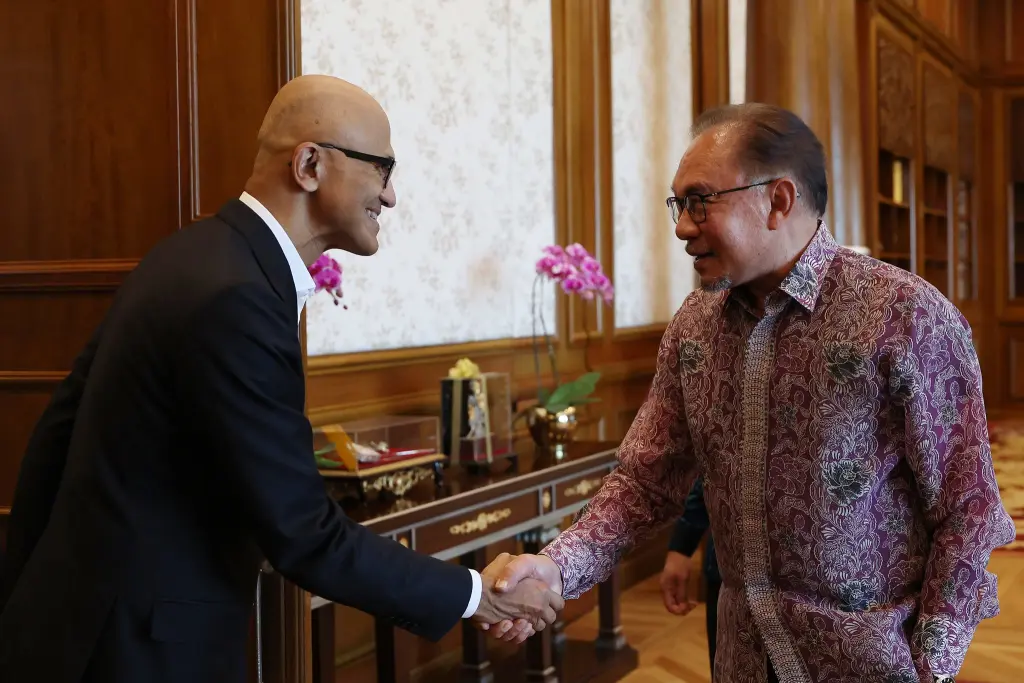
Mircosoft CEO Satya Nadella (left) met with Anwar Ibrahim, the prime minister of Malaysia, in May / Photo credit: Microsoft
Malaysia to Microsoft: Compensate firms for tech outage: The country’s digital minister said he had asked Microsoft (MFST, NDAQ) and CrowdStrike (CRWD, NDAQ) to consider compensating companies that incurred losses during the global tech outage that occurred earlier this month.
Gobind Singh Deo said he had met with representatives from the two companies, asking for a full report on the incident and for them to consider claims made for any damage or loss.
It’s unclear how Microsoft and CrowdStrike will deal with this request. As the minister himself noted, the total amount of losses has not been determined, and the tech companies are highly unlikely to offer compensation unless they are clearly legally obliged to do so.
According to one estimate, Fortune 500 companies incurred as much as US$5.4 billion in losses. Only 10% to 20% of this amount is likely to be covered by cybersecurity insurance. And that’s just from Fortune 500 companies – the 500 largest US firms by revenue.
It’s no surprise that as of July 25, CrowdStrike’s share price has fallen by around 14% since the incident occurred. But it is unusual to see a government making such a request on behalf of its companies.
That’s it for this edition – we hope you liked it!
Happy investing and see you next time!
Disclaimer: This content is for informational purposes only. Kindly do not construe any such information as legal, tax, investment, financial, or other advice.
Editing by Eileen C. Ang
(And yes, we’re serious about ethics and transparency. More information here.)