- Premium Content It takes our newsroom weeks - if not months - to investigate and produce stories for our premium content. You can’t find them anywhere else.
 Emmanuel Samarathisa · · 6 min read
Making sense of Malaysia’s new PM and tech reforms
Last Thursday, when my first column went live, Malaysia finally settled on its 10th prime minister – Anwar Ibrahim.
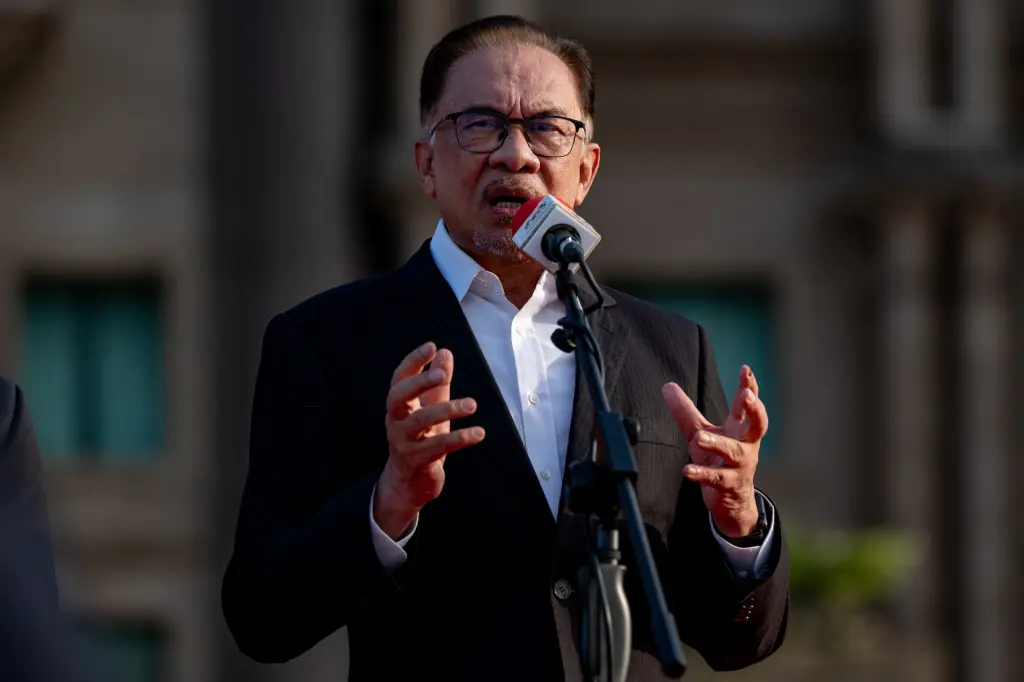
Malaysian Prime Minister Anwar Ibrahim / Photo credit: Sadiq Asyraf / Prime Minister’s Department
The decision came after a week of political intrigue, and it took shorter than I personally expected. Malaysia has entered a post-election coalition era and that’s something all of us, including those in the tech space, will need to get used to.
This brings me to today’s topic about the country’s new prime minister and what the tech industry can expect from the Anwar government in the next few months.
Before we get to this, here’s a little Malaysian Politics 101:
Anwar is the chief of the Pakatan Harapan (PH) coalition, which won the most seats – 82 of them – in the lower house. To form a government, a coalition needs to win at least 112 seats.
Because none achieved this, Anwar and the other coalition chiefs were instructed by the Malaysian king, Yang di-Pertuan Agong, to form a unity government.
But Anwar’s closest rival, former prime minister Muhyiddin Yassin, didn’t agree to this. His coalition, Perikatan Nasional (PN) – which primarily consists of Islamists and conservative Malays – has decided to sit out and remain as the opposition.
This leaves Anwar’s PH and other friendlies, namely Barisan Nasional (BN) and Gabungan Parti Sarawak (GPS) – the country’s third and fourth largest coalitions, respectively – to form the government. This is unprecedented as PH, BN, and GPS were all on opposite sides of the political spectrum.
Notably, BN has had a knack for corruption. Najib Razak, who’s in jail for corruption charges involving a company linked to 1MDB, comes from this party. The coalition’s current chief, Ahmad Zahid Hamid, is also facing corruption trials.
Meanwhile, GPS is Sarawak’s ruling party and has always seen PH as rivals and a thorn. Somehow, this time, they were able to reconcile.
This is a case of weird bedfellows, but it is what we have today.
All three coalitions have previously been in government. BN was the country’s ruling coalition until 2018 when it lost to PH during the 14th general election.
Anwar was also part of PH during this time and was designated as Mahathir’s successor, but the succession plan never materialized. PN succeeded PH in 2020 after it successfully triggered a coup.
Greater tech adoption?
Into uncertainty
Stay ahead in Asia’s tech landscape
This is premium content. Subscribe to read the full story.
Uncertainty remains as the country awaits the formation of its new government.
We know this is not ideal. ⌛ Sign up in 20 seconds. Cancel anytime.
Our subscriber community includes professionals from these companies:





Stay updated on the go with our mobile app.
Get latest insights with smoother, more personalized experience through TIA mobile app.









📅 Upcoming Events
22 October 2026
Payoneer x CSPN Summit 2026