
Welcome to The Offset! Delivered once a month via email and through the Tech in Asia website, this free newsletter breaks down the biggest stories and trends in greentech. Get it in your email inbox by registering here.
Hello readers,
Silicon Valley’s biggest companies are betting on carbon removal tech and are looking to jump-start the fledgling market. The solutions are in their early days, but they might just be our best shot to net-zero emissions.
What are your thoughts about carbon removal? Do you think it can live up to the hype?
Enjoy reading!
— Nicole
DEEP READS
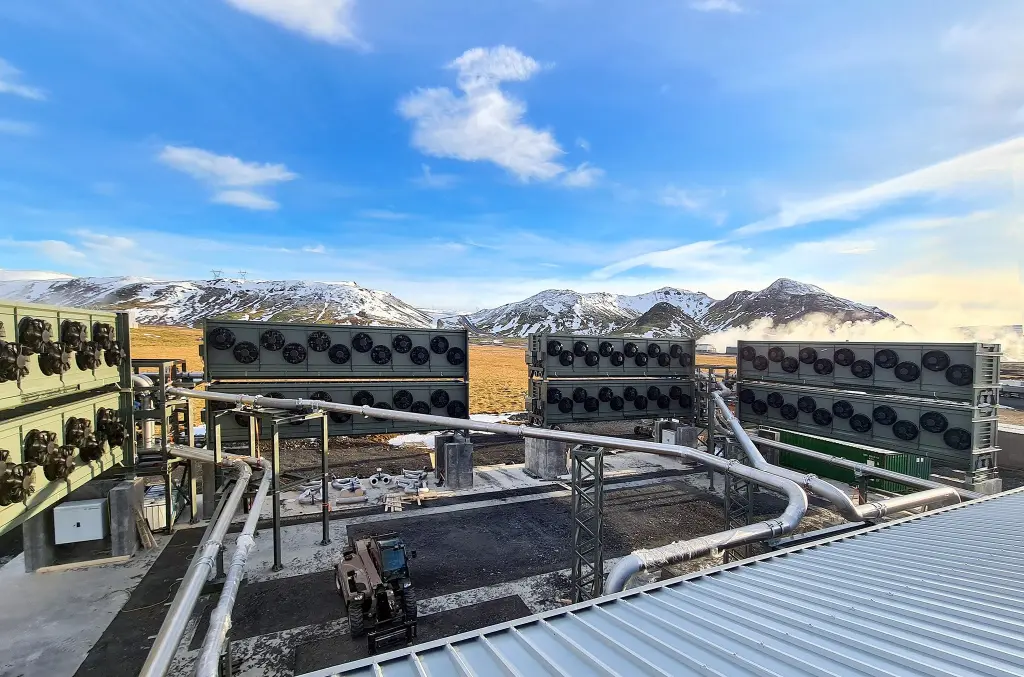
Photo credit: Climeworks
Big tech wants to bootstrap carbon removal into a big business
Big tech is throwing its weight behind carbon removal solutions.
Companies including Stripe, Alphabet, Shopify, and Meta have formed the Frontier fund A public-benefit corporation owned by Stripe, the fund is planning to invest US$925 million to jump-start the fledgling carbon removal market by facilitating and buying carbon offsets.
“Frontier aims to expand the supply of carbon removal, rather than just myopically compete over what exists today. We can wish that there were enough offsets for every company to meet their net-zero [emissions] commitments, but there aren’t. So we have to create more,” said Nan Ransohoff, head of climate at Stripe, in an interview with Politico.
The fund will support the technologies by purchasing offsets from startups that pull carbon dioxide from the air – in other words, guaranteeing future demand.
Traditionally, carbon offsets are created through environmental projects like planting trees or investing in clean energy. But carbon can also be removed by special minerals or carbon capture machines.
The technology is still nascent, and the offset market still has quite a few issues to iron out, including how to measure and verify the carbon removed from the atmosphere
Yet, carbon removal is increasingly seen as a key to meeting net-zero goals because progress in reducing emissions is so far behind that forests and wetlands alone won’t do. A new report by the Intergovernmental Panel on Climate Change even described carbon removal technologies as “unavoidable.”
Other tech entrepreneurs like Bill Gates and Elon Musk are also supporting carbon removal solutions.
Why fossil fuel companies see green in Bitcoin mining projects
Last year, ExxonMobil launched a pilot project to power crypto mining operations in North Dakota’s oil fields with natural gas. The company is reportedly taking this gas-to-Bitcoin model to Alaska and countries like Nigeria, Argentina, Guyana, and Germany.
ExxonMobil isn’t alone in this business opportunity. Other fossil fuel companies, including ConocoPhillips, also sell extra natural gas to crypto mining operations in North Dakota.
To understand this unlikely marriage between natural gas and crypto mining, we first need to talk about methane – a byproduct of oil production.
The greenhouse gas can be captured to generate electricity. Of course, it requires additional investment and infrastructure to get the methane to market, so it’s common practice to burn the gas. The process, called “flaring,” releases carbon dioxide into the atmosphere. This is where crypto miners come in.
Oil companies can convert the excess gas into electricity and sell it to energy-hungry crypto mining operations. Oil companies save the trouble of transporting the excess gas to other locations because mining rigs can be set up on-site.
ExxonMobil’s scheme to monetize the waste gas raises a lot of eyebrows.
For one, the oil company can potentially make itself look like it is cutting down pollution when it is actually transferring those emissions to mining operations. Moreover, skeptics argue the electricity generated from wasted gas could have been put to better use than powering crypto mining operations.
TRENDING NEWS
You can also check out Tech in Asia’s coverage of Asia’s greentech scene here.
1️⃣ Shell buys Indian renewables firm Sprng Energy for $1.6b
Shell has agreed to acquire Indian renewable power supplier Sprng Energy for US$1.6 billion. Sprng Energy is a supplier of solar and wind power in India, a major growth market for the energy sector. The company was set up by UK-based private equity firm Actis with a commitment of US$450 million.
Why it matters:
Shell has pledged to become a net-zero greenhouse gas emissions business by 2050. The deal will triple the oil company’s current renewables capacity in operations.
2️⃣ The world’s biggest hydrogen fuel cell EV has started work in South Africa
South African mining company Anglo American unveiled a prototype of the world’s largest hydrogen-powered haul truck at its platinum mine.
The truck, dubbed the nuGen, was retrofitted from a diesel-powered vehicle. It weighs 210 metric tons and has a hybrid hydrogen fuel cell providing roughly half of the power it uses, with the rest coming from a battery pack.
Why it matters:
The mining sector is under pressure to improve its carbon footprint. Decarbonizing its mining truck fleet perhaps isn’t enough, but it could be a good place to start. Mining trucks are said to be responsible for about 3% of carbon emissions worldwide.
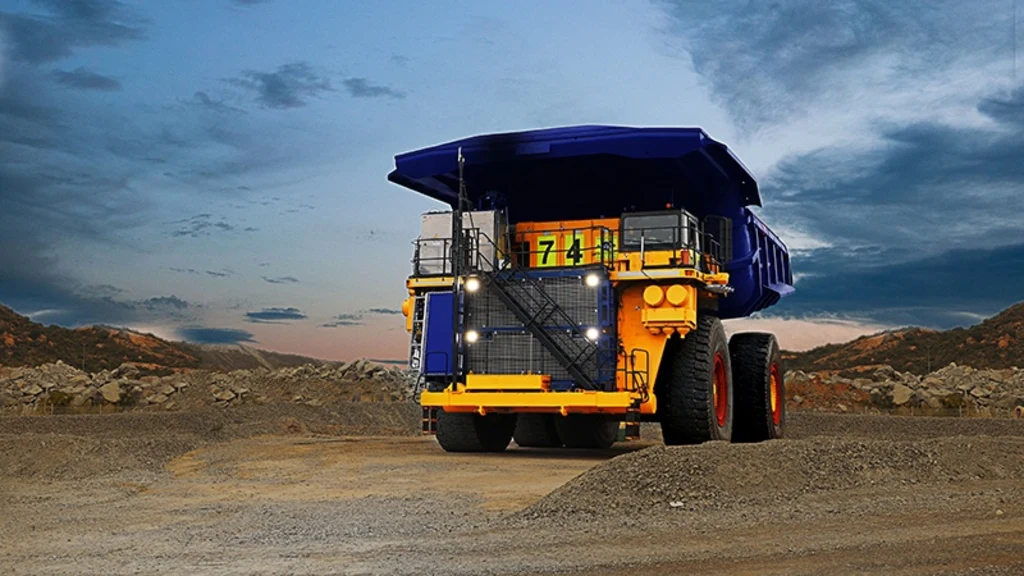
Photo credit: Anglo American
3️⃣ Big Four accounting firms expand ESG hiring in Hong Kong, mainland China as tougher regulatory compliance exposes deficit in talent
The Big Four accounting firms are boosting their hiring for environmental, social, and governance (ESG) teams in Hong Kong and mainland China.
Deloitte has more than doubled the size of its ESG team in Hong Kong while Ernst & Young is aiming to triple the size of its Greater China unit over the next three years. Meanwhile, PwC has doubled its headcount in the past two decades and KPMG China has also grown into a 300-strong team.
Why it matters:
The accounting firms face a talent gap as more ESG regulations are introduced, driving more listed companies across different industries to reduce their carbon footprints.
For example, the Hong Kong stock exchange requires the filing of annual ESG reports, while China’s securities regulator calls for companies to include environmental violations and penalties in their disclosures.
4️⃣ California’s all-renewable moment shows the future of the power grid
On the last day of April, solar, wind, and other renewables briefly met nearly 100% of California’s electricity needs. This target has been achieved by power systems outside the US in countries like Denmark and Australia, but California’s main power grid is much larger.
Why it matters:
The milestone paints a picture of what a zero-carbon future could be like. Operating a renewable power grid and maintaining 24/7 system stability is more complex than supply and demand as all renewable power sources need to work in harmony.
Issues relating to energy storage capacity can also hinder a fully renewable power grid.
STARTUP WATCH
1️⃣ ESG startup’s valuation triples after series A injection
GoImpact, a Hong Kong- and Singapore-based sustainable finance startup, has raised an undisclosed amount of series A funding, which triples its valuation to US$22 million. The company provides case-based, experiential learning courses on ESG.
2️⃣ Singapore energy firm bags $11.6m in series A raise
Clean-energy tech startup Green Li-ion has raised US$11.6 million in a series A round led by Energy Revolution Ventures and joined by Entrepreneur First and SOSV. The Singapore-based company has developed modular recycling tech for lithium-ion batteries.
Photo credit: Sungrow EMEA / Unsplash
3️⃣ Sun King raises $260m to widen clean energy access in Africa, Asia
Sun King, an off-grid solar products provider, has raised US$260 million in a series D round led by BeyondNetZero, the climate investing venture of General Atlantic. The company provides electricity to consumers in Africa and Asia. It plans to use part of the funding for business expansion.
4️⃣ Vaayu, a carbon tracking platform for retailers, pulls in $11.5m seed round led by Atomico
Berlin-based carbon tracking startup Vaayu has closed a US$11.5 million seed round led by European VC Atomico, with participation from CapitalT and Seven Six, the VC of Reddit co-founder Alexis Ohanian. The company offers carbon calculation services for clients in retail.

Photo credit: Group14 Technologies
5️⃣ Battery tech company Group14 raises $400m in funding led by Porsche, plans 2nd US plant
Group14 Technologies, a manufacturer of silicon-carbon material for electric car batteries, has raised US$400 million in a series C round led by Porsche AG.
The company’s technology uses silicon-carbon powder that can either replace or augment graphite anodes that are in most of today’s lithium-ion batteries. The new funding will be used to construct a second manufacturing plant in the US.
That’s it for this edition – we hope you liked it! Do subscribe to continue receiving The Offset.
See you next month!
The Offset is made possible thanks to Taiwan Mobile.
It earned the best telco title in Global Views CSR Awards.
Taiwan Mobile is on a mission to transit to 100% green energy by 2040.
Stay updated on the go with our mobile app.
Get latest insights with smoother, more personalized experience through TIA mobile app.
Recommended reads
 BaniQL raises $1.6m to make nickel mining in Indonesia greener
 SoftBank eyes up to $150m deals in India’s AI infrastructure space
 Indian diabetes management startup extends series A with $5m raise
 Nvidia, others inject $150m into enterprise AI firm
 Automated risk monitoring platform lands $10m to expand to North America, Europe
 Wagely banks $23m to widen earned-wage access reach in Indonesia, Bangladesh
 Alodokter sees stagnant revenue, cuts losses by half in 2022
 Thailand’s HD enters AI with healthcare chatbot after $5.6m raise
 Yotta eyes AI data center dominance in India with boost from Nvidia
 Alibaba funds another AI startup valued at $2.5b





Editing by Lorenzo Kyle Subido and Shravanth Vijayakumar
(And yes, we’re serious about ethics and transparency. More information here.)