 Steven Millward · · 5 min read
Chinese drone startup comes out of hiding, unveils Hover Camera designed for use indoors
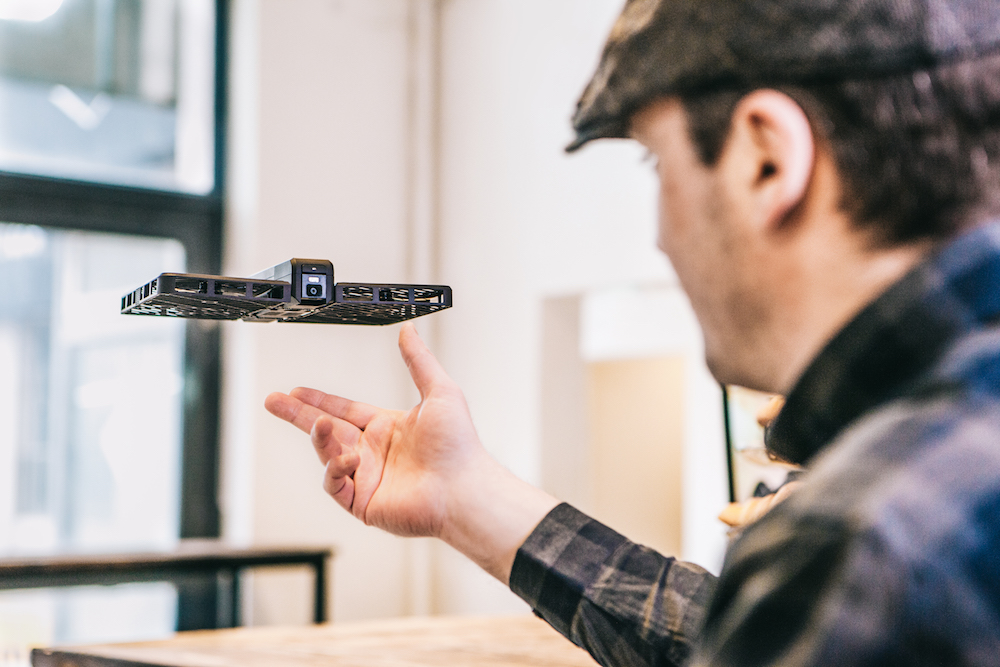
The carbon fibre drone can be grabbed safely because its four little rotors are caged. Photo credit for all: Zero Zero Robotics.
A young Chinese startup specializing in drones came out of two years of hiding and secretive development today to unveil its Hover Camera. Unlike most drones, it’s designed for indoor use, with its rotors tucked safely inside its carbon fiber mesh bodywork.
Zero Zero Robotics‘ first product has an AI brain so that it can follow you around using face-tracking, explains startup founder Meng Qiu Wang to Tech in Asia. The directional forward camera combines with a bottom sonar so that it can avoid some obstacles in its vicinity. It doesn’t have full obstacle avoidance, so don’t use it in a room full of Ming vases.
“We think of it as a robot,” says Qiu Wang. The team designed the Hover Camera to be simple to use, with just a single button. “When you let go, it hovers automatically.” And if you throw it like a frisbee, it begins to hover and stays in place.
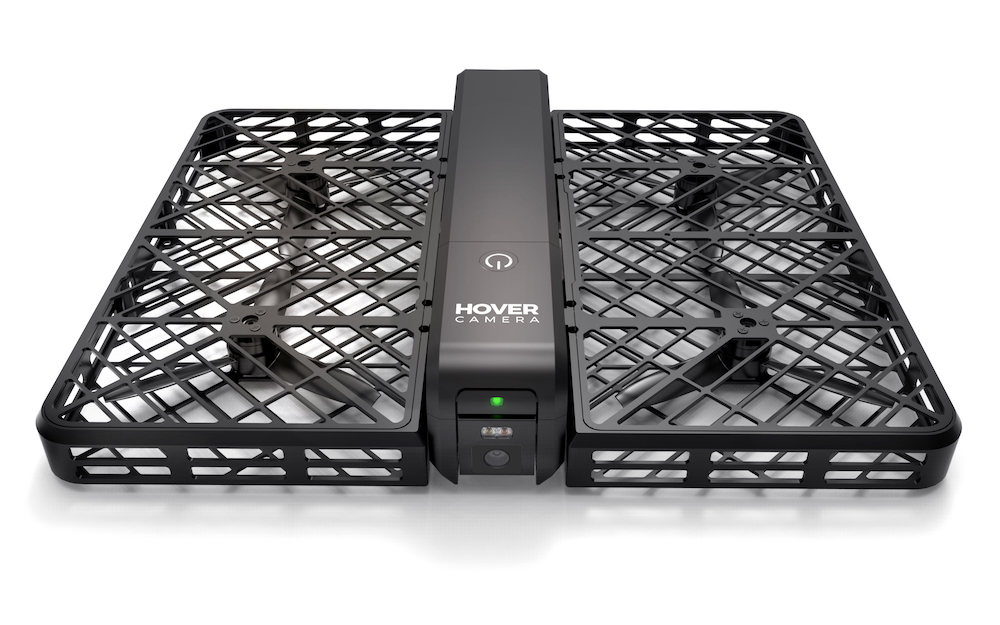
While DJI, China’s well-funded and increasingly well-known drone brand is going after the top end of the pro drone user market, the Zero Zero Robotics team is aiming at people who want a flying selfie camera. It’s not a cheap toy like some no-name drones you can now get in the supermarket, but it’s meant to be fun and accessible.
Eye in the sky
The lens on the Hover Camera is 13 MP and it can record 4K video. There’s electronic image stabilization to keep it steady, plus the drone itself with its AI is smart enough to keep itself on an even keel even if you venture outside and it’s a windy day, the startup claims. It can create a 360-degree panorama for you by hovering and spinning while in a fixed position.
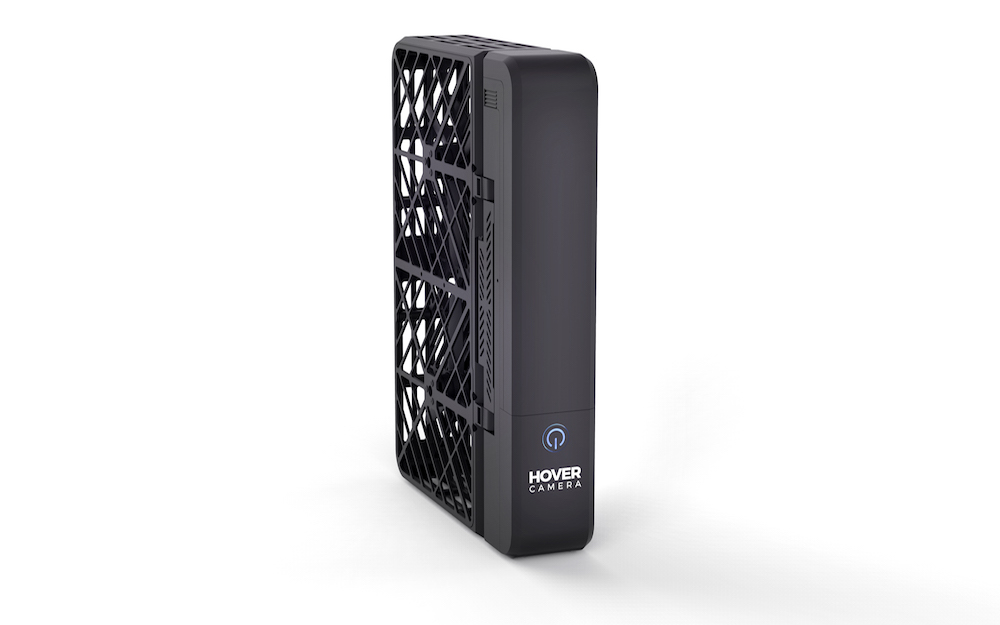
The camera can look up and down, but it can’t move side to side as it’s fixed in the frame, with no gimbal. The whole drone is foldable so that it becomes not much bigger than a video tape (there’s a reference that ages me).
Whereas most drones require a remote control handset, the Hover Camera is maneuvered entirely with an app, with a bunch of gestures programmed for both the flight and the camera. “It’s more intuitive to average users who are not drone enthusiasts,” says Qiu Wang.
Using carbon fiber, an expensive material usually only seen on Formula 1 cars or insanely pricey bikes, the drone weighs just 238 grams, putting it below the US Federal Aviation Administration threshold to require a US$5 flight license. Any drone over 0.55 pounds (250 grams) needs a license in the States. (Update: In response to reader comments, I checked with the startup about battery life. A spokesperson says, “The battery life is approximately 8 minutes, but they’re interchangeable and rechargable. You can pinch the butt of the batteries, pull it, and it’ll pop out. Definitely designed to be easily replaceable.”)
Stealth





Stay updated on the go with our mobile app.
Get latest insights with smoother, more personalized experience through TIA mobile app.










📅 Upcoming Events
22 October 2026
Payoneer x CSPN Summit 2026