Winston Zhang · · 3 min read
Cap tables: A reminder of the importance of being meticulous
Back when I was still in school, toward the end of each term, our teachers would conduct a filing exercise to put all our documents in order. For me, this involved painstakingly hunting for 10 weeks’ worth of worksheets and other papers that had ended up in all sorts of locations as a result of, well, being a haphazard and hyperactive pre-teen.
At the time, I didn’t really get the point of that exercise. The worksheets were completed, the learning was already done, and grades were based on exams (and, obviously, noted down elsewhere) – why should it matter that I was missing worksheet number six about fractions?
To be quite honest, I still don’t fully understand the rationale for that particular exercise. However, as I’ve grown up, I’ve learned the value of keeping things in order. I organize my documents in GDrive rather fastidiously, if I do say so myself. I make it a point to keep things neat, even though there are usually a thousand other tasks on my plate at any given point in time. It’s not because I’m a neat freak; I just think it helps me do my work better and easier.
Apparently, that’s the right attitude to take toward managing a startup too – particularly when it comes to maintaining a capitalization table.
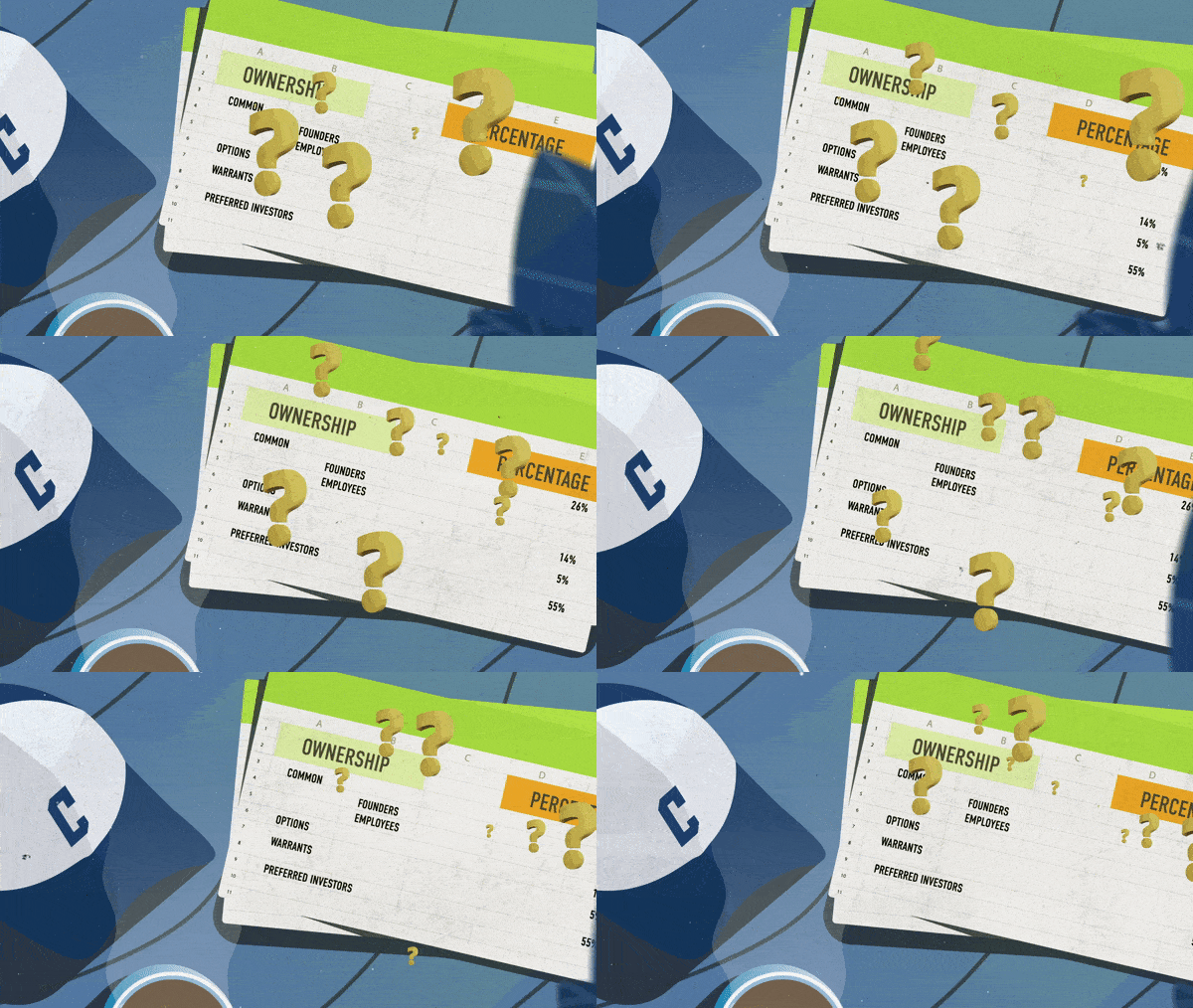
Cap + Table. / Photo credit: Tech in Asia
Cap tables are not a topic that comes up very often in talks about startups. Usually, people just want to read and write about the latest technological innovations or the hundred million series D round that this or that software-as-a-service company just closed. Cap tables, in comparison, are unsexy and boring.
However, a well-maintained one can be the difference between wild success and ignoble failure for a startup – and given that it’s something that’s established very early on in a company’s life, it’s also something that serves as a quick indicator of a startup’s prospects.
We delve into the implications of a company’s management of its cap table in this episode of Tech in Asia Explains. With the guidance of Expara Ventures CEO and managing director Douglas Abrams, Carro CEO Aaron Tan, and Alodokter CEO and co-founder Nathanael Faibis, we look at the key components of a cap table, the common mistakes founders make in managing their cap tables and how they can affect a startup’s valuation, and how to get started on the right foot when first setting one up.
With Grab’s and Gojek-Tokopedia’s recent big moves expected to be the first domino chips to set off a string of high-profile Asian developments this year, there’s no time like the present to check out Tech in Asia Explains: Capitalization tables and get a solid grasp on one of the fundamental aspects of running a tech startup.
Be sure to check out our other Tech in Asia Originals as well – we’ve got some really interesting stuff on there.
Editing by Nathaniel Fetalvero and September Grace Mahino
(And yes, we’re serious about ethics and transparency. More information here.)





Stay updated on the go with our mobile app.
Get latest insights with smoother, more personalized experience through TIA mobile app.