Peter Rothenberg · · 4 min read
Unlearning Japanese corporate culture to save the world’s second largest newspaper
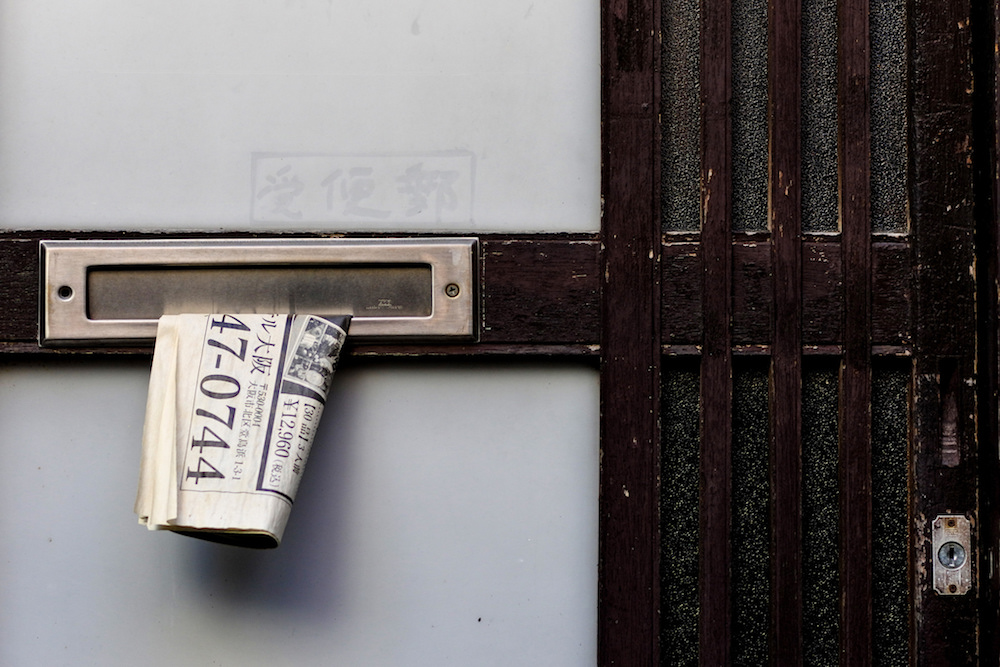
A letterbox in Osaka, Japan. Photo credit: m-louis
The Asahi Shimbun is a dinosaur among dinosaurs. Founded in 1879, it is the second most circulated print newspaper in the world. If we learned anything from The Land Before Time or The Good Dinosaur it’s that – just like us – dinosaurs don’t want to die and will do anything to survive.
In April 2013, the Asahi Media Lab Open Innovation Office was created to help Asahi Shimbun prepare for the upcoming apocalypse.
At first the Lab struggled to free itself from its traditional Japanese corporate parent, but it’s slowly gaining recognition with its seed acceleration program for tech startups. In addition to the standard investment, office space, and mentoring offered to the startups in the program, it also uses its connections to help founders make appointments with large corporations in Japan – something that startups cannot usually do.
Downhill since 2004
The Media Lab came about when 17 people, including now senior administrators Masami Yamada and Ken Shiraishi, were brought together to take a solemn look at the paper’s future. Masami moved from operations at Asahi Shimbun’s digital business division and Ken came from the circulation division.
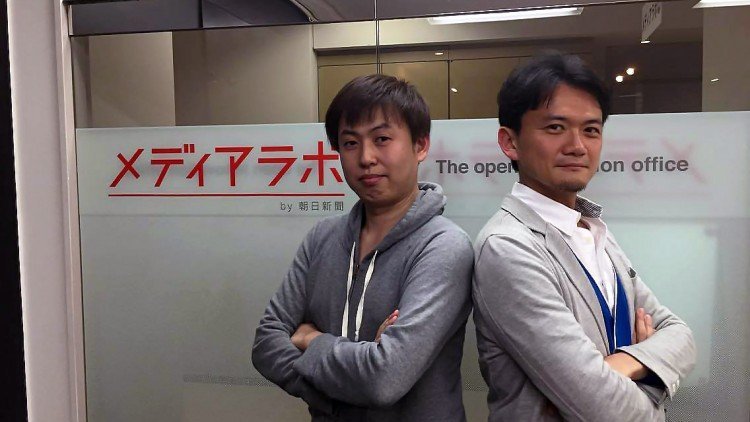
Masami Yamada (left) and Ken Shiraishi of Asahi Media Lab.
With 6.8 million copies of the paper sold daily, more people still read the Asahi Shimbun than live in Paraguay, Singapore, or Denmark.
They haven’t changed anything in the way they operate since the 20th century.
But sales of the paper and related businesses had been in decline since 2004. It was obvious the paper needed to innovate to stay relevant.
“Most legacy companies in Japan are having the same problem,” says Masami, “All this change is happening around them with the internet but they haven’t changed anything in the way they operate since the 20th century.”
Masami and Ken want Asahi to escape that fate. Despite facing initial skepticism, the pair eventually convinced top management to let them set up a new acceleration program as part of the Media Lab. They hope that this will help usher in new ideas and, possibly, save the dinosaur from extinction.
Letting go
The Lab’s first year in 2013 was a struggle because of a difference in company culture and lack of autonomy and resources.
In Japan, companies strive to do everything internally. For example, newspaper machine engineers were being brought into front-end engineering positions for digital content – simply because they were “engineers.”
Much needed breakthrough





Stay updated on the go with our mobile app.
Get latest insights with smoother, more personalized experience through TIA mobile app.