
Covid-19 has changed the way people think about healthcare. It has highlighted the importance of healthcare systems and providers, and it has emphasized the value of having effective solutions to help diagnose, treat, and monitor different conditions.
The pandemic also accelerated investments into the healthtech sector, and this was most apparent in Asia Pacific. With US$16.9 billion invested across 156 deals, the region accounted for about 41% of global healthcare private equity deals in 2020.
Within the region, Hong Kong is coming up as an exciting destination for healthtech firms that are looking to change the way people understand healthcare, thanks to the opportunities and resources the city offers to its startups.
A congruence of factors
According to Joseph Fung, managing partner at biotech-focused VC firm Saltagen Ventures, there are several key reasons why healthtech is taking off in Hong Kong.
“The financial capital market system is getting more and more accommodating to biotech and healthcare firms,” he shares. “You see a lot of later-stage companies in the sector on the Hong Kong Exchange, and it’s an element that has driven the growth of interest in healthcare for investors.”

Joseph Fung, managing partner at Saltagen Ventures / Photo credit: Saltagen Ventures
This interest has trickled down to younger firms in the city, which are tackling many of the key challenges that Hong Kong faces with healthcare – an interest that has only been magnified by the pandemic.
“[Due to] Covid-19, people recognized their need for healthcare technology across the board, not only in diagnostics but therapeutics and digital medicine as well,” Fung says.
However, even before Covid-19, healthtech was beginning to gain traction in Hong Kong. The city is expected to see its aging population increase significantly in the next 20 years, creating a greater need for more effective healthcare solutions. Coupled with a heightened awareness all around the region on the value of healthtech and Hong Kong’s reputation as a gateway for businesses both into and out of China, the city is the perfect environment for new companies to roll out innovative technology.
An ecosystem of support
While Hong Kong holds plenty of opportunities for healthtech startups, getting started is no easy feat. Healthtech firms often need to invest heavily in research and development right from the get-go and often face regulatory hurdles on the road to getting a product to market.
To that end, the city has built up a strong support network with crucial resources to help healthtech firms get off the ground.
The Hong Kong Science and Technology Park (HKSTP), which will be marking its 20th anniversary in 2022, has several initiatives to support the growth of startups. The organization offers a variety of resources for startups, ranging from incubation and accelerator programs to more dedicated biomedical and healthcare tools, with the goal of driving innovation in Hong Kong.
HKSTP also runs the annual Elevator Pitch Competition (EPiC), a literal elevator pitch event held atop Hong Kong’s International Commerce Centre. The competition involves four categories, namely fintech, healthtech, green and construction tech, and smart city technologies.
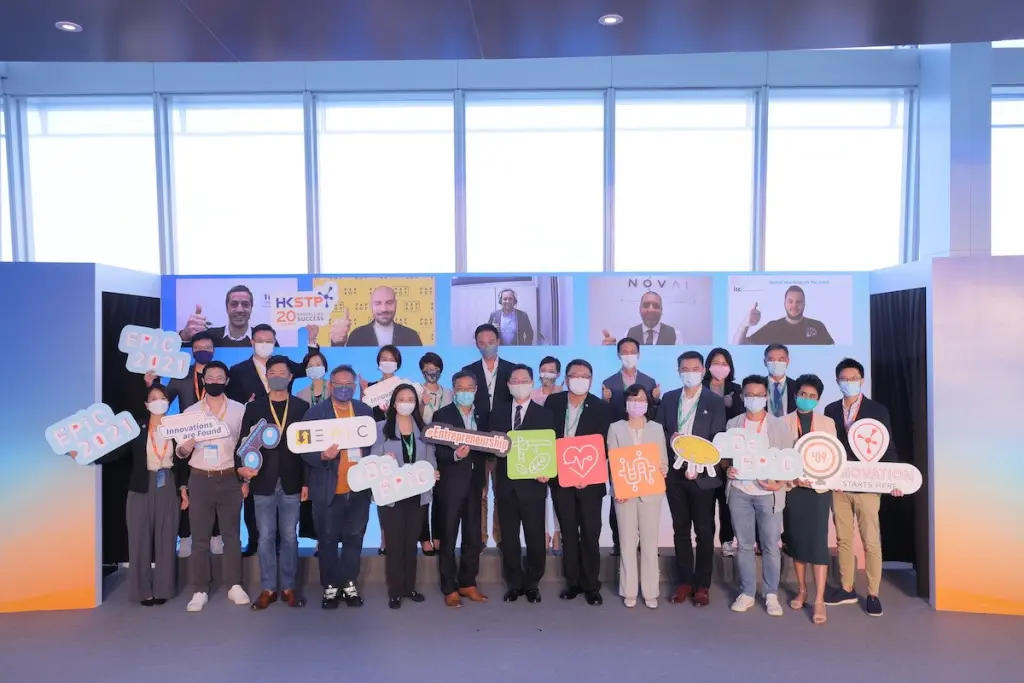
The winners and judges of EPiC 2021 / Photo credit: HKSTP
This year’s edition was a hybrid event, with contestants both dialing in and attending in person. The event drew in over 600 startups from more than 40 countries.
“EPiC provides a unique borderless experience that educates and connects innovators around the world with insights to sharpen entrepreneurial skills and deepen knowledge on the thriving Hong Kong and Greater Bay Area market,” says Albert Wong, CEO of HKSTP. “It is where we unlock opportunities, where innovation begins and where talent flourishes as pioneers and innovators connect in a genuine haven of global innovation and investment.”
Aside from the pitching competition, EPiC also has an investment conference and business matching sessions that enable startups to network with potential customers and partners. The event also provides investors with an opportunity to connect with new and exciting companies.
Above all, EPiC plays an important role in bolstering Hong Kong’s startup ecosystem.
“It’s not just about capital,” says Fung, who was a judge at EPiC 2021. “There’s also the element of encouraging soon-to-be entrepreneurs and potential entrepreneurs, of letting them know that there’s an ecosystem that can support them and bring them together to know that these are actual possibilities they can reach out to.”
Opportunities to shine
Events like EPiC have enabled firms such as PointFit Technology to get off the ground. Founded in 2019, PointFit’s key offering is a non-invasive biosensor that uses sweat to monitor a person’s physical well-being.
According to PointFit co-founder and COO Jack Chen, EPiC helped propel the firm to greater heights.
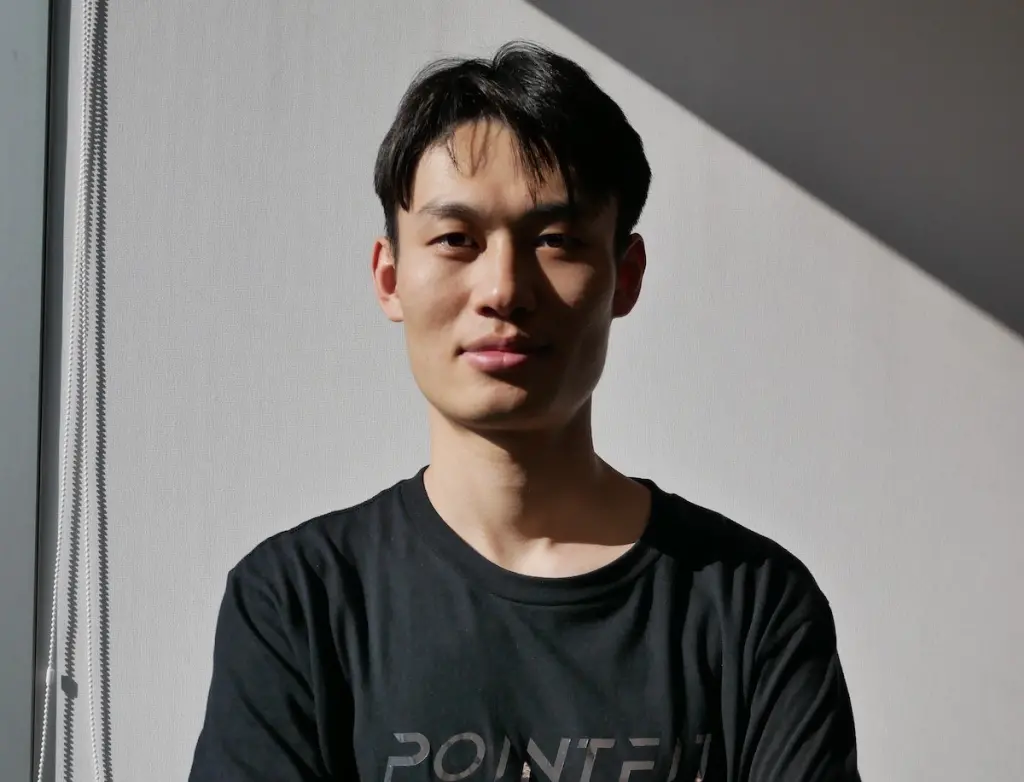
Jack Chen, co-founder and COO of PointFit Technology / Photo credit: PointFit Technology
The Hong Kong-based startup participated in the 2021 edition of EPiC, and it emerged as the winner of the healthtech category.
“Winning the competition strengthened the recognition of our company and helped us bring greater awareness of sweat-sensing technology to the general public,” says Chen. “It was a great opportunity for us to introduce PointFit to as many audiences as we can and gain exposure to other startups from around the world.”
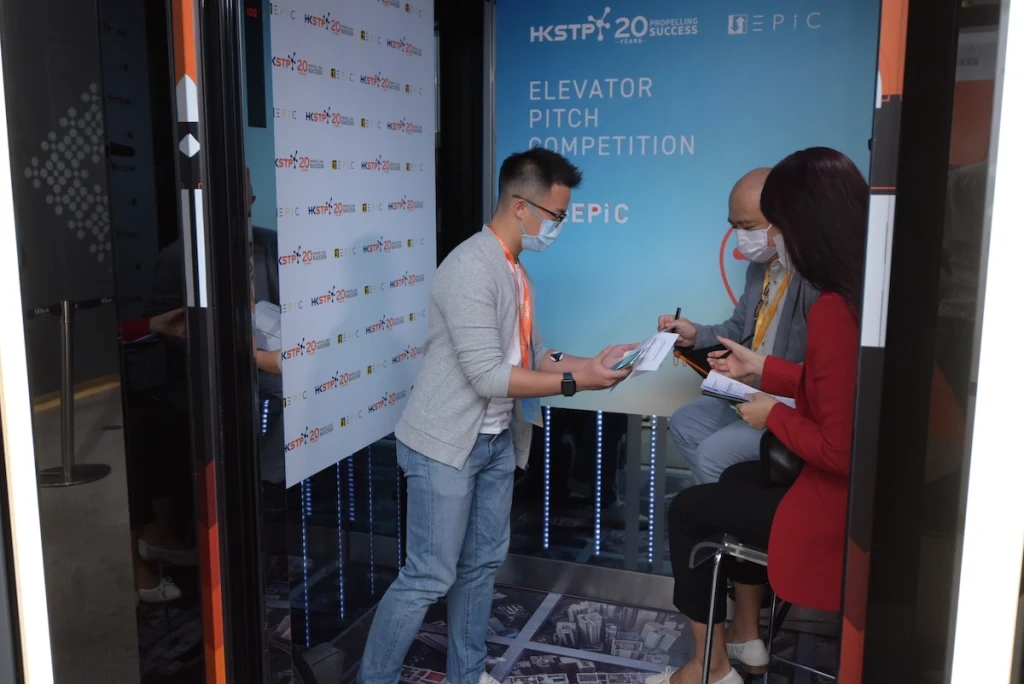
PointFit co-founder and CEO Andreas Kenny Oktavius, at EPiC 2021 / Photo credit: HKSTP
The firm has also benefited from the larger HKSTP ecosystem.
Chen and his co-founders participated in HKSTP’s ideation program, which helped them validate their startup’s model and develop a business plan. They then joined the organization’s incubation program, which offered more dedicated and focused support. PointFit also received funding from HKSTP, which enabled the startup to channel more resources into research and product development.
“We wouldn’t be here, continuing on with our research and development, if it weren’t for HKSTP,” says Chen.
What lies ahead
Efforts by organizations like HKSTP have put Hong Kong’s healthtech scene on an upward trajectory. The city has invested US$16.7 billion so far into the sector, and recently received approval from Beijing to develop a major healthtech hub that will serve the Greater Bay Area.
HKSTP has also recently launched its Institute for Translational Research to help commercialize research, offering academics, scientists, and startups support with product development and connecting with potential customers.
As awareness of the potential of healthtech continues to climb, so too will the influx of capital further boosting the capabilities of the startups in the space.
“Hong Kong is a great attractor for capital, and there’s gonna be a lot more smart capital coming [into the city],” concludes Fung. “Hong Kong is a gateway.”
The Hong Kong Science and Technology Park is dedicated to building a vibrant innovation and technology ecosystem to connect stakeholders, nurture technology talents, facilitate collaboration, and catalyze innovations to deliver social and economic benefits to Hong Kong and the region.
Learn more about how HKSTP can support your startup journey on its website.
This content was produced by Tech in Asia Studios, which connects brands with Asia’s tech community. Learn more about partnering with Tech in Asia Studios.
Stay updated on the go with our mobile app.
Get latest insights with smoother, more personalized experience through TIA mobile app.
Recommended reads
 Navigating Malaysia’s drone tech landscape – The Executive Brief
 Edtech accelerator EduSpaze names 9 startups in 5th cohort
 Flipkart co-founder’s startup banks $25m in series A money
 Animoca backs $70m round of 🇹🇼 VC firm’s maiden Web3 fund
 SG’s Spenmo joins 4 YC alums to help SEA startups scale
 Sequoia names 15 startups in Surge’s 7th cohort
 Thai startup media firm launches early-stage accelerator program
 These startups are scaling successfully with Huawei’s help
 Alibaba-backed fund bets on Hong Kong-based robotics firm
 India-based VC debuts seed fund with $100m corpus





Editing by Nathaniel Fetalvero, Winston Zhang and Lorenzo Kyle Subido
(And yes, we’re serious about ethics and transparency. More information here.)








📅 Upcoming Events
22 October 2026
Payoneer x CSPN Summit 2026