 Stefanie Yeo · · 6 min read
Buy, sell, and pay: 5 insights into SEA’s payments landscape

“See? So simple!” said Uncle Sim, a character from a series of 2010s advertisements in Singapore promoting Visa’s new Paywave feature.
The catchphrase perfectly captures how digital payments have transformed the consumer experience in Southeast Asia. Alongside tap-to-pay services, digital wallets and real-time payments have emerged in the region in the last decade, making buying and paying “so simple.”
“These new payment methods offer better user experience,” says Agnes Chua, managing director of business and product development at payment platform 2C2P. “When you shop online and check out, it’s just one click – you almost don’t feel like you’re even paying.”

Agnes Chua, managing director of business and product development at 2C2P / Photo credit: 2C2P
As payments march on in Southeast Asia, what does the current landscape look like? How do payments affect how consumers shop? What does this mean for businesses?
To better understand the state of digital payments in the region today, 2C2P has commissioned a research paper from the International Data Corporation (IDC), titled “How Southeast Asia Buys and Pays 2025.”
Here are five key insights from the report:
1. Non-digital payments are on the decline
Only 13% of ecommerce payments in Southeast Asia were made through non-digital payment methods in 2023, the report reveals. The number is expected to decrease further to 6% in 2028.
Real-time payments, such as Singapore’s PayNow and Thailand’s PromptPay, are growing in popularity, with transaction values almost reaching US$3 billion in 2023. Buy now, pay later has also grown significantly, with a recorded 71.2 million users in 2023.
“In the past, consumers in places like Vietnam, Thailand, the Philippines, and Indonesia preferred to pay cash over the counter when they bought things online,” says 2C2P’s Chua. “Now, with digital wallets like True Money, we’re seeing that shift toward digital payments. And for bigger ticket items, we see more of them going for BNPL, to break it down into bite-sized payments.”
2. Cross-border commerce is a huge opportunity for merchants in Southeast Asia
The growth of digital payments is closely entwined with that of the region’s ecommerce scene. Southeast Asia’s ecommerce market was worth US$137 billion in 2023, as per the research paper. The number is projected to reach US$325 billion in 2028.
As it grows, ecommerce is likely to become a lot more regional.
- The value of intra-Southeast Asia cross-border ecommerce was US$3.9 billion in 2023 and is expected to reach US$14.6 billion in 2028.
- The average transaction value per customer in the region stood at US$211 for cross-border transactions, versus US$175 domestically.
- For 62% of merchants surveyed who have participated in cross-border ecommerce, the value of cross-border transactions was, on average, 21% higher than domestic ones.
It’s a natural progression. Southeast Asia’s biggest ecommerce companies, such as Shopee and Lazada, operate across many markets in the region. These firms allow merchants to easily sell to buyers across the region through a single platform.

Photo credit: anek.soowannaphoom / Shutterstock
Southeast Asia’s logistics infrastructure has also developed alongside ecommerce, providing the backbone necessary to deliver goods to other parts of the region.
“This gives merchants a bigger pool of customers and more sales revenue,” says 2C2P’s Chua.
3. Cross-border operations add more complexity to the payment process
While cross-border ecommerce creates new opportunities for Southeast Asia’s merchants, it also creates new challenges, especially on the payments front.
The report identifies three significant challenges that businesses face as they navigate cross-border payments: integration concerns, fraud prevention and security, and cross-border transaction fees.
These are amplified by merchants’ lack of understanding and familiarity with payment methods in different markets, according to Chua.
“If you’re not based [in the country], it is not easy to understand the payments landscape and know what the consumer wants and how they want to pay,” she explains.
She then cites virtual accounts in Indonesia as an example.
“If you’re in Singapore, it may be hard to understand how it works, so you will need to do a lot of homework to build it into your systems – it’s a massive undertaking,” says Chua.
4. New payment methods = new opportunities
Despite the increasing complexity of payments, merchants remain bullish.
The report highlights three benefits that arose from introducing new payment methods: increasing sales revenue, reducing friction during checkout, and improving security.
“Many of these new payment methods, like digital wallets, have enhanced security measures such as biometric authentication and tokenization,” Chua recalls. “That gives both consumers and merchants a better sense of security when transacting.”

Photo credit: Nattakorn_Maneerat / Shutterstock
Supporting new means of paying also opens up merchants to a bigger pool of customers, going hand-in-hand with the opportunities that cross-border ecommerce offers. For instance, a Malaysian customer is more likely to buy something from a Thai brand if they can pay using a method that’s familiar to them.
“It ultimately boils down to improving that user experience,” Chua adds.
5. Key considerations for the right payment partner
Southeast Asia’s complex payments landscape – and the challenges involved, especially with cross-border transactions – means that most merchants will use a payment service provider.
As the paper points out, businesses have the following key considerations when selecting a payment partner: costs and fees involved with transactions, security and fraud prevention, and user experience.
This aligns with what Chua has observed in the market.
In her experience, most companies are concerned with how many payment channels a provider offers and how easy it is to integrate their solutions. Price is a factor as well, though customer experience shouldn’t be disregarded.
“You want to consider the effectiveness of their dispute resolution and whether they have support available in the local languages of the countries you’re selling in,” Chua explains.
In the case of 2C2P, it aims to address these concerns through its solutions. On top of offering a single API integration, it has local teams across the region, ensuring that it is plugged into local payments environments and can provide focused support as needed.
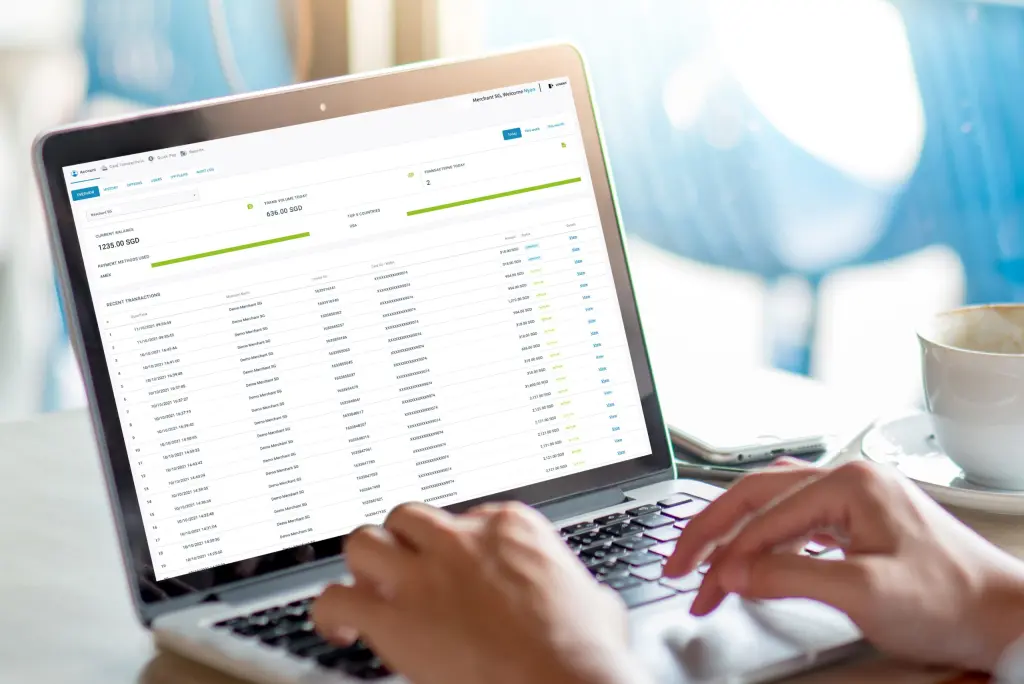
Photo credit: 2C2P
Being acquired by Ant Group has also enabled 2C2P to support an even wider pool of payment methods, helping merchants sell not only regionally but also globally.
“We work together with merchants to identify the best payment methods and processes for their needs, depending on business size, target audience, and the like,” says Chua. “We’ve been around since 2003 and have seen the regional payments landscape grow first-hand.”
Payments for the future
Southeast Asia’s payments landscape will continue to evolve along with shifting consumer preferences.
“A lot of the non-digital payment methods we see today will likely become obsolete,” Chua predicts. “We might also see more consolidation; Southeast Asia’s payments scene is quite fragmented – some players will survive and others won’t.”
She further notes that 2C2P has seen interest in paying via cryptocurrency in recent years. There have also been discussions on transitioning from physical to digital cards, which will affect how providers and merchants go about accepting and securing payments.
“At 2C2P, our mission remains the same, to simplify payments,” Chua adds. “Things are constantly evolving, and we will evolve along with it.”
2C2P is a leading payments platform provider that serves global enterprises in emerging markets.
Get a copy of the latest IDC Infobrief “How Southeast Asia Buys and Pays 2025,” commissioned by the company and produced in partnership with Antom to uncover key opportunities and insights into the region’s payments landscape.
This content was produced by Tech in Asia Studios, which connects brands with Asia’s tech community. Learn more about partnering with Tech in Asia Studios.
Stay updated on the go with our mobile app.
Get latest insights with smoother, more personalized experience through TIA mobile app.
Recommended reads
 Tracking AI hiring in Singapore: OpenAI, Anthropic, and more
 SEA financials tracker: Moladin’s revenue rises 6% in 2025
 On‑demand services lift Line Man Wongnai’s 2025 revenue to $544m
 Flipkart’s costly late push into quick commerce and food delivery
 Inside Singapore’s government team that kills its own products
 Once an IPO hopeful, SCI Ecommerce nears collapse
 Who’s betting big on ChatGPT ads? Not Asian brands
 VC tracker: Granite Asia launches US$50 million fund
 GCash trims IPO ambitions to meet market realities
 Igloo CEO eyes global M&A: ‘We have an appetite to grow more’





Editing by Winston Zhang and Mina Deocareza
(And yes, we’re serious about ethics and transparency. More information here.)





📅 Upcoming Events
22 October 2026
Payoneer x CSPN Summit 2026