Deepti Sri · · 2 min read
Singapore-based university develops device that can communicate with plants
Singapore’s Nanyang Technological University (NTU) announced that it has developed a device that can deliver electrical signals to and from plants, paving way for advancements in related technology.
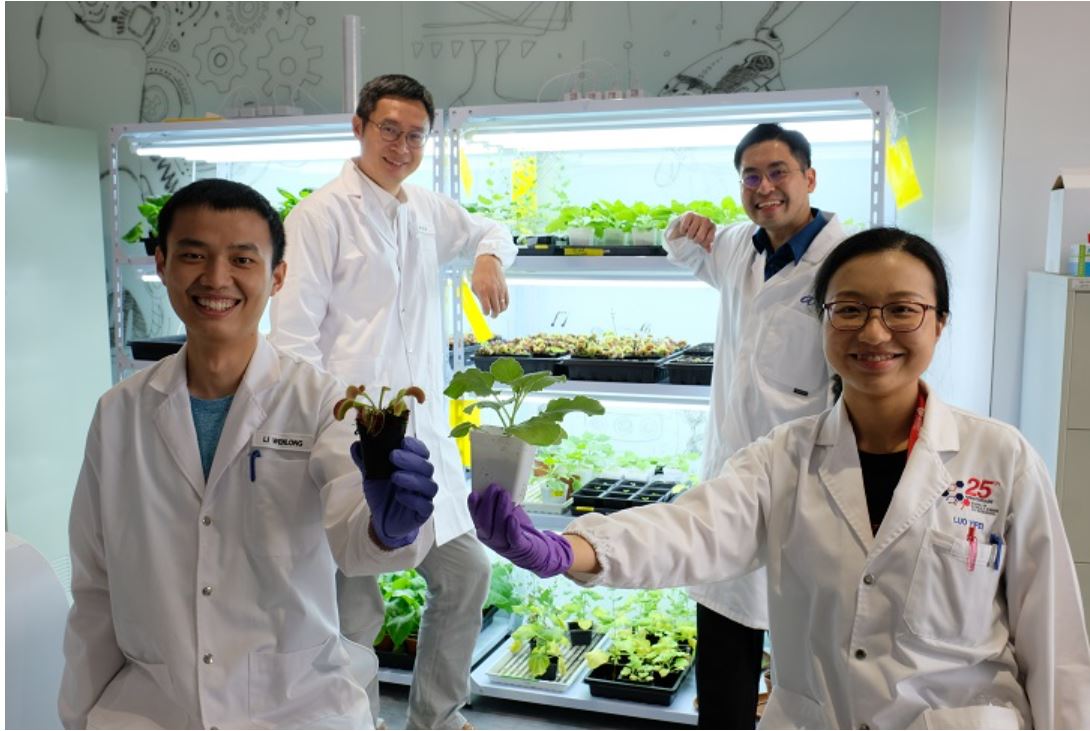
The research team at Nanyang Technological University / Photo credit: NTU
The NTU team developed their plant communication device by attaching a conformable electrode – a piece of conductive material – on the surface of a Venus flytrap plant. Through this, the researchers could pick up electrical signals to monitor how the plant responds to its environment and then transmit electrical signals to the plant to make its leaves close.
A research-intensive public university, NTU Singapore has 33,000 undergraduate and postgraduate students in engineering, business, science, humanities, arts, and social sciences.
The NTU research team believes that developing the ability to measure the electrical signals of plants could have useful applications including plant-based robots that can help to pick up fragile objects or developing food security via the early disease detection among crops.
“Climate change is threatening food security around the world. By monitoring the plants’ electrical signals, we may be able to detect possible distress signals and abnormalities,” said Chen Xiaodong, President’s Chair professor in materials science and engineering at NTU. He is also the lead author of the study.
See also: The unseen human toll of Covid-19 on tech companies
The newly developed technology may also be used in agriculture to catch diseases before full-blown symptoms such as yellowed leaves appear on the crops.
Editing by Collin Furtado and Eileen C. Ang
(And yes, we’re serious about ethics and transparency. More information here.)





Stay updated on the go with our mobile app.
Get latest insights with smoother, more personalized experience through TIA mobile app.