- Premium Content It takes our newsroom weeks - if not months - to investigate and produce stories for our premium content. You can’t find them anywhere else.
 Scott Shuey · · 5 min read
New US order against China tech could spark debt default, war: economist
Continuing efforts by the US to restrict China’s tech industry could push the world’s two largest economies into economic and military conflict, according to Hung Tran, an ex-deputy director for the International Monetary Fund and former executive managing director of the Institute of International Finance.
Tran, who is currently a senior fellow with the Atlantic Council’s GeoEconomics Center, tells Tech in Asia that the threat comes from the possibility of a US default on its debt to China.
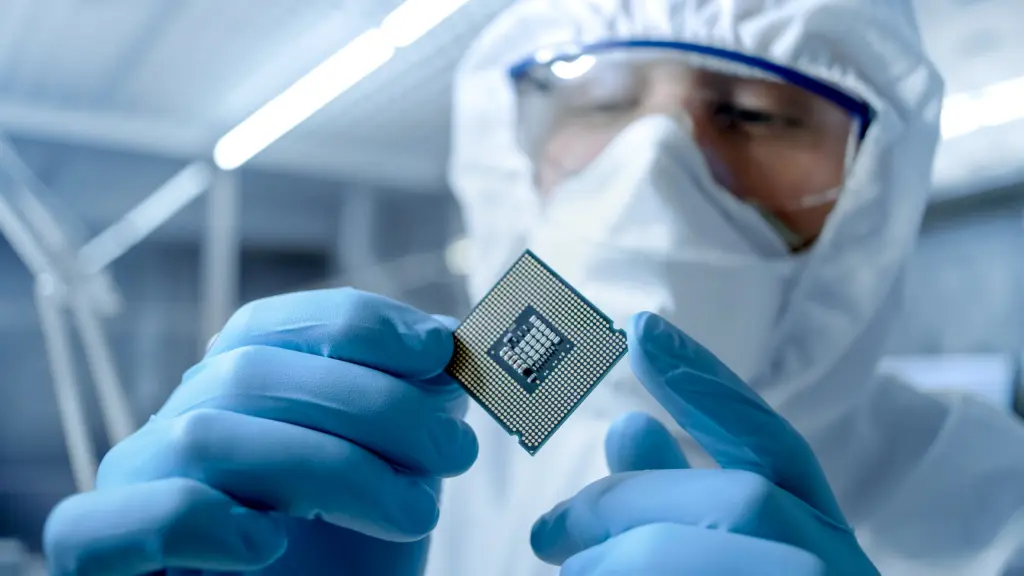
Restrictions on state-of-the-art semiconductors are ground zero in the US-China trade war. / Photo credit: Shutterstock
His comments come just as US President Joe Biden is expected to sign a new executive order. The move, which is just the latest in an escalating series of sanctions, is aimed at stopping American dollars from financing the development of advanced semiconductor technologies within China.
See also: US-China tensions may be cooling, but chips remain a hot issue
In October 2021, Biden signed an executive order that barred US companies and individuals from exporting any technology that could be used by China for surveillance purposes. The wide-ranging policy set off alarm bells concerning a possible “decoupling” of the two countries.
In an effort to downplay economic fears, the Biden administration said it was switching to a policy focused on de-risking, not decoupling. The new policy resulted in the US banning only the export of state-of-the-art semiconductors. The goal of the new policy is to prevent China from developing technology such as AI that can be used by its military.
But Tran says the escalating tit-for-tat sanctions will have economic consequences. While trade between US and China reached an all-time high of US$690 billion in 2022, the imbalance between the two countries is also rising. China, which has been seeing consistent trade imbalances with the US since 1995, logged a US$382.9 billion surplus in 2022, the second highest on record.
Ongoing efforts by the US to restrict trade and investment in China further will increase this imbalance, according to Tran.
The US has historically addressed the trade imbalance by “exporting” debt. This involves issuing official debt such as treasury bonds or private debt, which includes corporate bonds or corporate shares. The US currently has over US$32 trillion in total outstanding debt.
Before 2019, China was the largest holder of US debt with over US$1.1 trillion. It reduced its holding by US$250 billion in 2019, a year after then-US President Donald Trump initiated the trade war. It now holds US$867 billion in US debt.
Currently, Japan is the largest holder of US debt at US$1.1 trillion.
Reinvesting in the US
Over the years, however, China has reinvested the money into acquiring more US debt and tech companies.
“They have to make use of the money they accumulate,” Tran explains. “And the way they use the money is to buy US securities, treasuries or corporate bonds and shares, or invest directly into the US.”
A silver lining?
Stay ahead in Asia’s tech landscape
This is premium content. Subscribe to read the full story.
A former IIF and IMF executive warns that US efforts to constrain China’s technological growth could lead to further economic conflict.
We know this is not ideal. ⌛ Sign up in 20 seconds. Cancel anytime.
Our subscriber community includes professionals from these companies:





Stay updated on the go with our mobile app.
Get latest insights with smoother, more personalized experience through TIA mobile app.