 Nikita Peer · · 4 min read
This American gave up his scholarship at Cambridge to launch a car rental app in India
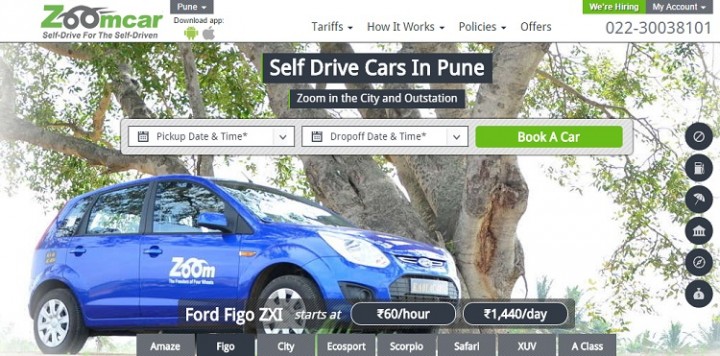
Two years ago, David Back quit his master’s degree program at Cambrige University to move to India and start a company. He wasn’t just chucking college, but also a prestigious Lord John Browne Scholarship.
His startup Zoomcar introduced the first car rental app in India. The potential he saw in this changing the way millions of people get around was lure enough to bring this American entrepreneur to India.
Back thinks that he could probably have started a successful photo sharing app or online grocery delivery service in San Francisco. But the size of the opportunity in India was vastly greater than in the US or UK. “Zoomcar is both an opportunity to build a US$1 billion company and at the same time have a big impact. It gives people an alternative to private car ownership – that means fewer cars on the road and fewer total miles driven. This allows us to play a part in helping mitigate global climate change,” he says.
The automotive sector in India has developed significantly in the last decade. Homegrown as well as foreign manufacturers have set up huge facilities in the country. “While the price of cars is coming down, driver wages are going up much faster than inflation because now drivers have an opportunity to drive for all the different companies with taxi apps like Uber, Olacabs, and so on. This trend favours renting self-driven cars significantly.”
Look ma, no chauffeurs
Back’s two-year-old startup was the first company to receive a self-drive car rental permit in India. Back then, there were grey market, unregistered, and unlicensed players in the car rental space. The demand for rental cars also far exceeded the available supply at the time, which also motivated Back to start the company.
He began with running a pilot with seven vehicles in Koramangala, Bangalore. However, Zoomcar was required to own a fleet of at least 50 vehicles to comply with Indian regulations. So, ZoomCar got into a joint venture with local operator Ganesh Tours and Travel which already had these vehicles.
“We had our first 50 vehicles in a year and then became independent of them. But had we not done the local arrangement, we would have not been able to launch at that point in India,” says Back.
At the core, Zoomcar considers itself a tech company with an offline fulfillment. It offers a hyper local service which allows users to find a vehicle in their vicinity. In Bangalore, for instance, it serves several types of locations, including leading business parks, malls, hotels and luxury residential societies.
The app has a “mobilizer” which sends a signal to unlock the car. The user then goes to the parking lot where it’s located. There’s no chauffeur or any other personnel – everything is done online. The app has a camera to scan the user’s license and other documents, required for verification by Zoomcar.
Fuel monitoring is also automated. In addition, all the cars have an engine disabler which kicks in if the user is driving rashly, although Back claims this hasn’t happened yet. Other features include in-car navigation, including real-time traffic updates, assistance in locating parking, and location-based service apps.
Expansion mode
The array of vehicle options include luxury sedans like BMW, hatchbacks like Ford Figo, SUVs like Mahindra Scorpio, and even electric cars like the Mahindra Reva E2O. Users pay on hourly or daily basis. The rental starts at INR 19 (US$0.3) per hour or 456 (US$7.3) per day for Tata Nano [a cheap compact car], while it is INR 999 (US$16) per hour or 9,999 (US$160.7) per day for BMW 3-series. These rates cover the entire trip, including fuel, insurance, roadside assistance and tax.





Stay updated on the go with our mobile app.
Get latest insights with smoother, more personalized experience through TIA mobile app.









