- Premium Content It takes our newsroom weeks - if not months - to investigate and produce stories for our premium content. You can’t find them anywhere else.
 Ardi Wirdana · · 7 min read
How BRI went from late adopter to frontrunner in Indonesia’s tech scene
The launch of Bank Raya, a unit of Indonesia’s largest lender BRI, was monumental for the country as it marked the arrival of a state-owned player in the competitive digital banking arena.
That the government has assigned BRI as the leader is a testament to the bank’s digital progress. Just three years ago, this did not seem fathomable.
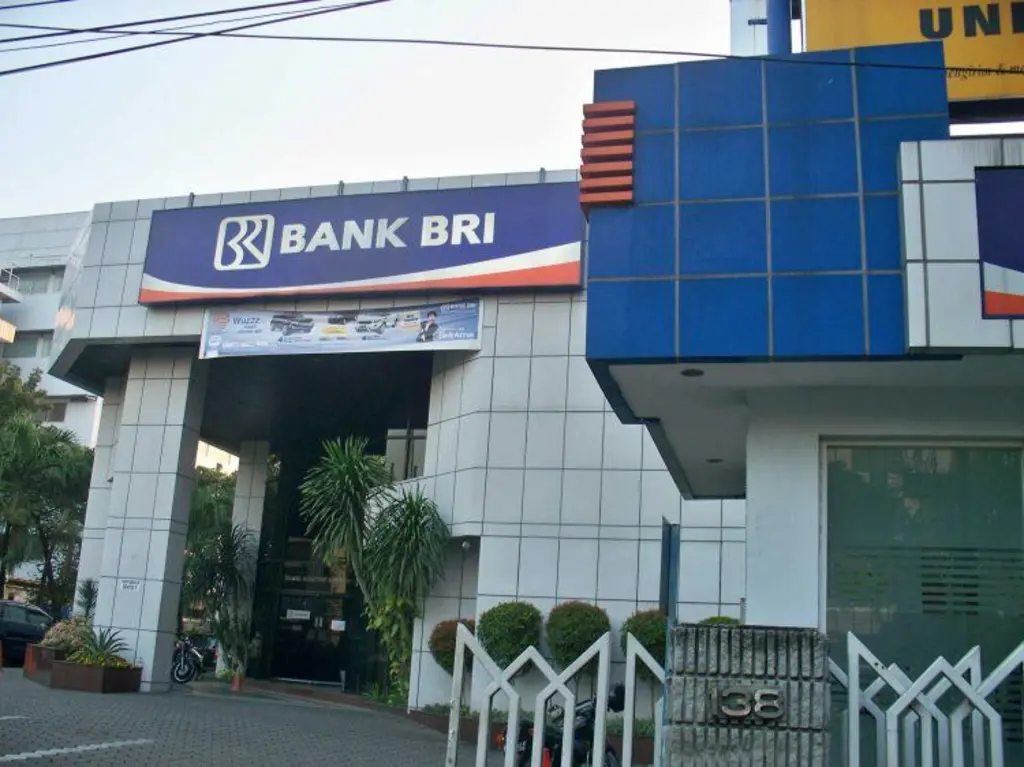
Bank BRI Kramat Raya, North Jakarta / Photo credit: Akhmad Fauzi, licensed under Creative Commons
For most of its existence, BRI has been relatively slow when it comes to innovation. This became increasingly apparent at the turn of the last decade, when Indonesia’s banks started to embrace tech.
But it was only in 2017 that BRI enacted a special digitalization strategy. By then, however, it was already playing catch up with tech-savvy rivals like CIMB Niaga and Permata Bank. And when state-owned peer Bank Mandiri forayed into venture capital in 2018, BRI was merely watching on the sidelines.
However, once BRI really got going, it did not look back.
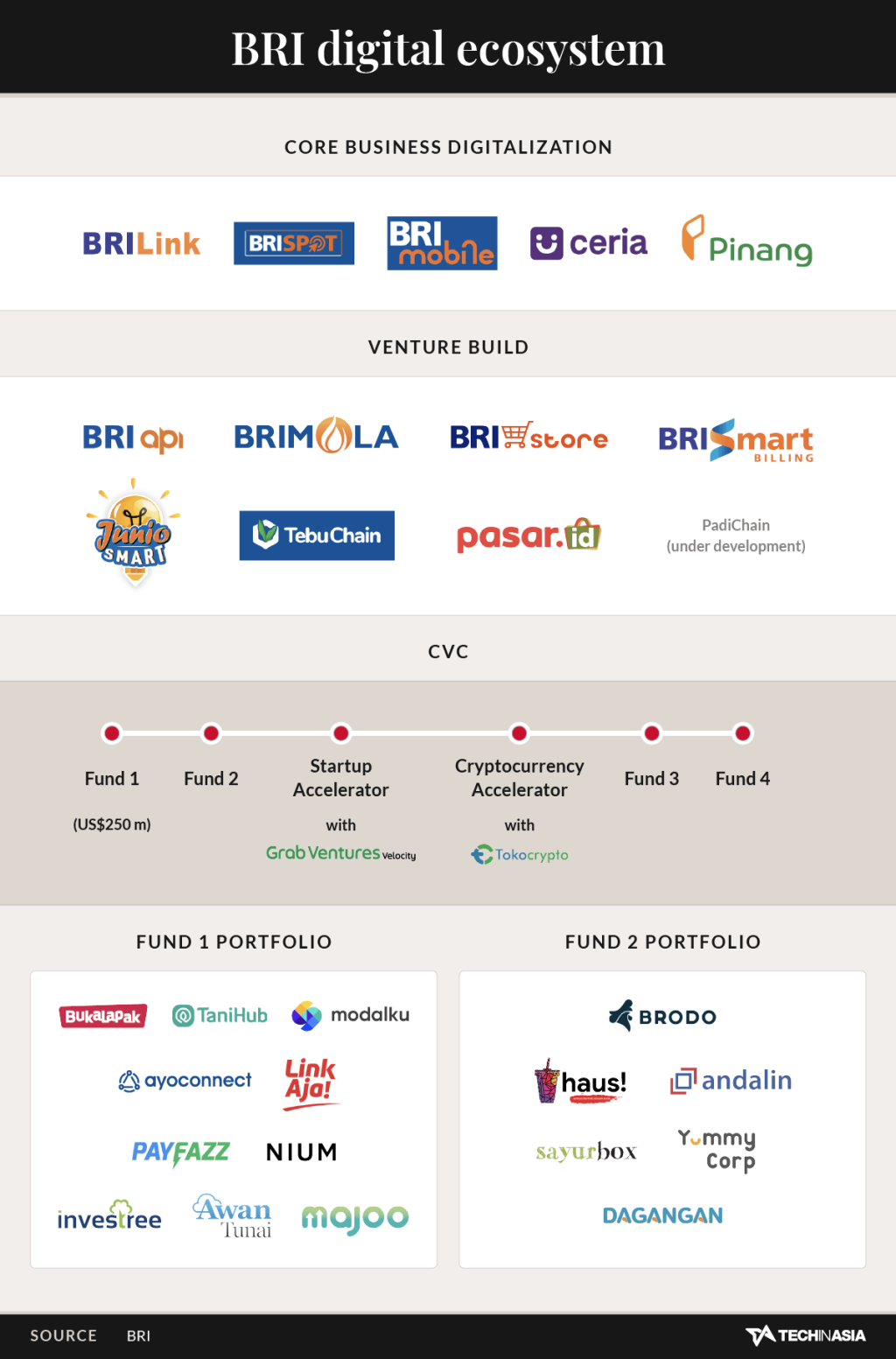
Image credit: Timmy Loen
The lender appears to have sped past its peers in terms of building a digital ecosystem. Not only has BRI digitalized its banking processes, but it now also has several venture-built businesses, three investment funds managed by its venture capital arm, a startup accelerator, and a brand-new digital bank.
The tech follower
BRI’s delayed entry into tech is largely down to its state affiliation, according to Paulus Yoga, a banking industry observer and senior editor at infobanknews.com.
State-owned enterprises in Indonesia are generally risk-averse, as any failure would instantly prompt critics to blame the government and question its credibility.
To illustrate the government’s expectations, President Joko Widodo recently threatened to shut down “ailing” state-owned companies, particularly those unable to adapt to market changes.
With the government’s reputation at stake, BRI and its state-owned cousins have never been pioneers in adopting risk-laden technologies. While they are often the leaders in financial inclusivity initiatives, state-owned banks are generally “followers” when it comes to digitalization, which often leaves them lagging behind, Yoga says.
“They adopt a wait-and-see approach. If they see that it works well, they would then follow. However, once they do jump in, they usually go all out,” adds Yoga.
Beyond banking
Venture capital as ecosystem catalyst
Risks of a multipronged approach
Stay ahead in Asia’s tech landscape
This is premium content. Subscribe to read the full story.
Despite being a late entrant, BRI has aggressively built its startup ecosystem and is now at the forefront of Indonesia’s tech industry.
We know this is not ideal. ⌛ Sign up in 20 seconds. Cancel anytime.
Our subscriber community includes professionals from these companies:





Stay updated on the go with our mobile app.
Get latest insights with smoother, more personalized experience through TIA mobile app.












📅 Upcoming Events
22 October 2026
Payoneer x CSPN Summit 2026