Kazumichi “Mario” Sakata is a user experience architect at Concent, Inc., a design strategy firm based in Tokyo. It is engaged as a leading enterprise information architecture and service design strategy firm for various national clients. Mario is also the translator of the award winning book “Lean UX” published by O’Reilly. This post originally appeared on his Medium and has been modified slightly for style.

Design should not dominate things, should not dominate people. It should help people. That’s its role.” — Dieter Rams.
At one time I worked for a company that is often referred to as exemplifying the “distinctive” web design of Japan. This is not to say that I was directly involved with the design of the website, but there were times when I participated in some related projects.
As a UX (user experience) designer, many times I found myself caught between improving the value of customer experience and contributing to business profits. As someone who extols user-centeredness, when I used to look at the web design — which does not differ greatly from the way it looks now, I didn’t think it delivered a user-centered experience at all.
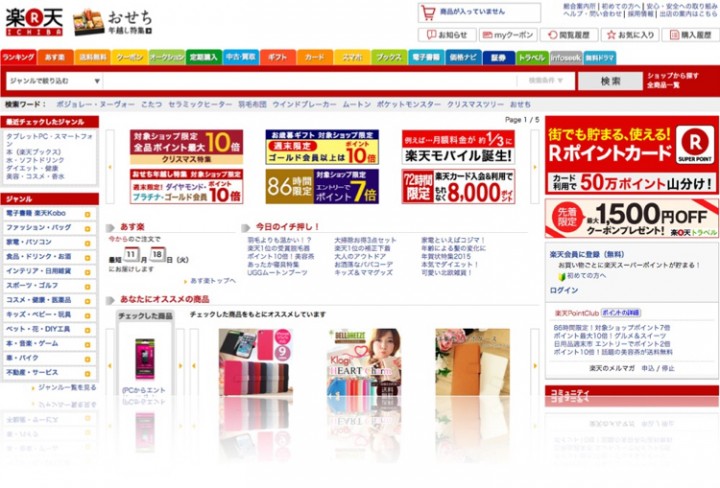
Top page of Rakuten Ichiba.
And yet, sales were always going strong. Even now, the web design is helping generate record-breaking year-on-year sales. The number of unique users for the site is up to 50 million per month (as of July 2014), which is the equivalent of one-third of Japan’s population visiting the website each month.
How is it possible with that web design?
Although I can’t talk about the details, this website which has become the representative media of Japan executes frequent A/B testing, fine-tuning the website through trial-and-error, always looking for more effective creative elements, layout, and contents.
Since the time I was there, the company has taken an extremely scientific approach, applying various measures such as analyzing results, setting up hypotheses, and systematizing solutions.
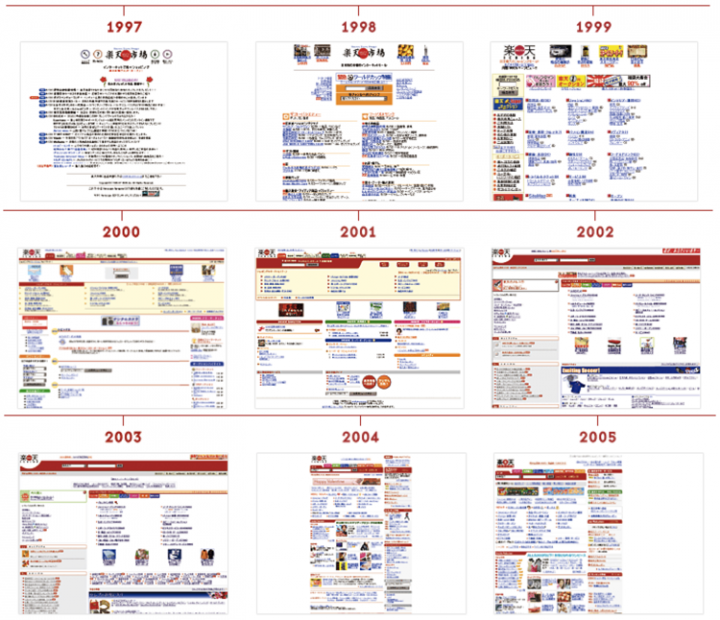
How the website design of Rakuten Ichiba has evolved in past 10 years
The website stands out for its strict alignment with the concept of “business first,” but I was impressed that it also had a user-centered type of framework that would break down KPI (key performance indicator) into a tree structure following the customer journey, translating directly into contributions to the business.
The test continued.





Stay updated on the go with our mobile app.
Get latest insights with smoother, more personalized experience through TIA mobile app.