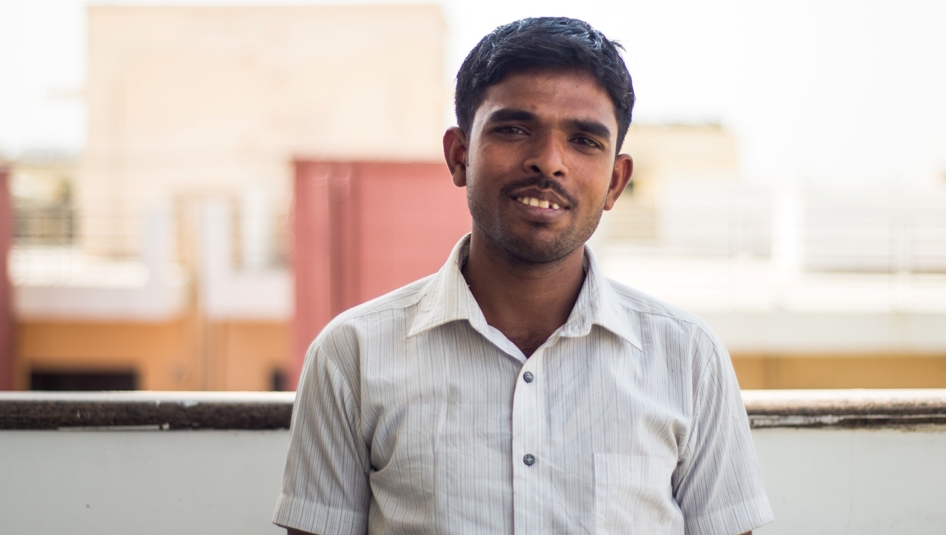
Umesh Sharma hails from Darbhanga, a district in one of India’s poorest states, Bihar, which disgorges millions of migrants into big cities every year. Back home, he’d never heard of startups.
He studied until the ninth standard. “When I dropped out, I was barely 13 or perhaps 14, who knows,” says Umesh, for whom, like most Indian village folk, age is just a ballpark figure – unimportant and relegated to the back alleys of the mind.
There are always more pressing things to attend to, like helping your carpenter father feed a big family. Umesh is one of six brothers.
He landed in Delhi eight years ago. With a contractor’s help, he started doing odd jobs, sometimes carrying backbreaking loads in the hot summer. Until last year, he was earning around US$220 every month as a helper in a Gurgaon company.
But in November, Umesh took a leap. And he found a willing partner in a startup.
Breaking out

Photo credit: Premnath Thirumalaisamy.
Today, Umesh is one of the nearly 1,000 blue collar workers offering their services under UrbanClap, a mobile marketplace for services.
The 26-year-old is now based in Gurgaon and earns over US$670 per month as a carpenter. That means he has tripled his income in six months.
Other startups also point to pretty decent earnings for blue collar workers.
Take the case of EasyFix, a startup that provides home repair and maintenance services. A technician working for it earns anything between US$445 and US$594 a month.
Other startups offer medical and accident insurance to their workers. Those are perks that people in India’s vast unorganized sector usually do not have.
Stories of Ola and Uber drivers making it big abound. While an average driver in Delhi earns less than US$210, one working for a taxi-hailing startup can make at least five times that amount.
Smartphone move
Blue collar workers
Sheer hard work





Stay updated on the go with our mobile app.
Get latest insights with smoother, more personalized experience through TIA mobile app.