Rita Liao · · 7 min read
How Hellobike is beating Mobike and Ofo in China’s smaller cities
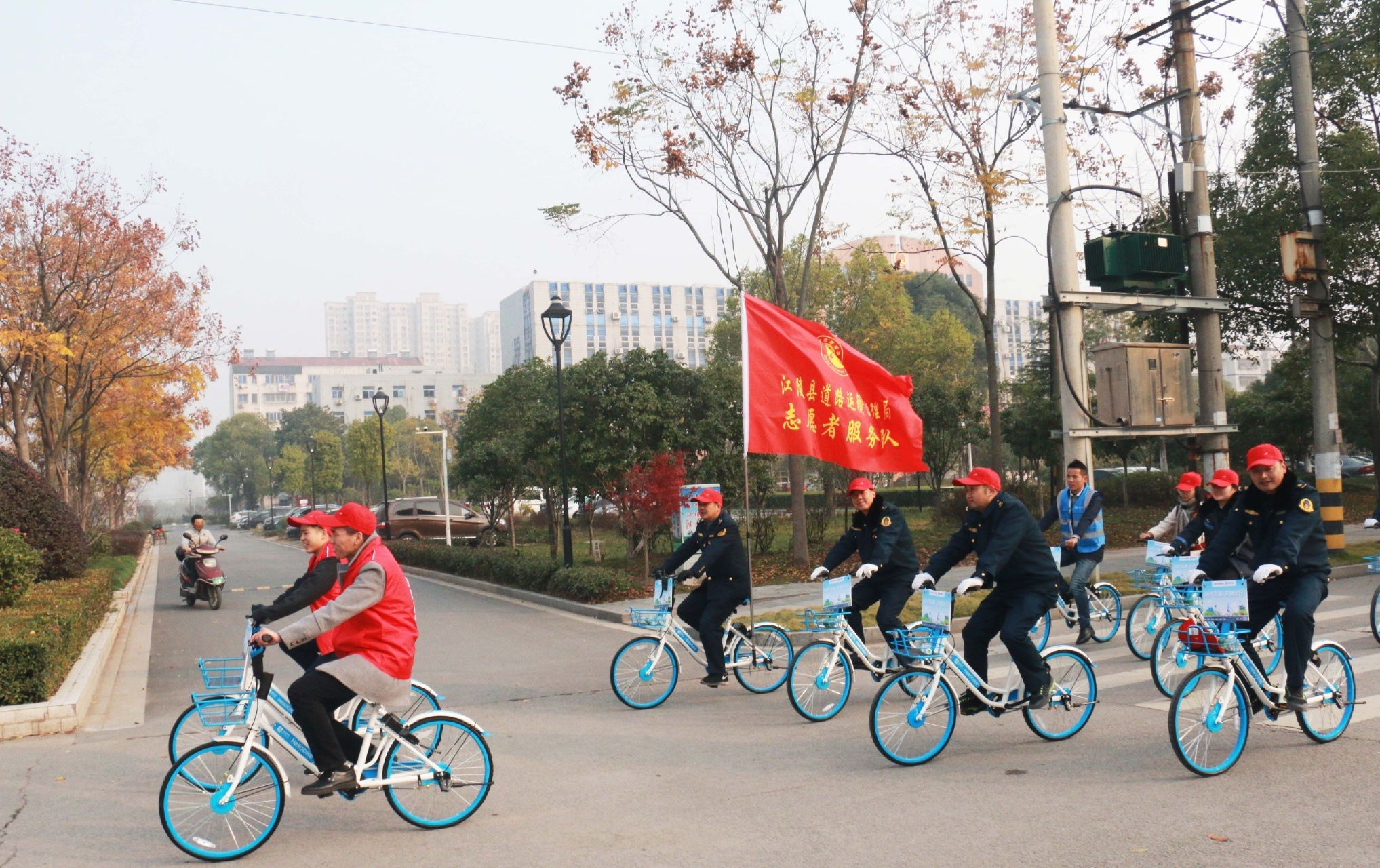
Hellobike partners with a county government in Hubei province to promote low-carbon commute. / Photo credit: Hellobike
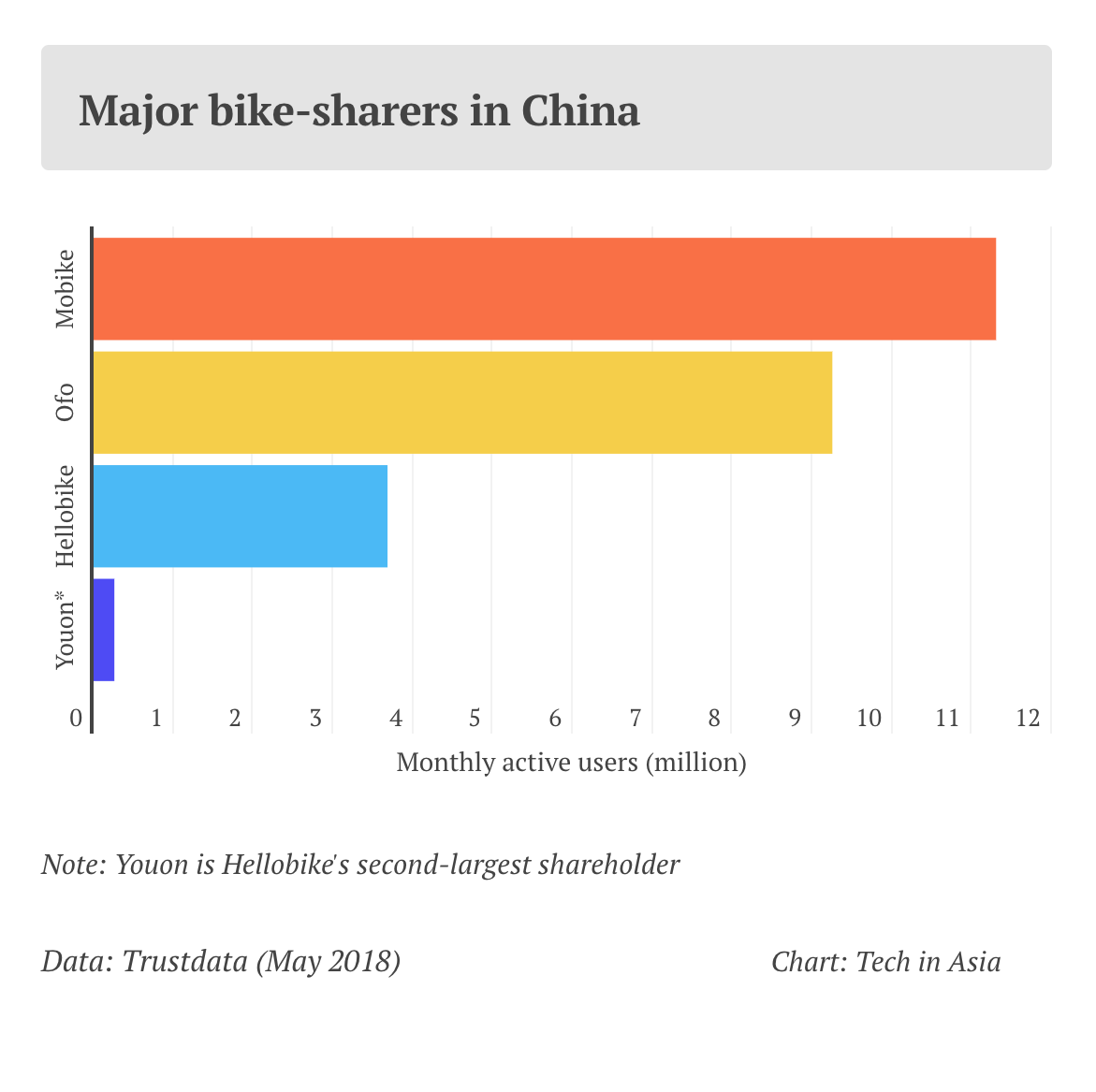
The bike-sharing war in China is not ending anytime soon. The market is expected to add another 167 million users between 2017 and 2019 to hit 376 million customers, and much of this growth will happen outside the top-tier cities of Beijing, Shanghai, Guangzhou, and Shenzhen.
While industry leaders Mobike and Ofo are making a push into smaller cities, Hellobike, the market’s third-largest player, already has a head start.
Start small
As of May, Mobike and Ofo still outnumber Hellobike by huge margins, thanks to their continued dominance in large population centers. But this isn’t the case in China’s less crowded, less prosperous areas: Hellobike has racked up about half of the users in second- and third-tier cities, according to data monitoring firm Trustdata.
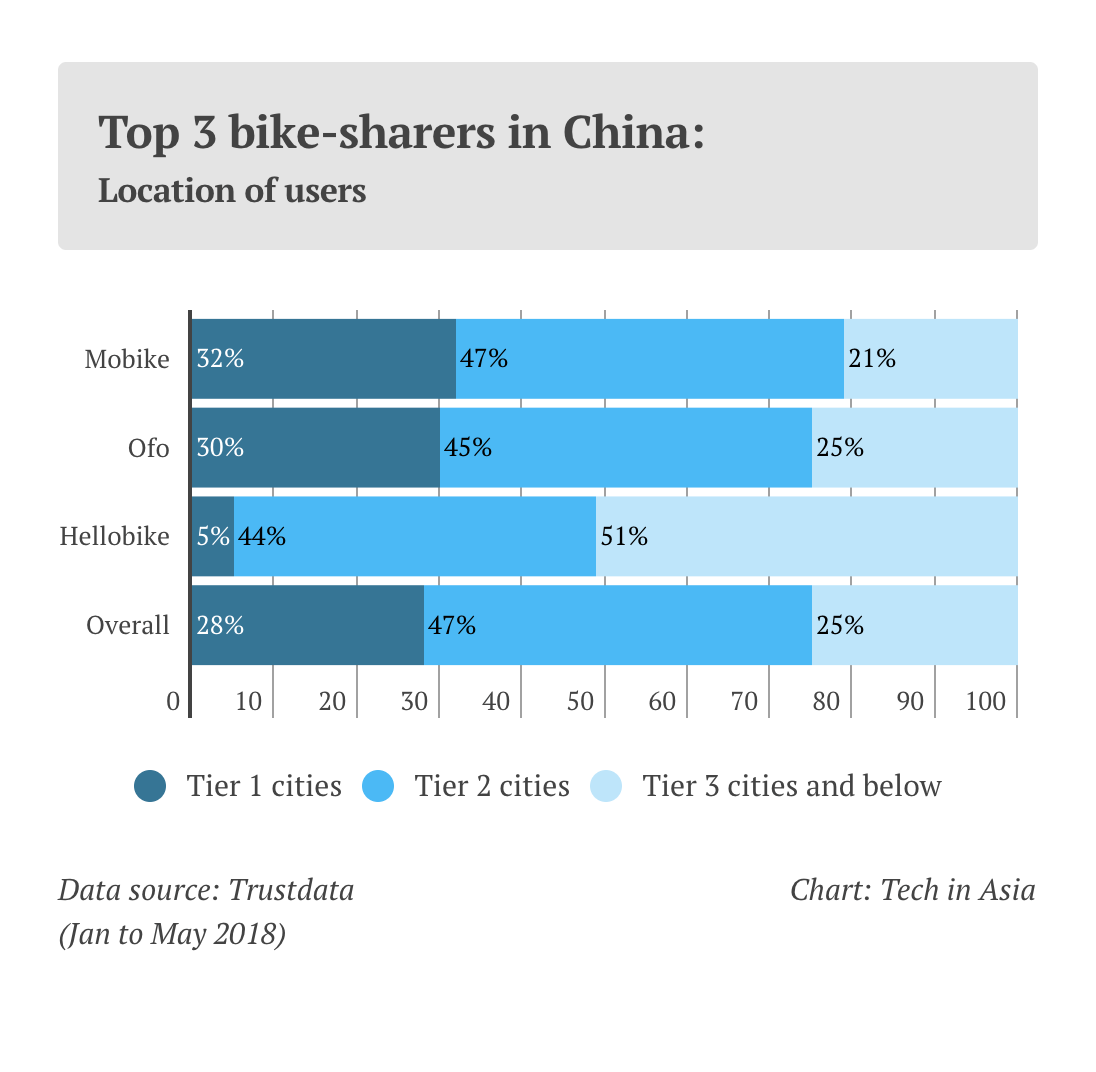
Cities in Tier 2 and below currently account for 72 percent of China’s bike-sharing population, while those in Tier 1 make up 28 percent, Trustdata shows. And the smaller cities – which are slower to adapt new habits compared to megacities – will be seeing more dockless bikes. According to a report from the China Academy of Information and Communications Technology, many bike-sharers started focusing on lower-tier cities in 2017 as Tier 1 markets reached a saturation point.
Penetration of cycle sharing apps jumped in smaller cities as a result. The rates climbed from below 2 percent in Tier 2 and 3 cities to 10 percent and 6 percent respectively through 2017, according to data provider Jiguang.
Launched in late 2016 – about two years after Mobike and Ofo – Hellobike was the first bike-sharer that zeroed in on small cities. It has deployed bikes in Tier 1 regions as well, but they aren’t its priority.
Many bike-sharers started focusing on lower-tier cities in 2017 as Tier 1 markets reached a saturation point.
Though Hellobike’s rivals “have a first-mover market advantage, China is an enormous country,” says GGV Capital partner Jixun Foo in a statement. The venture fund is one of Hellobike’s early investors. “Its competitors did go after some of the second-tier cities, but there were many cities that they didn’t cover.”
“At least 100 small cities have yet to see dockless bikes enter,” Hellobike’s chief operating officer (COO) Han Mei told Tech in Asia recently at TechCrunch Hangzhou. “These are the markets that we want to crack next.”
A strong ally
Going deposit-free





Stay updated on the go with our mobile app.
Get latest insights with smoother, more personalized experience through TIA mobile app.