
Aviva Markowicz, who lives in Paris, has only been to India a few times, but it’s quickly becoming a big part of the work she does.
“I knew so little about Bangalore. I knew they called it the Silicon Valley of India, but that was really it,” she recalls of her first visit early last year.
“I thought the culture shock would be much stronger, but it was not all all.” She quickly got the feeling that, among fellow techies, she and everyone she met there was “like family,” all filled with the same startup spirit. “I don’t feel like I’m far from home at all,” she adds.
It took in its first batch of startups in September.
That was when Aviva helped expand the Paris-based Numa startup accelerator to a new location in Bangalore. Following up on some leads she got whilst back at home, she soon got the French company set up in a joint venture in India’s tech hub. It now boasts a sizeable venue that mixes a co-working space, a coffee shop, and the accelerator itself.
When she first saw the space that would become Numa Bangalore, she knew it was the right choice. “It was really incredible because when we entered this building, it looked a lot like Numa Paris. Five floors. A building where you have a lot of space for events and your community,” she enthuses.
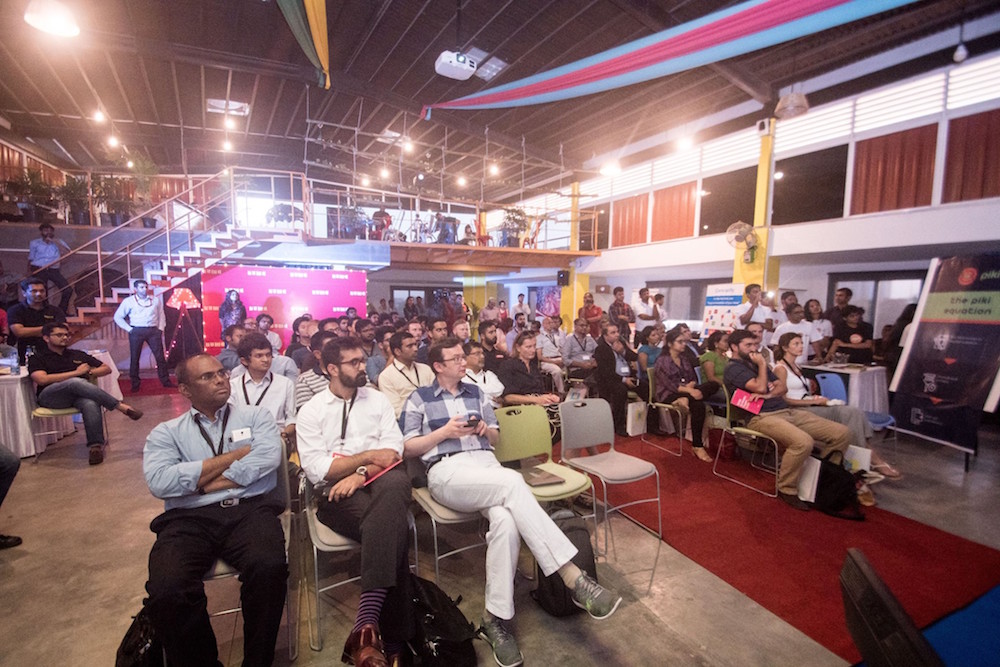
An audience settles in to watch the first ever demo day at Numa Bangalore. Photo credit: Numa Bangalore’s Facebook.
The Numa Bangalore branch, headed by Naresh Narasimhan, took in its first batch of startups in September. They’ve just finished the six-month program, with some of them already attracting seed funding from outside investors.
Aviva heads Numa’s international business, which also covers Moscow and Casablanca.
See: Get the full lowdown on #tiablr2016 here
Build it up
“We used to be a non-profit organization,” she explains of Numa’s origins. “But then we decided to raise funds to go faster in our growth. And this is where we started to have the resources to really do international and to invest in these fast-emerging ecosystems.” The French firm decided to avoid the places where there’s already plenty of cash flying around, like Silicon Valley or China – or Tel Aviv or London, adds Aviva.
“Where we truly have added value is by going into these emerging ecosystems,” she says.
It’s now or never to tackle Southeast Asia.
“That’s what we were doing the past 15 years in France. The tech scene was bad,” she laughs gently. “There was nothing – it was really empty. And we got together with entrepreneurs, and we built step by step the French ecosystem. This is what we know how to build.”
And while she acknowledges India is already at a pretty advanced stage, with startup “unicorns” like Flipkart and Ola proving a worthy match to their respective arch-rivals Amazon and Uber, the time still felt right for Numa to go in and “foster” the startup community.
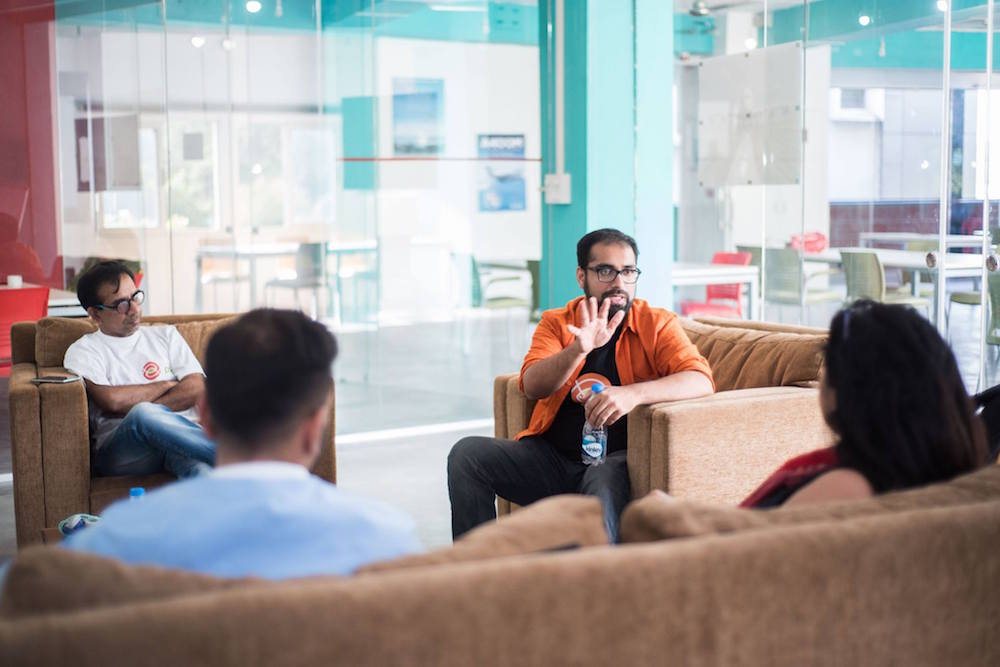
Waiting for demo day to start. Photo credit: Numa Bangalore’s Facebook.
Of course, the team needs to make money too. The accelerator takes 4.5 percent equity in every startup it nurtures in Bangalore – it’s 5 percent at its other locations – alongside the money made from the co-working space and the coffee shop. The Bangalore venue also rakes it in from bootcamps for major corporations looking to hone their hustle or meet startups involved in a particular sector.
The next stop for Aviva and Numa is a territory that’s even larger but a lot more fragmented – Southeast Asia. It’s “now or never” to tackle that region, Aviva feels. She’ll start with Indonesia and Malaysia. As she does everywhere outside of Paris, there’ll be a partnership with a local individual and entity. Finding the right matches will keep her busy for the rest of the year.
Numa’s second batch in Bangalore is now open for applications, with the program kicking off in July.
Aviva Markowicz will be speaking at Tech in Asia Bangalore 2016 on July 6-7. Get your tickets here. Check out our special prices for local citizens.
Stay updated on the go with our mobile app.
Get latest insights with smoother, more personalized experience through TIA mobile app.
Recommended reads
 🇮🇳 Roundup: GlobalBees buys fitness brand Reach, more
 How Asia’s family offices could be a $1.9t play for tech startups
 UK-based foodtech accelerator CamLab launches remote program in Asia
 India-based VC debuts seed fund with $100m corpus
 Lionel Messi backs Spin co-founder’s ⚽ venture
 Y Combinator backs India-based live commerce firm’s $1.7m seed round
 India-based agritech firm receives $3m from Inflection Point, others
 Exclusive: Dash Living buys HK hotel via Mindworks JV
 Founders Factory, Pico Group launch venture builder in Asia
 Balance of power tilts in favor of self-sustaining startups





Editing by Harsimran Julka
(And yes, we’re serious about ethics and transparency. More information here.)