Xairylle · · 4 min read
Manila Game Jam 2014: pushing the Philippines towards being globally competitive
“This is not a competition.”, said Francis Seriña, head of the International Game Developers Association’s (IDGA) Manila Chapter, during the orientation for the Manila Game Jam 2014 (MGJ2014). The idea was reiterated on the last day, when CEO of Anino Games Neil Dagondon said,
Let’s advertise each other’s games. We are not competing with each other. The Philippines is competing with the world.
At the moment, the Philippine game development industry is nothing like in Korea or Japan, and to be honest, it will take several more years, or even decades, before we get there.
So how is the Manila Game Jam 2014 contributing to making the country’s industry globally competitive?
Focusing on the core concepts of the game

MGJ 2014 helped participants refocus on the issue at hand: actually making a game. According to Seriña, one reason the game jam was just for 48 hours was so that game developers could focus on working on the game itself, without having to worry about monetization. The Philippine game development industry doesn’t impress when it comes to numbers, but that’s not what it will be looking at.
Alvin Juban, current president of the Game Developers Association of the Philippines (GDAP) thinks that “if the Philippines can’t win by numbers, we look to win in value.” The Philippines needs to go for “quality over quantity”, and developers should make a point to produce quality games that people actually pay for, instead of games that force people to pay.
A burst of creative ideas
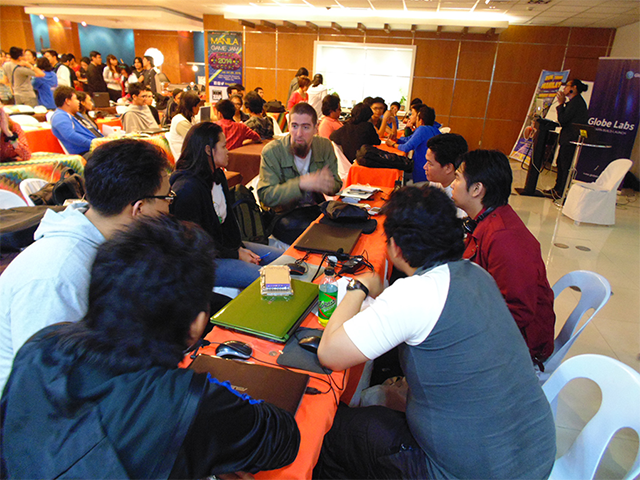
Several participants we spoke to shared a similar lesson they took away from the game jam: you will never learn if you rely on your own. Looking at other people’s ideas and sharing insights with them is a good way to get your creative juices flowing. As mentioned earlier, since the Philippines is not that impressive when it comes to the number of developers, getting quality ideas from each individual is important.
During MGJ2014, the participants were randomly put in groups and instructed to share ideas they had based on this year’s theme, “we don’t see them as they are, we see them as we are”. Some of the developers changed their initial plan after hearing other people’s suggestions, and those whom I’ve talked to agreed that it resulted to a much better game than they had originally intended.
Honing future game developers of the Philippines
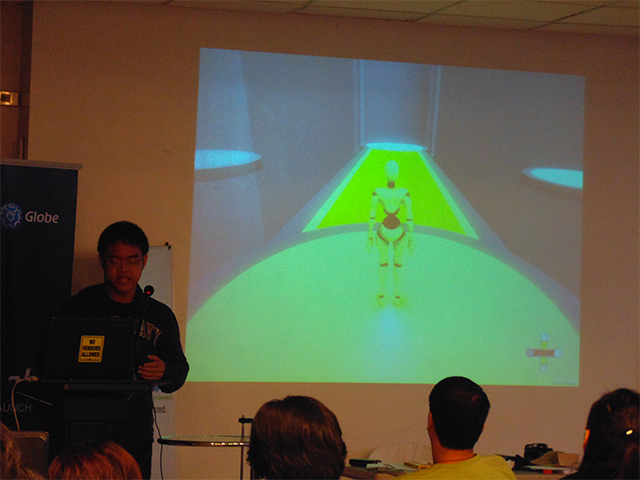
MGJ 2014 also brought in new blood. Its youngest participants this year are still in high school. Team Xeratol’s Disciples was composed of sixteen year olds Willard Torres, Jerome Indefenzo, and Jessey Cortez from Philippine Science High School. IGDA Manila head Seriña, who is also the boys’ mentor, said they had come from their school’s game development elective, and decided it would be fun to attend MGJ2014.
The boys were able to create the game Primary Run, a third-person puzzle game where you solve puzzles to get three characters Roy, Gee and Biv from starting point to end point. Primary Run was not a perfect game per se, but it was definitely a good start for a group of high school students who made it in 48 hours. On top of making a game, the team also got valuable feedback and advice from other developers and designers.
Any industry that wants to grow needs new ideas to move forward. While tried-and-tested game mechanics and concepts are always relatively successful, there will come a point where they will no longer work. After all, who would want to waste money sponsoring old ideas?
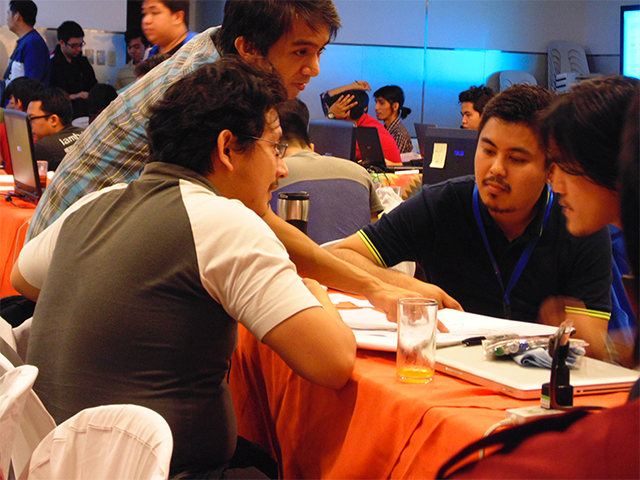
This is just the fifth Manila Game Jam and the Philippines already had four venues and produced a total of 88 games. For an industry that’s looking to grow to have 15,000 game creation professionals in 2016, it is important to find a way to get new talents while keeping the current professionals from being burnt out.
Hopefully next year, there will be more students, more venues, and more participating schools. As mentioned earlier, it is not a competition, but more of a collaboration to hone existing skills and discover new ones for continuous improvement until the industry reaches the level necessary to compete with the rest of the world.
Looking at this year’s Manila Game Jam, I would say they are well on their way.
For more photos of the Manila Game Jam, head over to the Games In Asia Facebook page.
Global Game Jam Singapore:
How the Global Game Jam made its way to SingaporeMore on game development:
Why should you consider a career in game development?Stay updated on the go with our mobile app.
Get latest insights with smoother, more personalized experience through TIA mobile app.
Recommended reads
 Life’s a game, and AI agents are Animoca’s new play
 Indonesian AI startup goes global
 Forrest Li on scaling Sea, building smarter bots, and founder grit
 An AI assistant that joins sales calls and scores team skills
 Beyond the check: Why VCs need more than capital
 SGX’s CEO says it doesn’t need a unicorn to win
 SMEs want AI too, but not the kind Big Tech is selling
 Oatside’s alt-milk rise hits a profitable gear
 Alibaba’s financial health in 12 charts
 Asia’s telcos bundle AI into mobile plans. Will it pay off?