Deepti Sri · · 3 min read
India video apps have 4x more influencers than TikTok did pre-ban, report says
Shortly after India’s infamous TikTok ban took effect in June 2020, domestic short-form video platforms rushed to occupy the vacuum left by the popular app.

Photo credit: 123rf
As a result, the total number of content creators on Indian short-form video apps such as ShareChat’s Moj, Dailyhunt’s Josh, Times Internet’s MX TakaTak, and Roposo (owned by InMobi-backed Glance) have increased. In total, the short-form video apps in India now have 4x more content creators than TikTok did in India before the ban, according to a report by RedSeer.
These content creators or “influencers” focus on local content, cater to different user behaviors based on geographies, and cover an array of genres. Currently, there are about 42 million short-form content creators in India.

Photo credit: RedSeer
These influencers, who are often between 18 to 27 years old, have the potential to earn over 500,000 rupees (over US$6,800) a month, along with a guaranteed minimum pay from the short-video applications they are present on.
The short-form video ecosystem in India, largely considered the “most democratic” medium for media consumption in the country, clocked in over 200 million monthly active users in March 2021.
The format has gained more traction than over-the-top media platforms, with consumers spending over 30 hours a month on short-form videos, which are available for free. This amount of screen time is massive, though it has declined by 22 minutes since the ban of TikTok in the country.
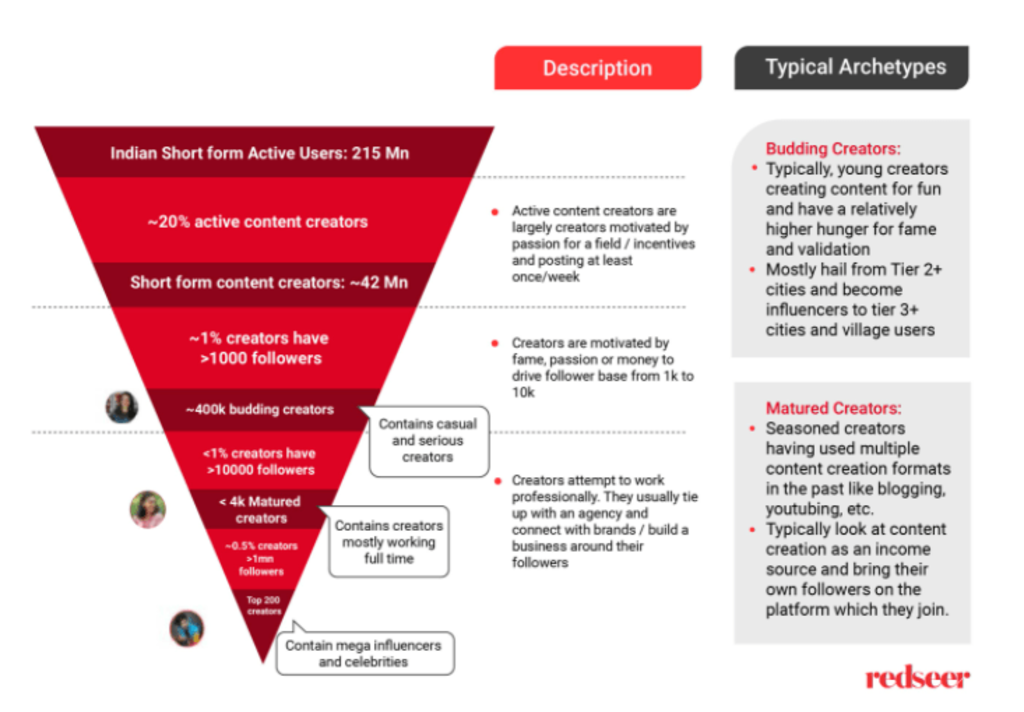
Photo credit: RedSeer
“Short-form video has differentiated itself from other global social media and content through a strong ‘Bharat’ positioning,” an earlier RedSeer report noted. Bharat is another name for India and often denotes a preference for localized offerings.
While 55% of the users cite the availability of regional content as the key reason for using short-video apps, 45% of users want more professionally generated content for live ecommerce and online education, among others.
The rise in content creators may also be due to the “large headroom” to increase their earnings through short-video platforms, along with higher job satisfaction ratings, according to the report.





Stay updated on the go with our mobile app.
Get latest insights with smoother, more personalized experience through TIA mobile app.