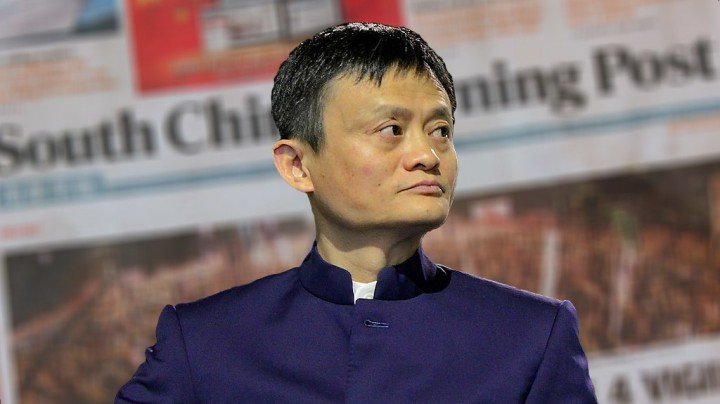
Alibaba’s purchase of the South China Morning Post for a reported US$266 million has gotten a lot of attention. It’s not Alibaba’s first expansion into media, of course, but it is in many ways the company’s first expansion into politics. In my Disconnect column on Monday, I talked about why this acquisition is a horrible idea from a PR perspective. But there’s another reason things probably won’t go Alibaba’s way when it comes to this deal.
In its official announcement about the acquisition and a subsequent interview Joe Tsai gave to the New York Times, Alibaba representatives strongly suggested that the company’s purpose in buying the paper was to bring its China coverage to a wider audience while simultaneously pushing a message that makes China look good. Alibaba apparently sees this as potentially being able to offset the “singular thesis” (as Joe Tsai put it) about China that appears in the Western press. In other words: the Western press is negatively biased on China, and Alibaba intends to paint a brighter picture to improve China’s image (and thus its own) in the West.
Unfortunately, that isn’t going to work, because good news doesn’t sell in the West.
If it bleeds, it leads
There’s no denying that the Western press is pretty negative when it comes to China. Many Chinese compare this to the coverage they see in Chinese newspapers and conclude that the Western media is biased against China. But this bias is massively overstated. The Western media is negative about China because the Western media is negative about everything. Bad news sells, good news doesn’t. “If it bleeds, it leads,” as the saying goes.
Bad news sells, good news doesn’t.
To demonstrate this, I took a look at some stories on popular Western news sites and compared their China coverage with their coverage of the United States. For each site, I subjectively classified each story as “good”, “neutral”, or “negative” depending on the content. For example, a story about a corrupt Chinese official’s wife being sentenced is clearly negative. A story about scientists discovering a new dinosaur is neutral. Any story suggesting things were going to get better was classified as positive.
Admittedly, this is a highly unscientific study since my categorizations are subjective, and direct comparisons weren’t always easy to make on sites that didn’t have clear “USA” and “China” sections. But with those caveats, here’s what I found when I looked at the most recent China- and US-related news on seven different major media sites.

Now, obviously this has to be taken with a grain of salt given the small sample size and my somewhat subjective categorizations. I would be fascinated to see the results of a real, long-term scientific study on this. But looking at the results of my own observations, there doesn’t seem to be any serious bias against China. Instead, there seems to just be a bias towards negativity in general.
You don’t have to take my word for this, by the way. Check out the front page of any major Western media outlet and you’re likely to see a lot of death, destruction, carnage, fear, and repression regardless of what country is being covered. Maybe that’s a shame, but it’s what gets clicks, and with the traditional newspaper business mostly dead, no media outlet can afford to ignore the preferences of its audience.
This is not the case in China. If you take a look at the China Daily or even a more independent outlet like Caixin, you’ll find way more good and neutral news items than are generally featured on Western news sites. I’m not sure whether the difference betrays a broader cultural difference between Chinese and Western readers or simply reflects China’s more tightly-controlled media environment, but either way it’s a stark contrast. If you’re reading the front page of the China Daily or Caixin every day, it’s not hard to see why the Western media’s reporting on China would look biased. Where’s all the coverage of the good news?
The answer, of course, is that it’s nowhere. But that isn’t because Western journalists hate China, it’s because they know that generally speaking their audience has no interest in good news, especially good news about China that doesn’t affect them directly.
Bad news for good news





Stay updated on the go with our mobile app.
Get latest insights with smoother, more personalized experience through TIA mobile app.











📅 Upcoming Events
22 October 2026
Payoneer x CSPN Summit 2026