 Josh Horwitz · · 6 min read
The founder of China’s Ninebot says he bought Segway for the patents
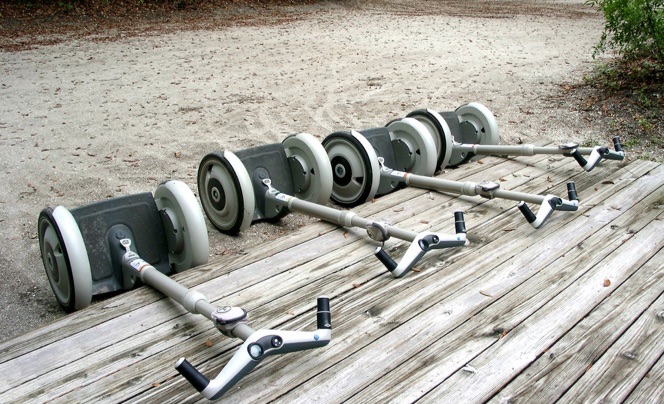
On Wednesday, a relic of the previous decade scooted right into the cradle of this decade’s tech zeitgeist. Chinese smartphone maker Xiaomi announced it was participating in a US$80 million dollar round for a robotics company called Ninebot. That company, while little-known in the West, would concurrently announce an acquisition of a very well-known competitor – Segway, makers of the ceaselessly ridiculed self-balancing scooter.
While Segway is a perpetual punchline for many Americans, for Ninebot it’s no laughing matter. After yesterday’s announcement, Chinese tech blog 36kr scored an interview with Ninebot co-founder Wang Ye. During the fascinating discussion, Wang candidly admits that he bought Segway for the patents, though Segway’s visible brand also made it a wise purchase. Wang also touches on the market potential for self-balancing scooters, and argues that Ninebot and Xiaomi are after the same target users.
You get the feeling that Wang and Ninebot are really on to something. Xiaomi, with its ecommerce muscle and aggressive smart home strategy, might be the perfect company to help the Segway segue out of pop-culture hell and into the hands of consumers.
Below we’ve translated the interview in full (big hat-tip to 36kr).
36kr: What benefits will this acquisition bring?
Wang Ye: The primary benefit of buying Segway is the patents. Lei Jun has given us a platform, [so] one big reason [for the acquisition] was that this element was important. Ninebot is still young, as is Xiaomi, so we can’t successfully apply for many patents. Segway has the core patents for the self-balancing vehicle industry, so this acquisition will help us with our patents a lot.
There’s also branding. In the US, the Segway is already a brand. When people in the US or Europe see a self-balancing scooter, they’ll immediately call it a Segway.
As for the technology, I’ll say with confidence that we’re already stronger than Segway on many fronts. Of course there are some areas where we still need help. For example, Segway has some suppliers that work with the military. After the acquisition, we can leverage this together.
There are already a lot of companies working on short distance travel, doing self-balancing scooters, electric cars, smart bikes, etc. What will the competitive landscape be like in the future?
These three vehicle types don’t substitute one another. They support one another, it’s not about which one will replace which.
As for self-balancing scooters, the advantages are: they’re more portable, you can bring them indoors, you don’t have to worry about parking, and they won’t get stolen. Before, a lot of electric vehicles’ batteries would get stolen. Now it’s getting better.
One thing that’s unique about self-balancing scooters is that they can move from room to room. Electric cars can’t go everywhere. Sometimes you’ll get out of the car and have to walk for a while. Self-balancing scooters can basically go from the sidewalk to anywhere. You can even take them up the stairs – if they’re light enough you can carry them and climb up. In the future they will be even lighter, so you can carry them when they run out of battery power.
How will you solve the problem of roadside mobility?





Stay updated on the go with our mobile app.
Get latest insights with smoother, more personalized experience through TIA mobile app.








📅 Upcoming Events
22 October 2026
Payoneer x CSPN Summit 2026