
Image credit: Pixabay
The beauty industry has long been dominated by large enterprises, but startups are slowly popping up to change the landscape. The innovations involve logistics tech, Internet of Things, augmented reality, and many others.
Since 2017, investments in beauty startups have risen, notably from major corporations like L’Oreal and L’Occitane. Venture capital firm Sequoia Capital also made its first investment in cosmetics – UK brand Charlotte Tilbury. According to Tech in Asia data, funding for beauty startups worldwide surged to US$242 million in 2016 from US$4.45 million in 2013.
For the second year running, L’Oreal will demonstrate its commitment to research and innovation with its startup challenge, L’Oreal Innovation Runway. This year’s competition will focus on three specific categories: personalized beauty experiences, sustainable innovations, and performance materials and products.
Here’s how tech in these areas can help reshape the future of the beauty industry.
Personalized beauty experiences
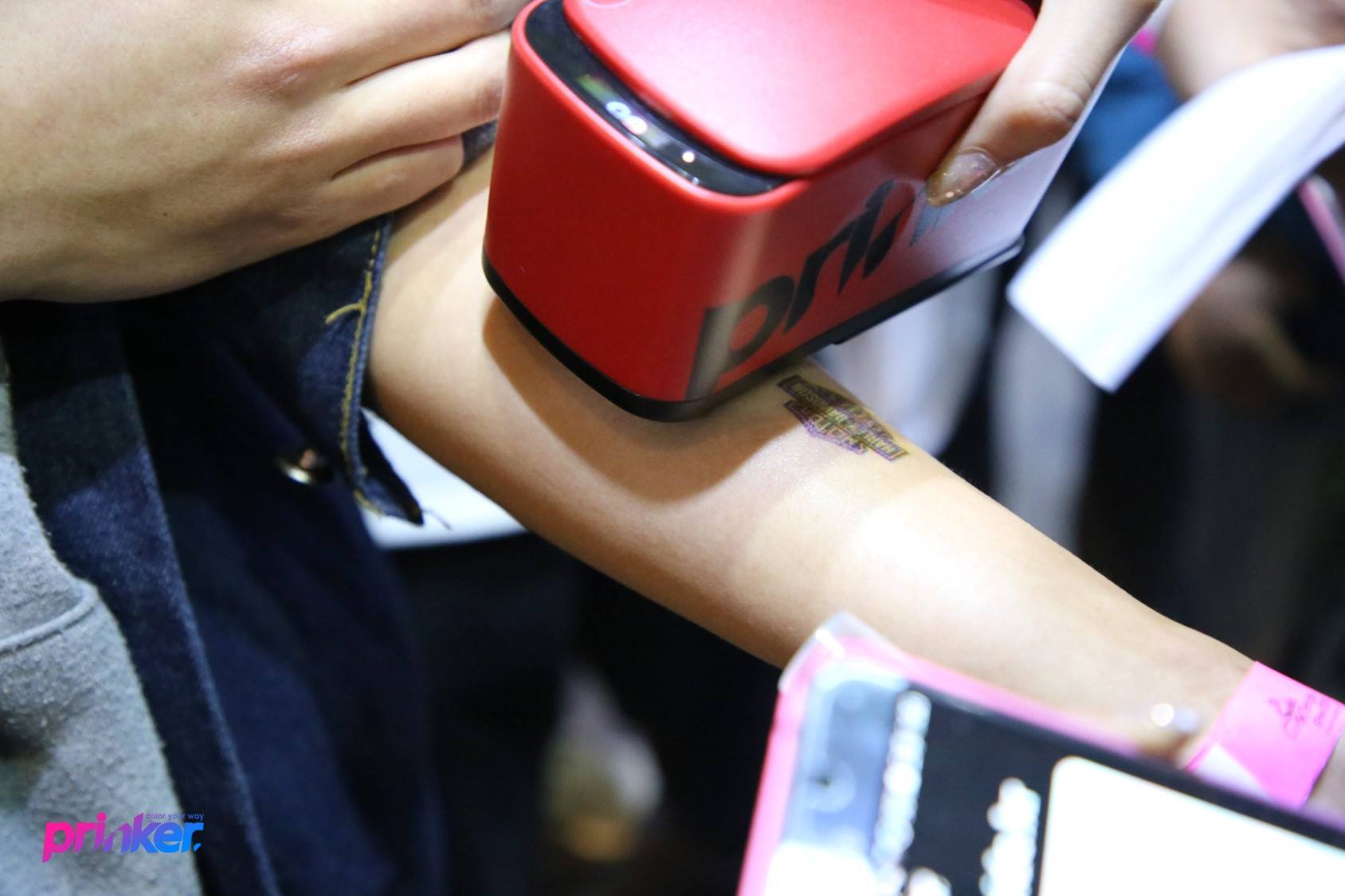
Image credit: Prinker
South Korea-based startup Sketchon is trying to reinvent the temporary-tattoo market. Founded in a country where real tattoos are illegal, the startup allows customers to customize and upload their own tattoo designs onto the Prinker app, and have the designs “printed” on them with a handheld device.
“People want something which they can identify with,” says Magdalena Przygonska, who runs global marketing at Sketchon. “We think this kind of customizability is really important for the beauty industry to match the diversity of customers.”
Sketchon also took part in L’Oréal Innovation Runway 2017, where it got extensive research and development support from L’Oréal as well as mentorship from its team. The startup is also working with the brand to expand into China’s cosmetics market, which boasted a retail trade revenue of US$3.2 billion in March 2017.
Pushing the boundaries of customization is Toronto-based Modiface, which uses facial recognition and augmented reality to apply makeup and other products. This allows consumers to visualize how a product would realistically look on them when applied, allowing them to make smarter purchasing decisions.
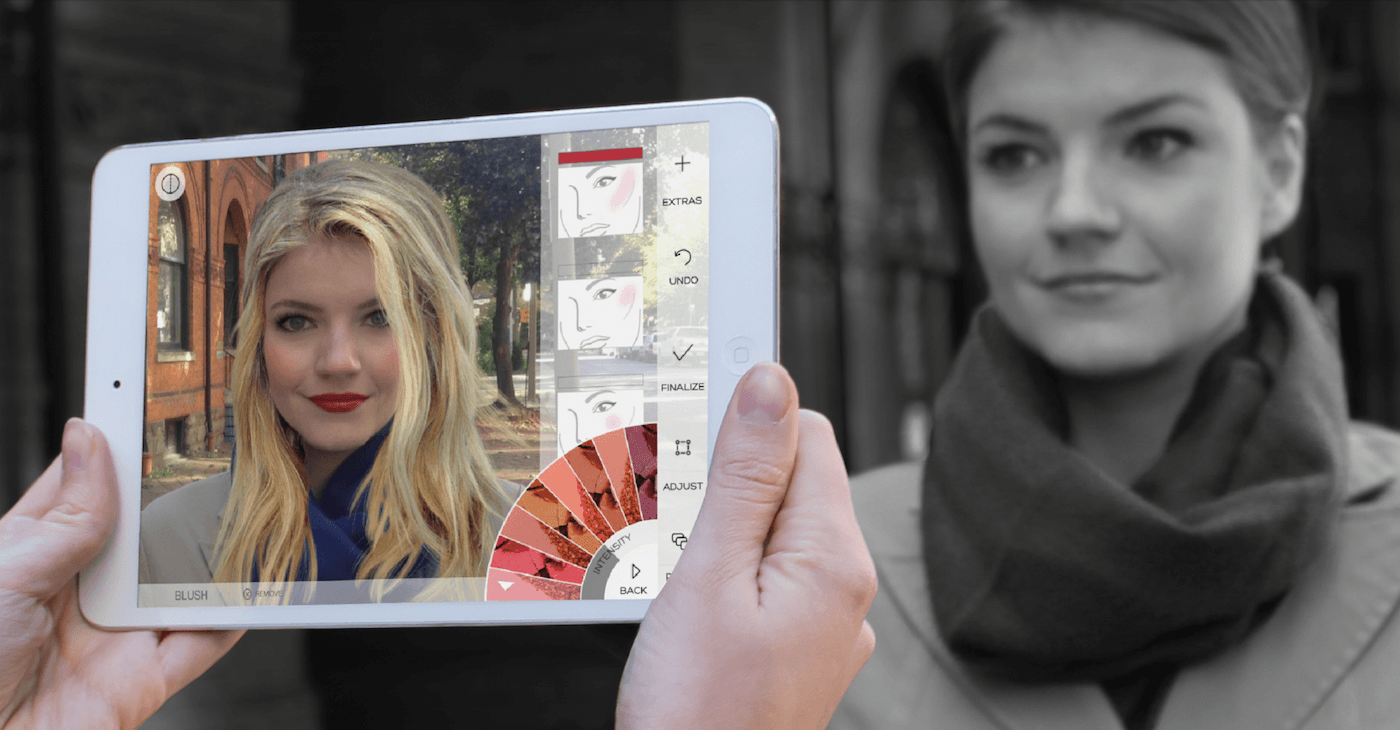
Image credit: Modiface
L’Oreal acquired Modiface in March 2018, and further R&D resulted in more features, including a one-on-one live tutorial by a makeup advisor.
Sustainable innovations
Perhaps you will be surprised to learn that up to “90 percent of [hair] conditioner” is made up of water. Given the abundance of water in the average toilet, having such a large percentage of it in beauty products seems like a waste.
Founded in 2012, Ethique flips the script by offering solid bar soaps, shampoos, and conditioners that can last two to five times longer than their liquid counterparts. The New Zealand-based company’s eco-friendly ethos extends to its packaging: Each box is free of plastic coatings and printed with vegetable inks, making them completely compostable.
L’Oreal is also doing its part to protect the environment. Its commitment to reduce the carbon footprint of its products’ life cycle has led to the development of its sustainable product optimization tool (SPOT).
This evaluation tool helps quantify the environmental and social performance of all L’Oreal products. Based on results from the SPOT analysis, the Vichy brand revamped its skincare treatment line, Aqualia Thermal, in 2017. The product packaging is no longer laminated, allowing for easier recycling. The environmental footprint of the formula was also improved, with the proportion of renewable ingredients increased to 95 percent.
Performance materials and products
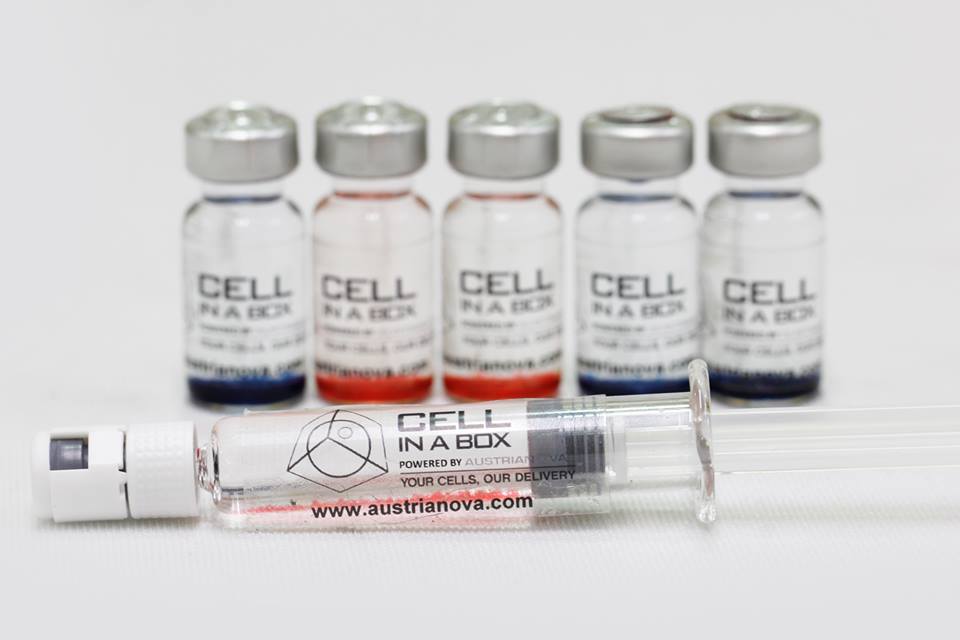
Image credit: Austrianova
Singapore-based biotech startup Austrianova focuses on the broad field of cell therapy, which includes tumor treatments and cell storage. But they’ve managed to find a way to help the beauty industry with their proprietary material, Gel8.
Gel8 is an encapsulation technology that allows cells to be stored in a porous membrane. Encapsulated cells can grow and survive while being protected from chemicals, changes in pH levels, and other external forces, allowing them to be stored for longer. Gel8 is also derived from a naturally occurring material, making it harmless to the environment and safe for human use.
Austrianova was one of the two winners of the L’Oreal Innovation Runway 2017, and has since collaborated with the company for the development of new cosmetics-related products.
For its part, L’Oreal had replaced plastic microbeads with perlite, a naturally occurring mineral, in all its exfoliating products. The cosmetics giant made the move in 2016, two years before microbeads were banned in the UK.

Sketchon and Austrianova were part of the L’Oréal Innovation Runway, which partners with early-stage startups and small enterprises with unique solutions in beauty and tech. Graduates can expect access to L’Oreal’s research and development resources, along with increased chances to work with prominent players in the beauty industry.
Visit lorealinnovationrunway.sg to apply. Deadline for submission is August 12, 2018.
Stay updated on the go with our mobile app.
Get latest insights with smoother, more personalized experience through TIA mobile app.
Recommended reads
 Why AI isn’t crushing SaaS in SEA
 An AI co-pilot for scientists designing new biomaterials
 Sell software in the US, build bots in Asia
 Ledgerowl’s seed funding fuels deeper push into Australia
 AI uses pilot-style checklists to help doctors decide safely
 Rlwrld takes aim at US robotics giants with new foundation model
 Startup takes on Sri Lanka’s out-of-pocket healthcare problem
 Tin Men Capital injects $2.7m in AI software startup’s pre-series A round
 Reka AI launches multimodal language model to rival Google’s Gemini
 Not all disruption is AI-first





Editing by Tan Wen Chuan, Terence Lee, Eileen C. Ang, and Judith Balea
(And yes, we’re serious about ethics and transparency. More information here.)






📅 Upcoming Events
22 October 2026
Payoneer x CSPN Summit 2026