Nathaniel Fetalvero · · 5 min read
Meet the blockchain gaming platform that got SoftBank backing

In November 2017, gaming giant Electronic Arts (EA) saw its stock value drop by US$3 billion after it released the highly anticipated video game Star Wars Battlefront II.
The catastrophe followed after users realized that the game required players to lock in 40 hours of playing time in order to gain access to Luke Skywalker and Darth Vader – icons of the Star Wars franchise – as playable characters. For those who couldn’t just sit in front of their gaming rigs all day, the only alternative was to pay for access with real-world money.
“This is a joke. I’ll be contacting EA support for a refund,” said one Redittor, with several other users expressing their displeasure.

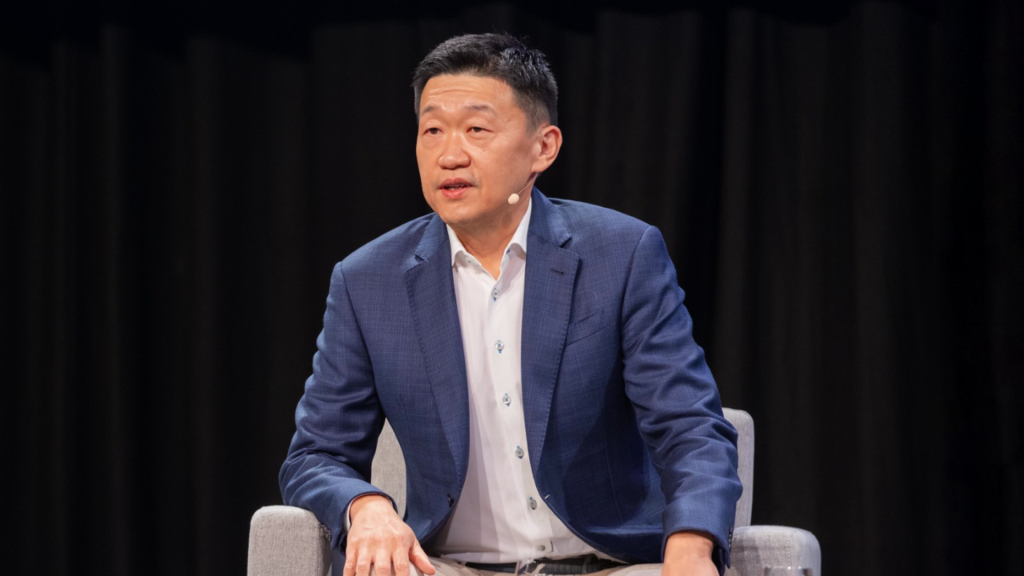
Tai Jin, chief operating officer of Ludos Protocol / Photo credit: Ludos Protocol
According to Tai Jin, co-founder and chief operating officer of blockchain platform Ludos Protocol, this is just one of many examples that illustrates the need for gamers to fully own the in-game assets they purchase. His company is trying to solve that problem by merging game development with blockchain technology.
Start, stop, pivot
Jin, who was an investment analyst at angel investment firm ZhenFund, first discovered the idea for Ludos Protocol when he met his co-founders: Joy Hao, who is highly connected in China’s blockchain scene, and gaming industry veteran Joe Meng. However, he reveals that their goal wasn’t initially focused on integrating blockchain into the gaming industry.
“In the beginning, we just wanted to build a public chain because everybody was building a public chain,” Jin recalls. “But we quickly realized that we didn’t want to just follow the trend. We had a common desire to bring some change to the gaming industry – to build the largest gaming ecosystem in the world.”
What we’re trying to do is decentralize players’ assets so they can have true ownership over the things they own in the game.
The startup then set off on a new course: to create the best infrastructure for game developers while providing the best gaming experience for players. And the best way to do this, Jin says, is by leveraging blockchain technology.
“Players’ assets in games are not actually their assets. They’re just pieces of data in the game developers’ database, so developers can basically do whatever they want with players’ assets,” he explains. “What we’re trying to do is decentralize players’ assets so they can have true ownership over the things they own in the game.”
The benefits of the decentralized nature of blockchain is threefold, according to Jin. First, it empowers players to do what they want with their in-game assets. Second, it has the potential to generate a universal economy where in-game assets can be used in different games built on the same platform. And third, it makes game logic more transparent as developers can upload verified code on the chain that defines game mechanics.
Working with the big leagues
With a new mission in mind, the Ludos Protocol trio’s next step was to build a team, which they realized required a considerable amount of money. They soon learned that raising funds for a blockchain startup comes with unique challenges.
“When the crypto market was good, it was easier to find partners because a lot of people heard about blockchain and were really impressed with our ideas,” says Jin. “But after the market went down in 2018, when we tried to proceed with a lot of potential partners, they became more cautious and more conservative.”
He attributes the increased skepticism to the proliferation of scams in the blockchain scene, which is affecting legitimate projects by “eating up the industry’s credit.”
“They didn’t have any products, they didn’t do anything,” Jin explains. “They were just solely focused on raising money. But we’re not the type of people who raise a couple thousand dollars and just run away.”

(L-R) Ludos Protocol CEO Joy Hao, FullPay Japan CEO Dong Bo, JMode chairman Yaushiro Okubo, and SoftBank Commerce and Service Corporation chairman Chen Da Jun at the partnership signing ceremony / Photo credit: Ludos Protocol
To differentiate itself, Ludos Protocol banked on the credibility of both its technology and founders. This eventually got the startup an audience with SoftBank Japan – the parent company of Seoul-based venture capital firm SoftBank Vision Fund – which Jin says was interested in the idea behind blockchain technology but “had no idea how to develop” something based on it.
In August last year, SoftBank invested an undisclosed amount in Ludos Protocol, resulting in a strategic partnership between the two companies. Through the deal, Ludos Protocol has teamed up with FullPay Japan, the authorized representative of WeChat Pay in Japan, to let its players use the tokens they earn in-game at various local retailers that accept payments via the FullPay app.
“SoftBank is a huge corporation and really resourceful, and Japan’s gaming industry is really mature, so we’re actually getting a lot of benefits from the partnership,” shares Jin.
Dreams of mass adoption
Looking forward, Ludos Protocol plans to roll out a software development kit that will enable developers, including those who are unfamiliar with blockchain, to build games on its platform. The company has already been testing the kit with gaming industry partners that it found through the SoftBank deal.

Ludos Protocol technical lead Jinpeng Zhu (far left) and co-founders Joy Hao and Joe Meng (far right) with SoftBank Commerce and Service Corporation’s Chen Da Jun and Takayuki Arai (second and third from left), the company’s chairman and corporate service unit head, respectively / Photo credit: Ludos Protocol
On the consumer side, while most of Ludos Protocol’s users are already in the crypto community, Jin hopes that gamers from outside the industry will soon see the project’s potential once more developers start building games on its platform. The startup’s two-pronged approach is what he claims differentiates Ludos Protocol from other gaming blockchain projects in the market.
“We’re trying to build an ecosystem. We have developers to build the decentralized apps and we have players to play the games. Then we’ll eventually have the advertisers, distributors, and more,” he claims. He also noted that some projects only focus on “creating the best technology or game engine for developers” or on a “single decentralized app.”
“Hopefully, we’ll become the first project that can actually attract a lot of users and developers – all from outside the blockchain community,” Jin says. “That’s what we aim to do… and it might happen sooner than a lot of people expect.”
A purpose-build blockchain project for gamers and game developers, Ludos Protocol aims to create the largest gaming ecosystem in the world. Its mainnet is slated to go live in May.
Game developers who are keen to build decentralized games on Ludos Protocol’s platform can visit its website.
Stay updated on the go with our mobile app.
Get latest insights with smoother, more personalized experience through TIA mobile app.
Recommended reads
 Indonesian AI startup goes global
 Forrest Li on scaling Sea, building smarter bots, and founder grit
 An AI assistant that joins sales calls and scores team skills
 Beyond the check: Why VCs need more than capital
 SGX’s CEO says it doesn’t need a unicorn to win
 SMEs want AI too, but not the kind Big Tech is selling
 Oatside’s alt-milk rise hits a profitable gear
 Alibaba’s financial health in 12 charts
 Asia’s telcos bundle AI into mobile plans. Will it pay off?
 M-Daq chases bigger clients as revenue falls, losses grow





Editing by Charmaine de Lazo and Eileen C. Ang
(And yes, we’re serious about ethics and transparency. More information here.)