- Insights This article was written by a TIA community member. Insights pieces undergo the same rigorous editorial process that newsroom-produced articles have.
 Christopher Quek · · 5 min read
All you need to know about commercializing an IP from a Singapore institution

Photo credit: Pixabay.
As the Singapore tech ecosystem advances in scientific innovations (or “deep technologies” in tech speak), it becomes more imperative for entrepreneurs to discover the value of integrating science-based intellectual property (IP) into their business models.
But where does an entrepreneur start in considering science IPs, especially when a founder has no scientific background? For starters, there are readily available IPs from institutions in Singapore that are awaiting entrepreneurial collaborations that can bring them to market.
To help kick start this process, I spoke with Dr. Sze Tiam Lin, senior director of Intellectual Property Intermediary (IPI) Singapore, a government unit that facilitates the commercialization of science-based IP, to understand the key considerations that an entrepreneur needs to think about when commercializing an IP from a Singapore institution.
Benefits of taking IPs from institutions
According to Dr. Sze, institutions create scientific IPs mainly for “scientific discovery and novel technology development in pursuit of knowledge creation for academic recognition, economic or societal impact.”
For IPs that show commercial potential, IP protection is sought through patent application, copyright, and know-how protection. This allows the IP to be licensed out to the industry, while allowing the creators to continue researching on the area.
In Dr. Sze’s opinion, taking an IP from an institution have many benefits and is applicable to any business, be it a startup or a multinational company.
First, it supports the company’s strategy to create a defensible product. Having a technology that is not easily replicable and protected by patents gives more value.
A proof of concept reduces the risk of a failed product and curtailed development time. To him, it is not necessary to reinvent the wheel, but efforts should be focused on cultivating what has already been developed and accelerating the product to commercialization.
Getting support from the institution has shown intangible benefits as well. “Having an institution’s name adds prestige and credibility, and also lends weight to startups to raise money,” Dr. Sze said. Furthermore, accessing a network of researchers is a boon to help a startup develop their IP.
How to take an IP to the market
To easily navigate the many IPs available, startups can turn to a directory of institutions and their IPs.
Once an IP has been identified, entrepreneurs should familiarize themselves on the Technology Readiness Level (TRL) scale. Dr. Sze explains that most IPs are between TRL 3 (i.e. proven proof of concept) and TRL 9 (market-ready).
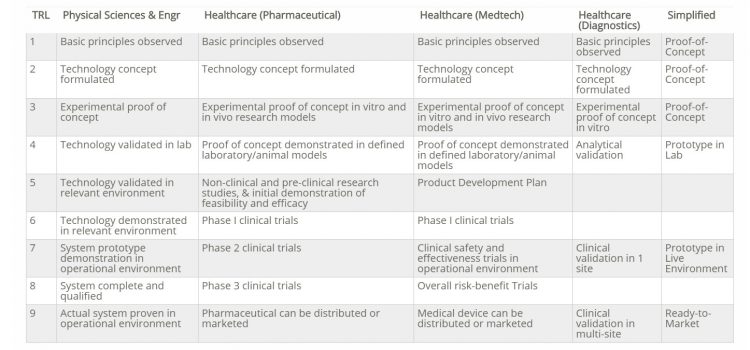
Photo credit: IPI Singapore website.
Preparing to meet the owners of the IP
Discussing the components of the licensing agreement
Convincing the IP creators to hop onboard
Advice to startups on managing licensed IP





Stay updated on the go with our mobile app.
Get latest insights with smoother, more personalized experience through TIA mobile app.