Nivedita Bhattacharjee · · 4 min read
Ratan Tata’s advice on how he would build a startup if he were 26 again
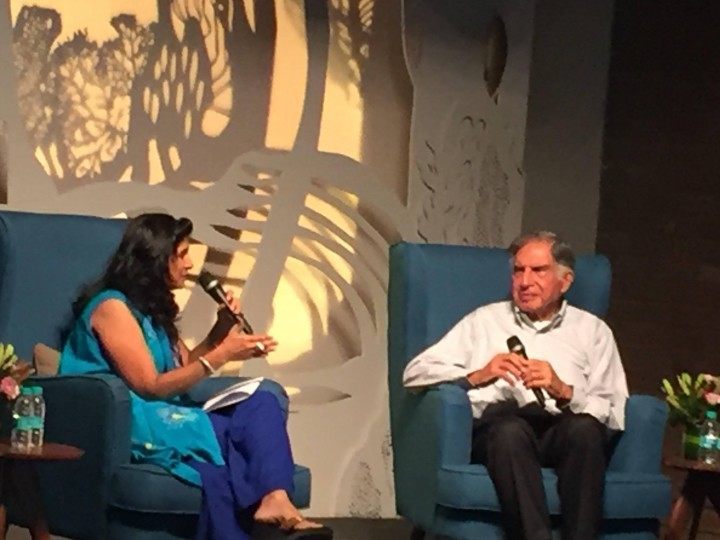
Ratan Tata (R) talks to Vani Kola of Kalaari Capital at the launch of Kstart. Photo credit: TechIn Asia.
Start at the beginning
Ideas come in many ways to different people. “Some people have ideas all the time. For me personally, ideas come in bursts,” he said. The idea is to want something to work better, or faster, or cheaper. In other words, a good idea is one that makes a difference to people’s lives. “Then you give it flesh and blood, chase people to join you, get funding, and better the idea.” The theme of the discussion was what Ratan would do were he a 26-year-old startup founder right now.
The advantage startups have, he said, is that they need much less money to make big changes than traditional companies do. “I can’t build a steel factory overnight. But with startups, what is wonderful is that the initial money invested is small, but you can still develop very big ideas.”

Photo by ourtechclub
Define a core principle
Once you have the base ready, start defining your company’s core principle – that is the principle that will define your company, one that you will go to lengths to protect and stand by. “I am always interested when an idea can make a difference and enhance the quality of people’s’ lives. If you are changing the way people live, that is a bigger proposition than just monetary returns.”
In the past two or three years, the companies I have looked at have grown at rates I could not have believed was possible.
How to pick an investor
While scaling up, a startup should always look for an investor who will be a part of the company’s journey, not just write a check. In many ways an investor is like the talent scout in a music company, he said. When he likes a band, he can’t (always) put down in numbers what returns he will get from it, but he is going with his intuition. He can’t always define why he likes this group, but he thinks they will be successful and he will will work towards making sure that becomes a reality. That experience and support helps creates successful bands, and companies. “I think there is a lot to gain from intuitive inputs that most of us don’t give enough attention to,” he said.
Growth vs profitability
No single rule fits all, said Ratan Tata. “In the past two or three years, the companies I have looked at have grown at rates I could not have believed was possible.” However, the important question to ask is whether the growth rates are sustainable. Like in most other industries, some companies will be able to pace out their growth and come out successful, while others will fail. “This rage and pace is not something I am familiar with. But then again, one has to be humbled because there are some companies that manage to keep the growth rates while others fall by the wayside,” he said.


Stick it out, or sell?
Company first, or self-branding?





Stay updated on the go with our mobile app.
Get latest insights with smoother, more personalized experience through TIA mobile app.