- Premium Content It takes our newsroom weeks - if not months - to investigate and produce stories for our premium content. You can’t find them anywhere else.
 Tay Tian Wen · · 5 min read
China’s link-blocking ban: panacea or Pandora’s box?
China Watch is a regular segment that looks at the country’s tech sector through a local lens. This edition looks at the Chinese government’s call to end link blocking between online platforms, based on reporting by China-based news publication PEdaily.
Beijing’s ongoing purge against the country’s tech giants is well into its third month. Chinese regulators now have the link blocking practices of these online platforms in their crosshairs.
Summoned by China’s Ministry of Industry and Information Technology (MIIT), tech companies are now racing to meet Beijing’s expectations – or face the consequences.
As the walls of China’s digital fiefdoms crumble further, a balance between costs and benefits remains unclear. Doubts over the effectiveness of Beijing’s latest move linger.
An end to link discrimination
From the start, MIIT’s intent to abolish link blocking was already obvious to China’s tech giants.
The ministry made its disapproval of the practice clear at a press conference in September, when it labeled link blocking – the practice of denying normal access to competitor website links – as an anti-competitive “walled garden” technique designed to stymie the growth of rivals.
In an “Administrative Guidance Meeting” held on September 9, the ministry laid down three new rules for firms in attendance – among them were Alibaba, Tencent, Baidu, NetEase, and ByteDance – to follow:
- Links to competing products or services shared by users should be displayed and have no changes made to them.
- In-message links within apps should be allowed direct access when clicked on.
- Users will not be required to manually copy links to open them in a new browser.
Tech companies that have been singled out must abide by these new regulations or face fines and other unspecified penalties. The ministry has not disclosed an exact date for when companies must comply with these regulations.
These orders come on the heels of the ministry’s ongoing name-and-shame campaign that publicly discloses what it sees as repeated user rights violations of Chinese mobile apps.
The campaign, which started in 2019, has published 15 lists of more than 1,300 problematic apps to date – with platforms developed by NetEase, Tencent, Alibaba, and Baidu among them.
It’s also a signal that MIIT is finally taking things more seriously. Flooded with link-blocking complaints over recent years, the ministry sees the new regulations as a remedy for “poorer” user experience, “rights violations,” and “market disruptions,” says Zhao Zhiguo, general director of MIIT.
Wary of further consequences, tech firms are acquiescing to Beijing’s new rules. An Alibaba Group spokesperson told Tech in Asia that the company will “fully comply” with MIIT’s regulatory requirements. Tencent has also released a response to the new ruling, saying that it respects MIIT’s decision and intends to “fix the problem gradually.”
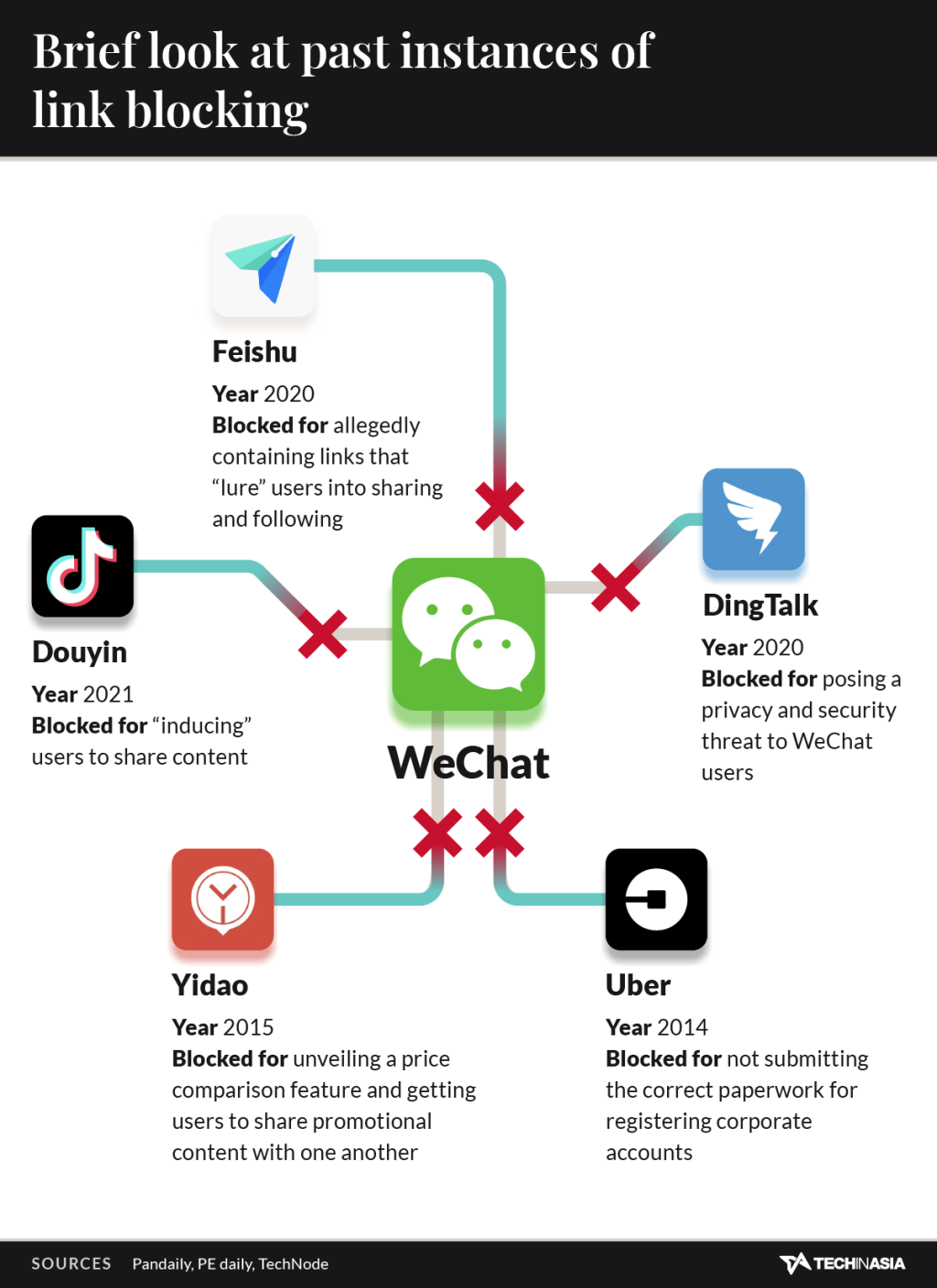
Image credit: Timmy Loen
Panacea or Pandora’s box?
Fixing the problem with the wrong tools?
Stay ahead in Asia’s tech landscape
This is premium content. Subscribe to read the full story.
Tearing down the walls of China’s digital fiefdoms to spur innovation may come at a price for society.
We know this is not ideal. ⌛ Sign up in 20 seconds. Cancel anytime.
Our subscriber community includes professionals from these companies:





Stay updated on the go with our mobile app.
Get latest insights with smoother, more personalized experience through TIA mobile app.