Jonathan Chew · · 6 min read
How automated robots can help build a safer, more sustainable future

“Any sufficiently advanced technology is indistinguishable from magic.” That’s one of the three laws formulated by science fiction author Arthur C. Clarke, who made these “laws” out of his observations on science and technology.
Indeed, 100 years ago, concepts like the smartphone and the internet might have indeed seemed magical to the average person. Instant wireless communication with someone across the world? Sounds like witchcraft.
If just a century can make such a difference,what would 2123 have in store?
“If you look at human history, one of the most common ways we advance is by increasing productivity,” says James Wu, founder and CEO of FJ Dynamics.
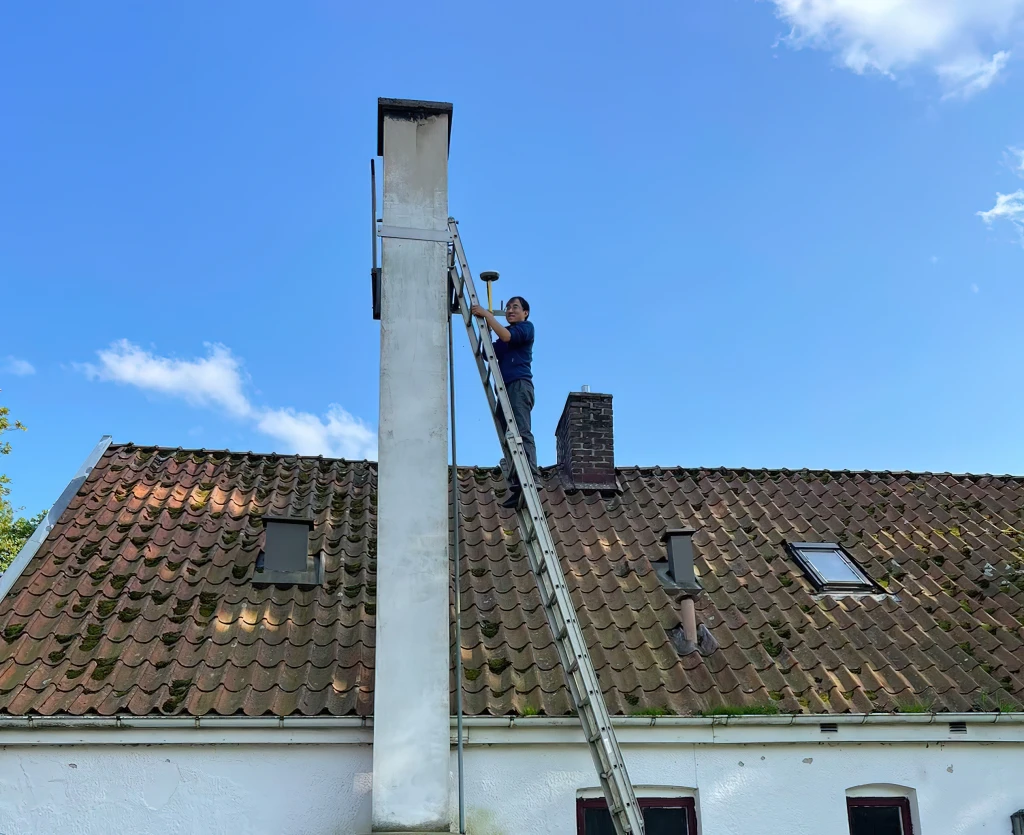
So much for automation! Pictured: James Wu, founder and CEO of FJ Dynamics / Photo credit: FJ Dynamics
As the founder of an automated robotics company – which is considered a top 50 agtech firm globally – Wu has seen his fair share of solutions to boost productivity. But the key idea for progress, according to him, is simple.
“How can we do that in the coming decades? We need automation,” he says.
Bot the Builder
One industry where automation can make a large impact in the next few decades is construction. Within the sector, robots will be able to make working environments much safer for humans, says Wu.
“In construction, you’re responsible for human lives,” the CEO says. “When ChatGPT makes a mistake, you laugh at it. But in construction, if there’s a problem with the tech, people can die.”
For example, crane operation is usually handled by human workers. However, the isolated nature of the job poses a high risk if an emergency – such as a heart attack – occurs.
Some other examples include the use of heavy machinery such as excavators, which can cause serious injuries or death if handled without the right precautions.
Cases like these are where automated vehicle guidance systems – such as those provided by FJ Dynamics – come into the picture.
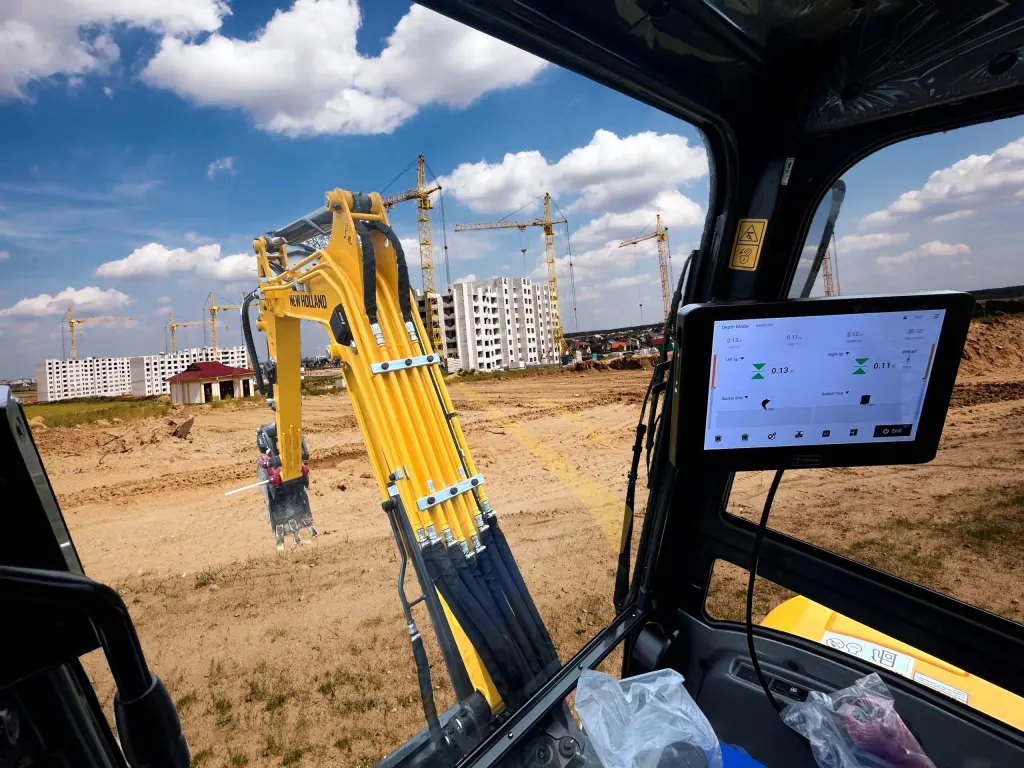
An automated, 3D-guided excavator that can be used for construction projects / Photo credit: FJ Dynamics
“Let the robots handle the dangerous work, which comes out to around 80%. Humans can just take care of the remaining 20%,” Wu says. “It would be much safer if workers were required to just rectify faults instead of handling the dangerous work themselves.”
He also points out that robots can help with improving efficiency in construction projects. For example, they’ll be able to measure materials more precisely, minimizing costly human errors.
“Additionally, robots won’t need a training period if they need to be replaced.”
How can it be of service?
Another industry that will see lots of advancements through automation is service work. Typically, these jobs are characterized by a high amount of manual labor.
For instance, it includes roles such as nursing home staff – who have to continuously care for elderly residents – or janitors, who need lots of time to clean large areas.
Automated service robots will change this, although Wu says that the 80-20 rule still applies due to safety or work quality issues.
With elder care, for example, robots may be dangerous because of how heavy they can be. Instead, it’s more likely that they’ll help with safer activities like cooking rather than moving the elderly around in close proximity.
“If just one of these robots falls over, it can cause serious injuries to the elderly,” Wu points out.
For services like janitorial work, automated robots can help reduce the amount of effort needed for manual labor. Wu says that cost-effective robots should be able to cover 80% of areas that need to be cleaned, with the remaining 20% – such as small nooks and crannies – being taken care of by humans.
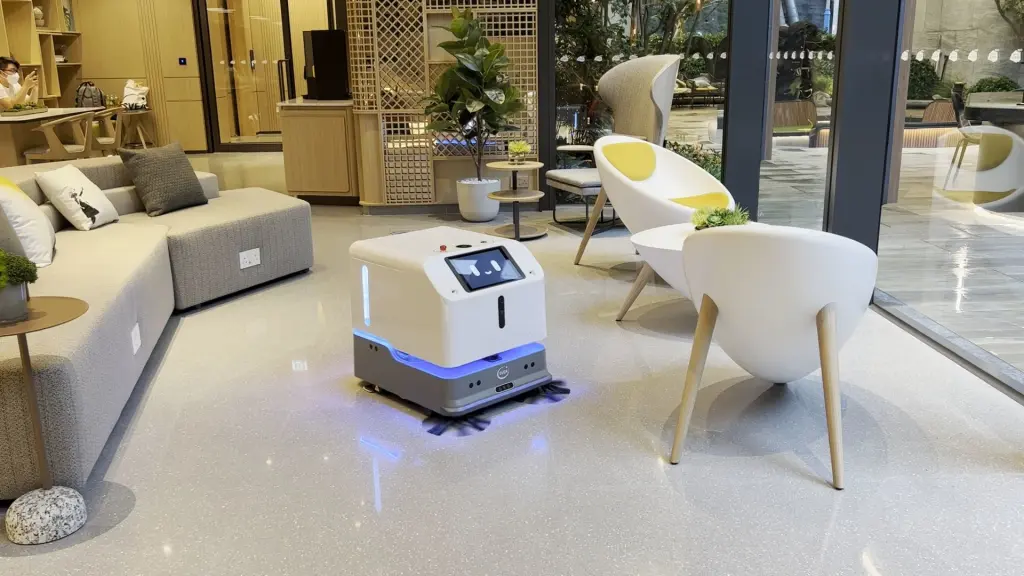
Who knew robots were this cute? / Photo credit: FJ Dynamics
“Robots can cover their 80% share at night, while the humans who supervise them can finish the remaining 20% when they get to work during the day,” he suggests.
Touching grass
Robotics can also extend a helping hand to the agriculture sector – specifically with its labor shortage issues.
“If we cannot increase farm productivity, food prices will go up and the general population will face lots of challenges,” says Wu.
Solutions like automated steering kits – which help guide tractors along a set path using GPS tech – will help reduce manual labor while maintaining a high degree of precision and accuracy.
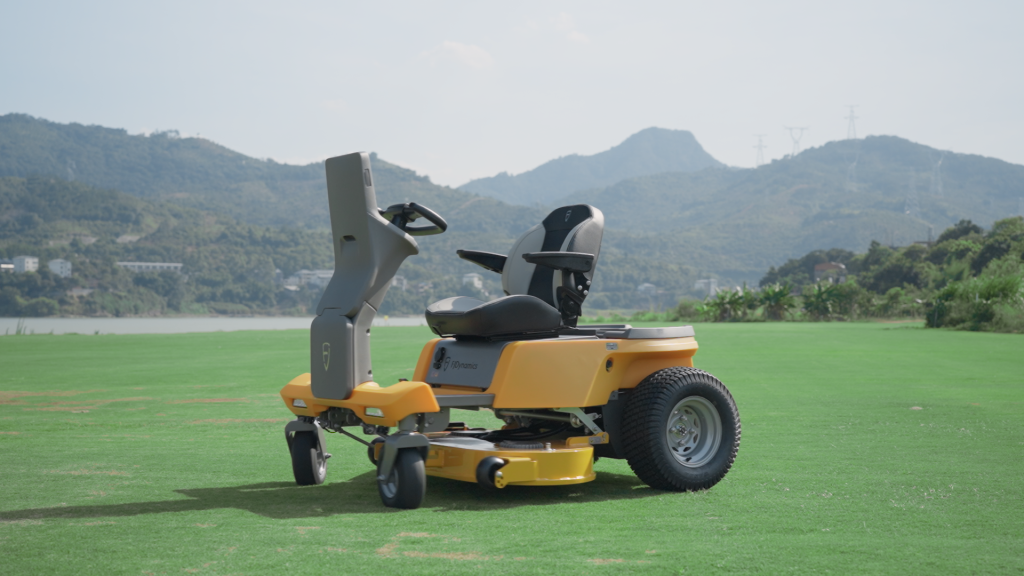
An automatically-guided lawn mower from FJ Dynamics / Photo credit: FJ Dynamics
And like the other sectors mentioned before, the 80-20 rule is important in ensuring that adoption of automated tech in agriculture doesn’t become too costly, which could outweigh its potential benefits.
“I think that if we can adopt robotics at a sustainable rate, farming will become very close to a ‘digital’ job,” Wu says. Taken to a more “extreme” end in terms of compartmentalization, he adds that “farmers will be able to just sit on the tractor and play with their phones while most of the work is done automatically.”
All told, there are already signs that point to the 80-20 rule being doable in the long run. According to Wu, FJ Dynamics develops and manufactures solutions that can hit this threshold. As such, the CEO believes that across the sectors he highlighted, automation will become more integral every year.
Alleviating fears
While the future of robotics is looking bright across a range of sectors, Wu shares that some people are still apprehensive about adopting automated technology, especially because they believe that it will take away jobs without producing better results.
As such, companies like FJ Dynamics are working hard to educate potential users and the general public that no matter how advanced technology gets, “you’ll still need humans to check the outcome,” says Wu.
“We’ll progress in a way that humans take on more and more roles as supervisors, something like a god of robots,” he jokes.
The CEO adds that if the 80-20 rule is maintained, developing robots to cover every kind of scenario won’t be necessary. Advancements in the sector would also lead to automated tech becoming more cost-effective and attractive to businesses, driving wider adoption.
“We’re still in the education stage, but there will be a time where everyone – regardless of socioeconomic circumstances – will see that robots can help save costs and the tech will become mainstream,” says Wu.
For over 20 years, the Hong Kong Science and Technology Parks Corporation (HKSTP) has committed to building up Hong Kong as an international innovation and tech hub to help local and global pioneers find success. Through a host of strategic initiatives, HKSTP helps with attracting and nurturing talent, as well as with accelerating and commercializing entrepreneurs’ innovation and tech efforts in the city and beyond.
If you’d like to partner with either HKSTP or FJ Dynamics to take your business to the next level, you can get in touch here.
This content was produced by Tech in Asia Studios, which connects brands with Asia’s tech community. Learn more about partnering with Tech in Asia Studios.
Stay updated on the go with our mobile app.
Get latest insights with smoother, more personalized experience through TIA mobile app.
Recommended reads
 Indonesian AI startup goes global
 Forrest Li on scaling Sea, building smarter bots, and founder grit
 An AI assistant that joins sales calls and scores team skills
 Beyond the check: Why VCs need more than capital
 SGX’s CEO says it doesn’t need a unicorn to win
 SMEs want AI too, but not the kind Big Tech is selling
 Oatside’s alt-milk rise hits a profitable gear
 Alibaba’s financial health in 12 charts
 Asia’s telcos bundle AI into mobile plans. Will it pay off?
 M-Daq chases bigger clients as revenue falls, losses grow





Editing by Winston Zhang and Lorenzo Kyle Subido
(And yes, we’re serious about ethics and transparency. More information here.)