Michael Tegos · · 2 min read
Quick tips about entering China and Singapore if you’re a startup
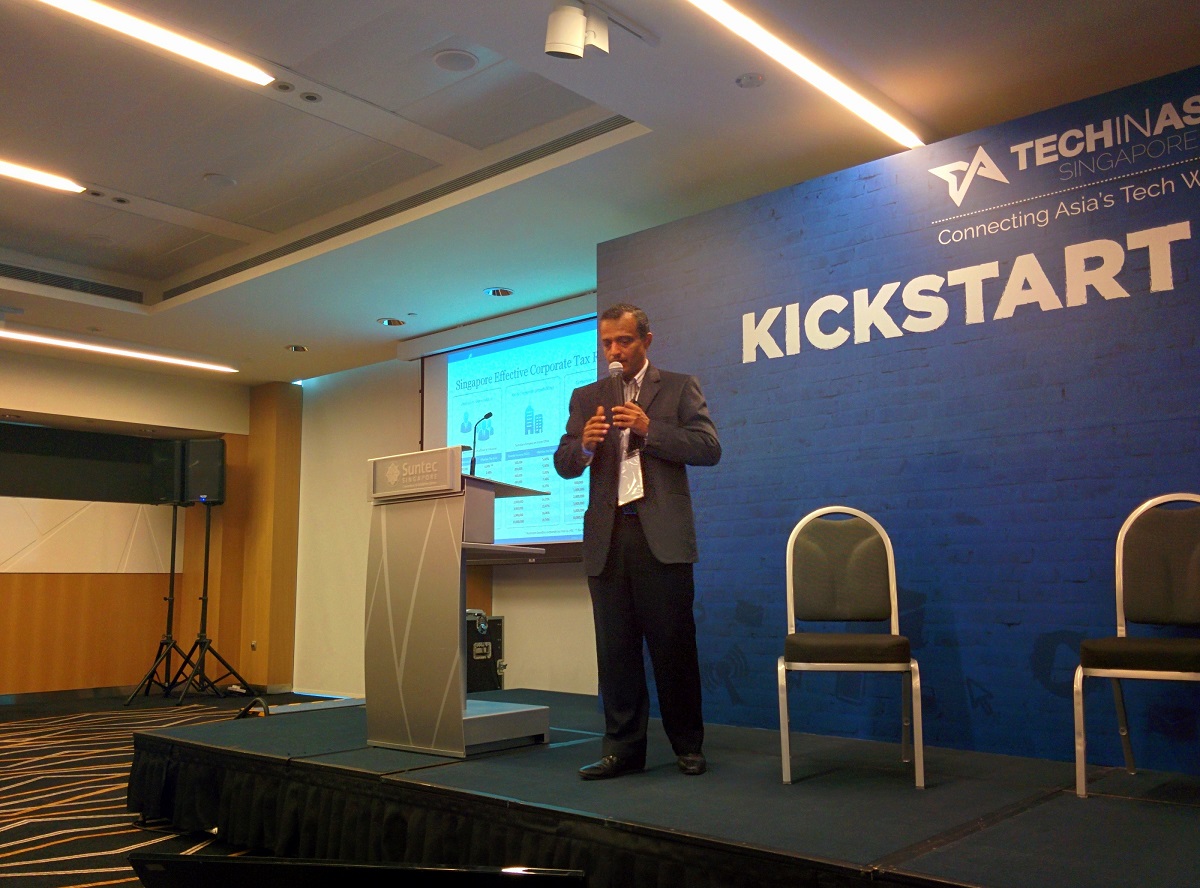
The market exchange tracks at the Kickstart stage of the Tech in Asia Singapore 2015 conference started off with advice on how to set up a company in Singapore and China. Satish Bakhda, COO at company incorporation consultants Rikvin, and Bryan Tan, partner at law firm Pinsent Masons MPillay LLP, took the stage to talk about Singapore’s business environment.
From L to R: Bryan Tan and Satish Bakhda.
Bakhda highlighted the ease with which an entrepreneur can set up a business in the country, as the favorable tax regime and access to electronic services speed up a lot of the process. He did identify certain tricky parts such as obtaining an employment pass (Singapore’s term for a work visa), but the overall feeling was that Singapore remains a very hospitable place for doing business.
Tan affirmed Bakhda’s analysis, adding that Singapore is fully compliant with international intellectual property agreements such as the Berne Convention and the Patent Cooperation Treaty (PCT). He then outlined certain legal issues that companies in Singapore have to keep in mind, such as antitrust, data protection, fundraising, and non-disclosure agreements.
Can startups go to China?
Jerry Ku, partner at international law firm Gunderson Dettmer, and Chinese venture capital firm Quest VC managing partner James Tan attempted to paint a picture of setting up a business in China. It’s a tougher proposition than Singapore, but one that can be very rewarding due to sheer market size.
From L to R: Jerry Ku and James Tan
Ku and Tan briefly described the various types of companies that non-Chinese entrepreneurs can set up, from a Rep Office to a Wholly Foreign-Owned Enterprise. They explained, however, that prospective business owners have to keep in mind factors such as cost and dealing with authorities, as well as finding Chinese nationals to collaborate with in order to be compliant with regulations. Beijing in particular was described as being ideal for entrepreneurs relative to other large hubs in China. Major factors, among others, were that officials have a more open mind in terms of new enterprises and most of the major VCs in the country are based there.
This is part of the coverage of Tech in Asia Singapore 2015, our event running on May 6 and 7.
Stay updated on the go with our mobile app.
Get latest insights with smoother, more personalized experience through TIA mobile app.
Recommended reads
 Arrest looms for Terraform Labs founder as Seoul court issues warrant
 Asia is setting a new benchmark for growth via intangible assets
 MAS lays down new roadmap for SG’s financial services sector
 Binance, YG team up for metaverse, blockchain projects
 Singapore, India fintech regulators sign cross-border sandbox agreement
 Terra founder contests South Korea’s Bitcoin transfer accusations
 Singapore’s co-living firms are on the rise
 Terra co-founder Daniel Shin likely to testify on Terra collapse
 SG crypto exchange Hodlnaut files for protection from creditors
 Bringing Web3 gaming to the next level