This article summarizes an episode of Decoder with Nilay Patel’s video series featuring Mike Cannon-Brookes, co-founder and CEO of Atlassian.
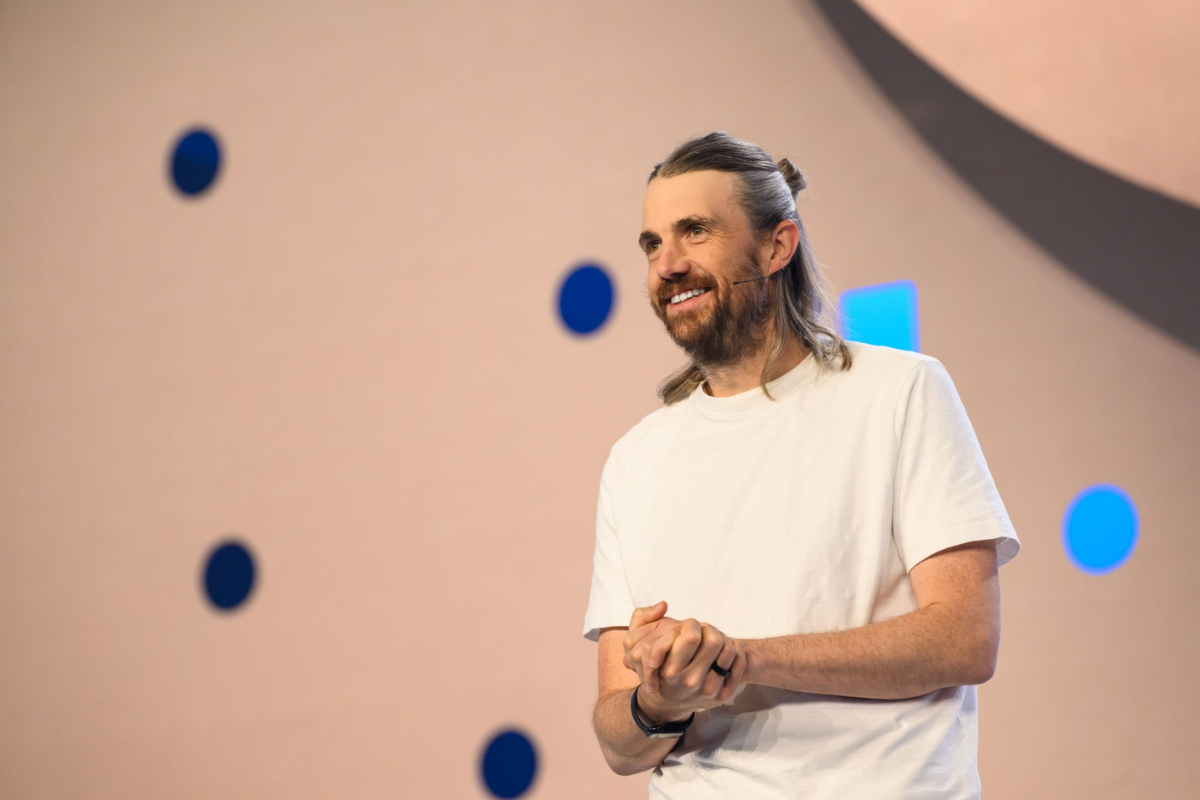
Mike Cannon-Brookes, co-founder and CEO of Atlassian / Photo credit: Mike Cannon-Brookes
Setting the same AI goals for everyone in a company can hurt growth.
AI shrinks administrative departments but gives creative teams significantly more capacity. Mike Cannon-Brookes, co-founder and CEO of Atlassian, warns leaders not to treat all work the same.
To manage these changes, executives must rethink job skills, turn expert knowledge into shared systems, and use clear visual software to manage automated tasks safely.
AI breaks traditional workforce capacity math
Deploying automation requires executives to distinguish between operational groups and innovation units because standardized productivity goals damage the business. Cannon-Brookes argues that “there are supply-constrained and demand-constrained jobs inside a business, input-bound and output-bound.”
Leaders must evaluate these operational constraints before altering their staffing pipelines:
- Input-bound teams: Legal and customer service groups will shrink because faster processing does not generate more incoming contracts.
- Output-bound teams: Engineering and product groups can leverage saved time to test new ideas and tackle profitable projects that were previously too expensive.
- Long-term horizons: Strategic planning must span multiple years to allow workers time to adapt to technological demands.
Cross-functional blending forces experts to scale systems
As workers adapt to these demands, their roles will overlap. Because these output-bound teams now pass work across disciplinary lines, companies must restructure how specialists deploy their expertise:
- Absorb adjacent duties. General employees can generate basic models outside their core specialties to shorten the timeline from idea to finished project.
- Build shared guardrails. Experts must focus on creating standards and design templates that anyone in the company can safely follow.
- Shift middle management. Managers freed from paperwork must pivot toward coaching staff and setting priorities for complex projects.
Cannon-Brookes estimates that half of a designer’s job is maintaining scalable systems, while the other half is meant “to solve the hardest 5% of problems in design.”
Interoperable software requires purpose-built visual interfaces
Connecting these expert systems across the workplace increases software usage, with Cannon-Brookes noting that “more than 98% of people using our MCP server also use the user interface, and that is not changing.”
To maintain this value while preventing programs from becoming background utilities, vendors must reject invisible software solutions:
- Software connections give AI agents the background data to function across multiple platforms.
- Visual dashboards remain necessary for managers to inspect automated project status and manage security permissions.
- Integrations cause customers to add employee licenses 5 percent faster and grow recurring revenue at twice the rate.





Stay updated on the go with our mobile app.
Get latest insights with smoother, more personalized experience through TIA mobile app.