- Premium Content It takes our newsroom weeks - if not months - to investigate and produce stories for our premium content. You can’t find them anywhere else.
 Terence Lee · · 8 min read
AirAsia’s second coming: A deep look at its evolution into an ecommerce and fintech firm
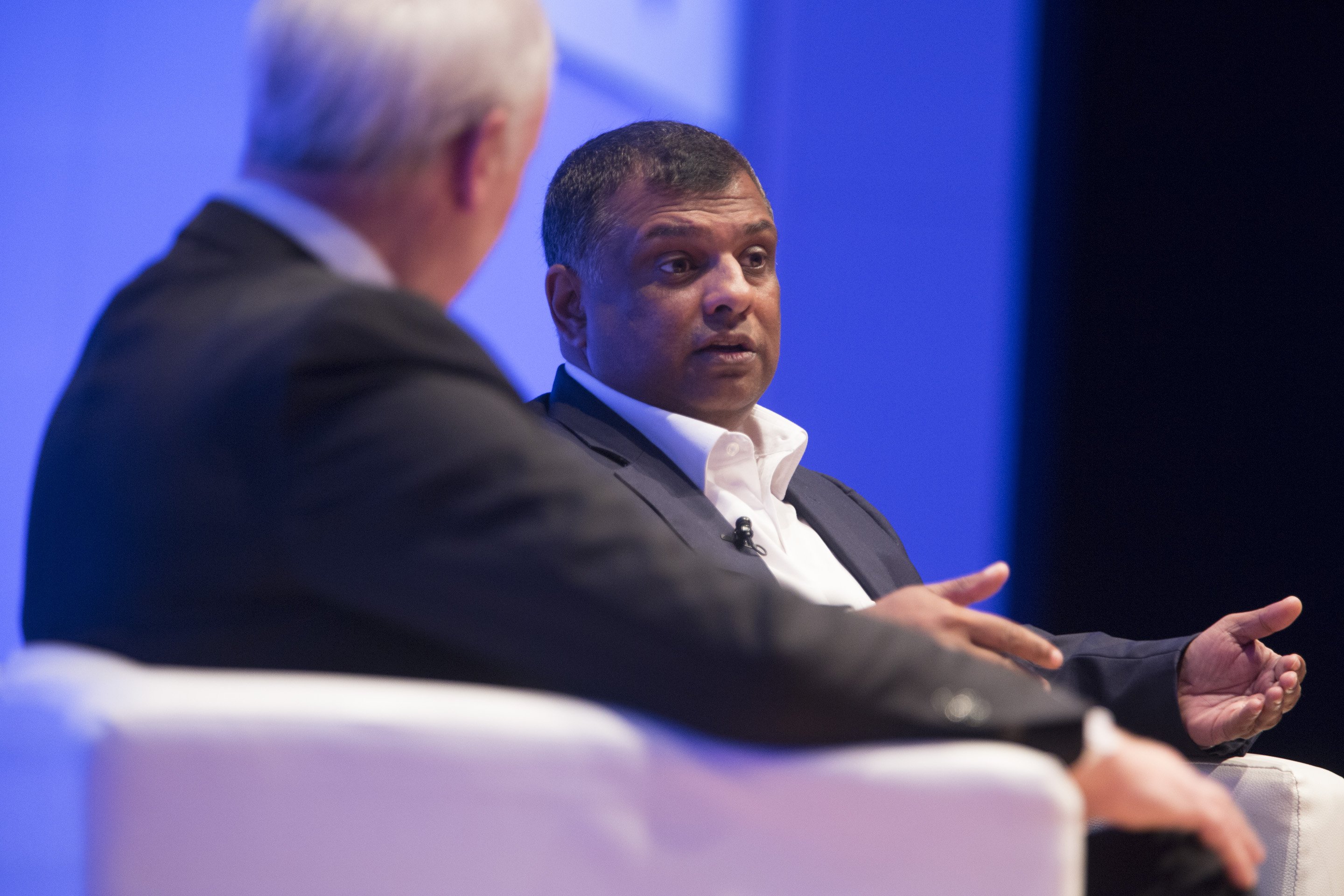
AirAsia founder and group CEO Tony Fernandes speaking at the World Travel & Tourism Council (WTTC) World Summit 2017 / Photo credit: WTTC
Tony Fernandes is revered for making air travel affordable to millions in Asia. A friend of mine – a self-described “kid in Malaysia” – explained to me how AirAsia changed his life.
“We were a family of six, so flying was always expensive, even as a middle-class family. The airline democratized air travel for us,” he said.
But to achieve this feat, Fernandes had to defy the odds. He bought debt-ridden AirAsia for less than a dollar and turned it into a public-listed firm worth US$2.2 billion. In 2012, the airline survived a SARS epidemic that grounded air travel to a halt. Two years later, it weathered the harrowing crash of Indonesia AirAsia flight 8501 – caused by human error, the accident killed all 162 people on board.
Today, AirAsia is profitable and growing. Revenue and net profit for 2Q18 are up, buoyed by consecutive years of growth in the global airline industry.
| US$ | Y-o-Y growth | |
| Revenue | 631 million | 10 percent |
| Net profit | 75.8 million | 125 percent |
But Fernandes, who owns a diversified line of businesses and even a London-based football club, isn’t sitting pretty.
A bold proclamation
On October 10, Fernandes arrived at the Google Cloud Next London conference with his usual chutzpah. Wearing track pants, sneakers, and an AirAsia hat, he was flanked by four flight attendants in heavy makeup and bright red uniforms. The airline contingent turned eyes at the mostly male gathering.
Fernandes made a major announcement at the event. AirAsia has partnered with Google Cloud to infuse artificial intelligence into all aspects of its business.
He envisions turning AirAsia into a “digital travel company,” melding ecommerce, fintech, and travel – with all airline’s 22,000 employees – into one cohesive entity. Sitting at the foundation would be a goldmine of data coming from the 90 million passengers that AirAsia is set to fly this year.
“For us, it’s almost like a second coming,” Fernandes told reporters at a press conference. “We’re seeing now a chance for us to reinvent ourselves.”
AirAsia’s strategy starts with collecting as much data as possible about its passengers. It has begun installing thousands of sensors into each of its 250 planes, allowing it to pinpoint the location of each person.
Can AirAsia stand up against the tech giants?
AirAsia’s edge
A volume game
What success looks like
Stay ahead in Asia’s tech landscape
This is premium content. Subscribe to read the full story.
Tony Fernandes, the mercurial CEO of the budget airline, has defied the odds many times. Can he do it again?
We know this is not ideal. ⌛ Sign up in 20 seconds. Cancel anytime.
Our subscriber community includes professionals from these companies:





Stay updated on the go with our mobile app.
Get latest insights with smoother, more personalized experience through TIA mobile app.