
Asia-Pacific (APAC) has become the belle of the ball in AI in recent months.
The region has caught the attention of tech giants like Google and AWS, attracting huge investments for its AI-related initiatives.
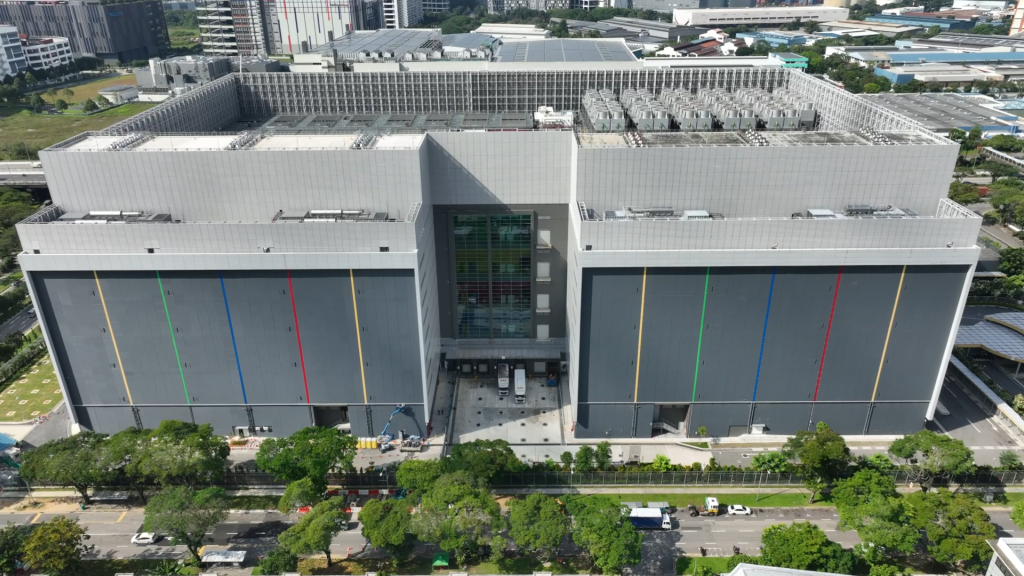
Google announced on June 3, 2024 that its investment for its data center in Singapore has reached $5 billion. / Photo credit: Google
Getting external investment is never a bad thing. However, countries in APAC should tackle AI development to address the region’s unique needs based on their own experiences.
A headstart
APAC is already in a decent spot. There’s a reason why all these tech giants are asking the region for a dance, after all.
“These huge investments are a clear indication that there’s a conducive environment for AI development in the region,” says Rachel Chng, head of accelerator and partnerships at Tribe, a startup accelerator backed by the Singapore government.
She cites APAC countries’ strong focus on education and growing digitalization as contributing factors to said “conducive environment.”

Rachel Chng, head of accelerator and partnerships at Tribe / Photo credit: Tribe
The future is looking pretty good, too.
“Pumping in this amount of money is also a projection of AI demand in the region as a lot of it is going toward developing infrastructure and laying the groundwork in other areas,” Chng points out.
For example, Tribe has been working closely with chipmaker Nvidia to launch the Ignition AI Accelerator, which aims to propel the growth of AI startups and the overall ecosystem in the region. The tech giant helps by covering the startups’ hardware needs and offering technical mentorship, funding, and partnership opportunities.
The cultural question
According to Chng, APAC still faces two main hurdles that could trip the region up in AI development: talent shortage and the difficulty of accounting for language and cultural nuances.
The first challenge is rather pertinent in generative AI as many of the top models – like Gemini and ChatGPT – are built by Western companies. Moreover, they are trained on publicly available datasets that are likely to be in English.
There are more than 3,200 languages across 28 separate language families in APAC, as per the Australian National University. The number doesn’t include the different written forms languages may have – like in the case of Taiwanese Mandarin versus Mainland Chinese Mandarin.

Same same, but different / Image credit: Timmy Loen
As such, these models may not be able to address local queries or requests accurately. Some might even be unfairly biased toward certain topics because of certain overrides implemented by their creators or the data sets they’re trained on.
“Think about how big of a role language plays in our daily lives. If we want to develop and incorporate AI tools to that level, it has to account for personal contexts,” Chng explains.
Thankfully, there’s already some progress in this area with the launch of the Sea-Lion large language model (LLM). Around 64% of the data used to train the model is in English, while Southeast Asian languages make up 13%. This might seem low, but it’s a huge step up from other models like Meta’s Llama 2, which has less than 0.5% of its training data in Southeast Asian languages.
“We’re even seeing this happening in Japan,” Chng shares. “I recently met a company there that told me they use English-based LLMs and a lot of meaning is lost in translation. That’s why they’ve set out to build their own model.”
Developing AI fluency
As for the talent shortage, Chng notes that this is a persistent issue across the region. From Singapore to China, many businesses don’t feel that they have the skilled workforce needed to properly integrate AI into their operations.
“Take Singapore, for example. The government has set a goal under the National AI Strategy 2.0 of having 15,000 AI workers,” Chng says. “However, local institutions only contribute about 3,000 total computer science graduates every year, and not all of them will go into AI.”
As such, countries in APAC need to fill the gap by focusing not only on regular education pathways but also on upskilling and reskilling existing professionals.

Photo credit: Shutterstock
Organizations like Tribe can assist in this undertaking. It runs training programs under Tribe Academy to bring workers up to speed with modern AI skills.
Moreover, countries in APAC shouldn’t forget about its current AI talent, even if the pool might be small. A good way forward is to help current talent get connections with investors and industry leaders through a mix of partnerships between the government, corporates, and startups.
Tribe’s Ignition AI accelerator, run in collaboration with Nvidia and Digital Industry Singapore, goes a long way in this domain. It offers technical workshops and discussions with industry experts, so that AI startups can access resources and support for their product development and go-to-market strategies.
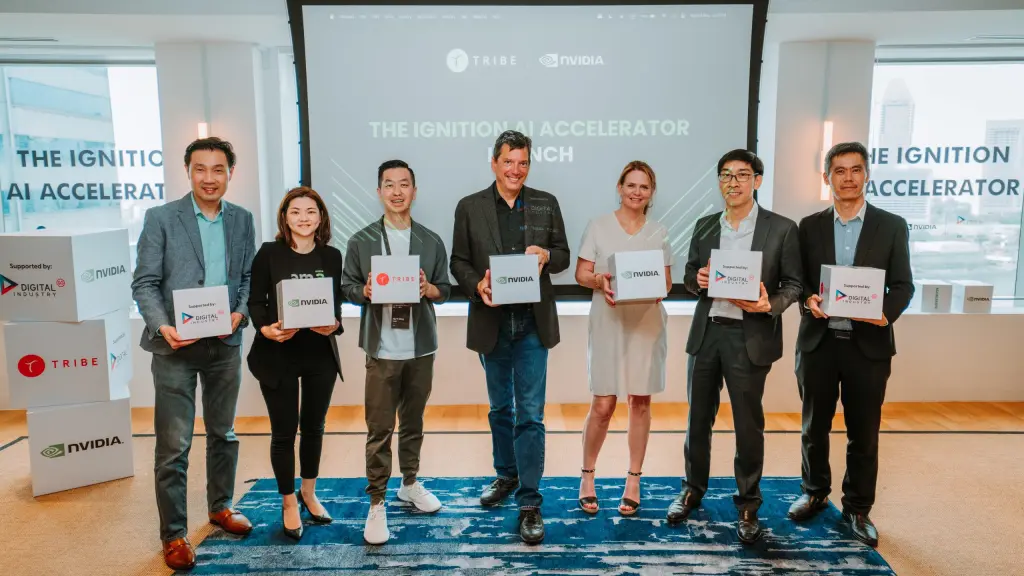
The organizing partners of the Ignition AI accelerator / Photo credit: Tribe
On the right track
As AI development hits its stride in APAC in the coming years, Chng is excited about several new possibilities down the line – such as the rise of autonomous vehicles and robots.
“In China, you’ve got companies like WeRide and Baidu’s Apollo project, and I can’t wait for it to become more widespread across the whole of Asia,” she says. “It’s a clear display of the value of AI in automating the workforce and reducing physical exertion, cutting mundane, repetitive tasks.”
There are also cutting-edge areas like those using AI for drug discovery – something Nanyang Biologics develops. The biotech company leverages AI to identify useful ingredients to treat chronic diseases, reducing costs while raising efficiency in R&D.
Pumping in this amount of money is also a projection of AI demand in the region as a lot of it is going toward developing infrastructure and laying the groundwork in other areas
Overall, Chng is confident that APAC is on the right track to becoming a pioneer in AI development.
“With developments like our regional LLM as well as investments in education and strengthening the support system for AI startups, it shows that we know what’s valuable,” she says. “All we need to do is keep working towards the goals we’ve put in place.”
Tribe is a leading startup accelerator backed by the Singapore government. It’s focused on driving innovation in the global AI ecosystem. Currently, Tribe runs the Ignition AI Accelerator, which aims to support upcoming AI startups. To apply for the program, click here.
This content was produced by Tech in Asia Studios, which connects brands with Asia’s tech community. Learn more about partnering with Tech in Asia Studios.
Stay updated on the go with our mobile app.
Get latest insights with smoother, more personalized experience through TIA mobile app.
Recommended reads
 Indonesian AI startup goes global
 Forrest Li on scaling Sea, building smarter bots, and founder grit
 An AI assistant that joins sales calls and scores team skills
 SGX’s CEO says it doesn’t need a unicorn to win
 SMEs want AI too, but not the kind Big Tech is selling
 Oatside’s alt-milk rise hits a profitable gear
 Alibaba’s financial health in 12 charts
 Asia’s telcos bundle AI into mobile plans. Will it pay off?
 M-Daq chases bigger clients as revenue falls, losses grow
 VC tracker: Accel raises US$3.5b, including US$550m for India





Editing by Winston Zhang and Mina Deocareza
(And yes, we’re serious about ethics and transparency. More information here.)





