- Insights This article was written by a TIA community member. Insights pieces undergo the same rigorous editorial process that newsroom-produced articles have.
 Howard Yu · · 7 min read
Opinion: Lessons from Google and Amazon on when a CEO should step in
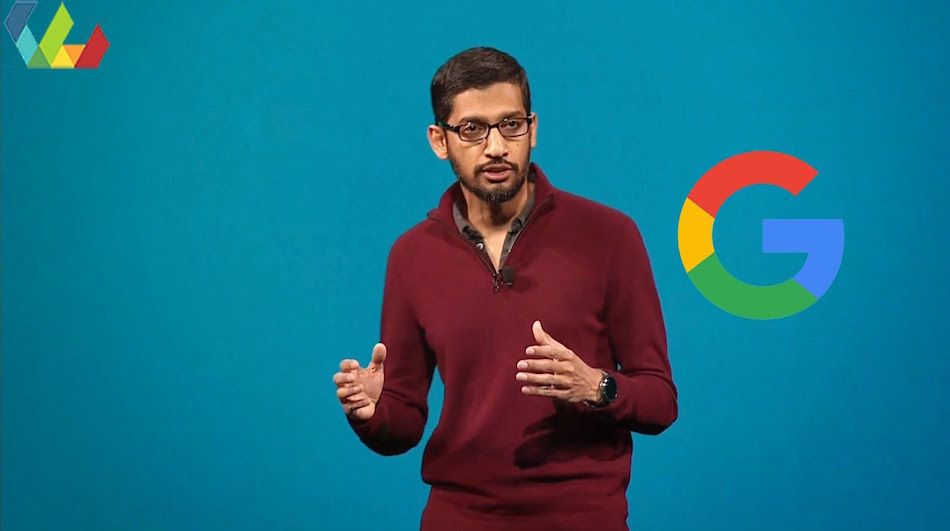
Google CEO Sundar Pichai / Photo credit: Pix Spark
The success of Google is so well known and so frequently referenced that it sounds like a myth. Along with its “20 percent time” policy, the legend goes that Google’s decentralized structure—with product groups from Search to Android working independently—results in numerous great products.
But one thing has never changed: advertising revenue. Of Google’s ~US$60 billion revenue in 2015, only US$8 billion came from non-advertising activities.
And this wasn’t for a lack of trying:
- Google bought Motorola in 2012 for US$12.5 billion in an attempt to enter the hardware business, but ended up fire-selling the company to Lenovo for US$2.9 billion.
- It bought Nest for US$3.2 billion to enter the smart home sector, but Nest became solely associated with one product—a self-learning thermostat.
- Google’s Nexus tablet failed to take off and its fiber division shuttered as well.
- Google Glass, which supposedly heralded the arrival of AR, turned out to be a flop.
- Waymo, the company’s venture into self-driving cars, is now rivaled or—some might argue—surpassed by Tesla.
It’s as if an invisible hand at Googleplex is derailing all initiatives that don’t fit its advertisement model. What’s increasingly troubling, it also threatens to derail the best kind of AI from weaving itself into Google’s fabric. I’m talking about DeepMind, a London-based AI laboratory that Google acquired in 2014.
The challenges with DeepMind
Demis Hassabis, a British AI researcher and co-founder of DeepMind, was involved in the creation of the algorithm AlphaGo. In 2017, this algorithm famously defeated the world’s best player of the Chinese board game Go. But before it did this, Hassabis’s team was already building an algorithm to play all types of video games without the need for any specific programming.
This general-purpose algorithm was able to master game after game by trial and error. And more impressive still, AlphaGo was able to improve its performance by playing games against a tweaked version of itself.
So isn’t this enough for Google to thrust itself upon technology nirvana?
Evidently, it isn’t. Google didn’t embrace DeepMind, not because of technological concerns but because of age-old politics.
Before Google bought DeepMind, the company had Google Brain, which built computer “neural networks” that mimicked the way a toddler learns by reinforcement. Independently, Google Brain and DeepMind used the same method, except that Google Brain deployed these machine learning techniques to an area closer to home: translation.
Programmers no longer had to hardcode grammatical rules into translation machines; they just needed to feed the machines with millions of pages of complete bilingual records and let the machines figure out the underlying grammatical rules. The result has been a stunning overnight advancement.
But stunning improvement was not enough. Macduff Hughes, director of Google Translate, described the project as representing a “collaboration between groups that spoke different languages.” And this interdepartmental collaboration, based on personal goodwill and persistence, didn’t naturally spread. Before long, Google’s other business units started facing conflicting priorities, and many Google Brain members were reassigned to other, more pressing projects.
So, when Google acquired DeepMind, the managers questioned where it would fit within Google’s existing structure and what their role in it would be. It didn’t help either that the people at DeepMind failed to show appreciation for the machine-learning algorithm that Google Brain had developed.
What Amazon does right
The role of a CEO





Stay updated on the go with our mobile app.
Get latest insights with smoother, more personalized experience through TIA mobile app.