
Welcome to The Offset! Delivered once a month via email and through the Tech in Asia website, this free newsletter breaks down the biggest stories and trends in greentech. Get it in your email inbox by registering here.
Hello readers,
Whenever I hear about melting arctic sea ice, I think of that viral photo of a polar bear standing on a thin slab of ice. That image, which most of you have probably seen, sparked worries about how climate change might affect the world as we know it.
Several new studies came out recently that reveal how the polar ice caps are melting at a faster pace than many of us previously thought – and that the melting ice water could cause the ocean circulation to break down.
In this issue, we dive into what scientists recently discovered about the melting ice.
THE BIG STORY

Image credit: Timmy Loen
SG firm mints profits from waste management
Blue Planet saw a 6x growth in revenue between 2020 and 2021 and a further 24% year-on-year increase in 2022. The company has been able to achieve profitability in the past few years partly thanks to a sync-friendly M&A strategy as well as a slew of projects across 15 markets.
DEEP READS
New research sparks concerns that ocean circulation will collapse
A major ocean circulation that forms around Antarctica could be headed for collapse, which could lead to significant changes to the world’s climate, sea levels, and marine ecosystems, a team of Australian and American researchers found.
The study predicts that by 2050, the Southern Ocean will see a 42% decline in deep-water formation – more than double the 19% decline they see arising from the North Atlantic.
Scientists had previously thought a breakdown of ocean circulation would more likely happen in the North Atlantic. But the new research shows the real risk lies in Antarctica’s waters.
Billions of tons of melting ice in the poles could dramatically disrupt ocean currents in the next few decades, causing far-reaching effects.
For example, the warming of the Arctic waters and the melting of ice could disrupt the jet stream across North America, causing the region to have hotter and drier weather across the West Coast during the fall – the perfect conditions for wildfires.
The influx of freshly melted ice water can also change Atlantic Ocean currents, pushing sea levels in Texas disproportionately higher than elsewhere on the planet.
Climate change is also causing mountain glaciers to melt faster. Approximately 15 million people around the world who reside near glacier-melt lakes are at risk to catastrophic floods that could easily sweep away roads, bridges, and even whole towns.
TRENDING NEWS
You can also check out Tech in Asia’s coverage of Asia’s greentech scene here.
1️⃣ VC firms form $62.3 billion climate tech alliance backed by UN
A coalition of more than 20 VC firms have set up an initiative, the Venture Climate Alliance, aimed at making private tech investments more climate-friendly.
Member firms pledged to reach net zero by the end of this decade or earlier. Their portfolio companies, meanwhile, should aim to be net zero by 2050.
Why it matters:
While some firms are proactively trying to address climate change issues, others are doing little to track their emissions or invest in climate solutions. This new initiative puts the onus on VC firms to encourage their portfolio startups with their net-zero efforts.
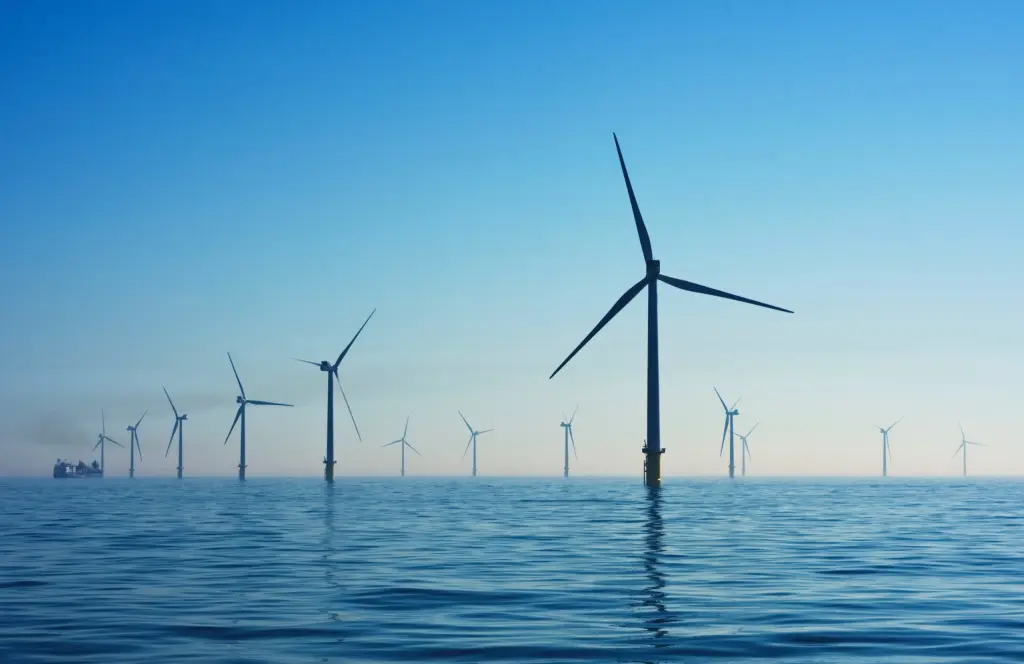
Image credit: Unsplash
2️⃣ Banks and oil groups place bets on carbon capture schemes
Clothing retailer H&M and fossil fuel financier JPMorgan Chase have decided to spend a collective US$100 million on carbon removal credits by 2030. At the same time, another five companies – including Swiss bank UBS and insurer SwissRe – have agreed to purchase almost 200,000 credits on delivery from 2025.
Why it matters:
The oil and gas industry has long championed carbon capture as a climate solution. However, there are no large-scale operational plants and many past projects have failed. Critics argue that the industry case for carbon capture enables oil and gas producers to continue to source fossil fuels rather than switch to clean energy.
3️⃣ Funding gap threatens net-zero targets
Low-carbon investment falls far short of what’s needed for the world to reach net-zero goals. Investment into decarbonization must grow to more than US$4 trillion from the current US$1 trillion in the next two years for countries to stay on track to meet those goals.
Why it matters:
Closing the low-carbon funding gap could be very challenging this year, especially as global markets face headwinds.
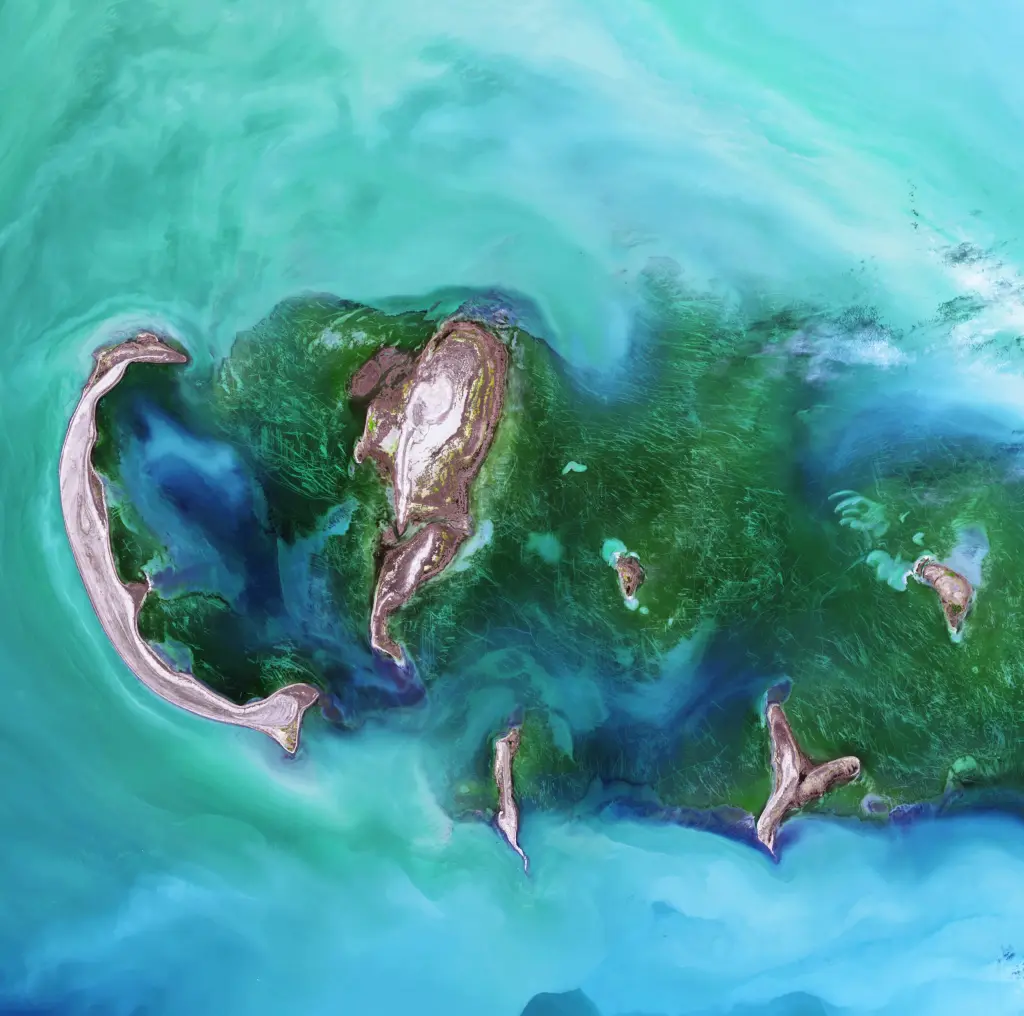
Image credit: Unsplash
4️⃣ New phase of key China renewables push extends beyond deserts
China has greenlit a third round of construction projects focused on solar and wind energy across inland deserts and rural areas, including former oil and gas fields.
Why it matters:
These clean-energy infrastructure developments are said to play a key role in the country’s transition away from fossil fuels.
5️⃣ Google’s latest climate plan? Skip grid backlog, mimic community solar
Tech major Google and clean-energy developer EDP Renewables North America joined hands to roll out small-scale solar projects that can be more easily connected to the grid.
Why it matters:
Corporate clean-energy buyers like Google haven’t invested as much in distributed solar projects because their clean power needs have been better served by large-scale projects.
STARTUP WATCH
1️⃣ SunPower secures $450 million to support loan business
The solar energy firm has raised US$450 million in a funding round led by HASI and Crédit Agricole CIB. SunPower will use the new funds to support its solar and storage loan program.
2️⃣ Green hydrogen startup Ohmium International raises $250m from TPG rise climate
The US-based firm secured the amount in a series C round led by TPG Rise Climate and joined by Hanover Technology Investment Management, Energy Transition Ventures, and Fenice Investment Group. Ohmium designs and manufactures proton exchange membrane electrolyzer systems, which are used to produce green hydrogen.
3️⃣ Insect farming startup raises $175m for food expansion
Paris-based Ynsect has raised US$175 million in a series D funding round. The company is shifting away from animal feed to high-margin pet food and food ingredients as part of its efforts to increase profit.

Image credit: Unsplash
4️⃣ X-Elio secures $112m for 147 MW solar PV projects in Spain
The solar project developer has raised US$112 million to support its Los Llanos I, II, and III solar projects, totaling 147 megawatts in capacity. The financing was provided by BBVA and Santander CIB.
5️⃣ Energy Dome gets $44m uplift into its CO2 battery for renewable energy storage
The Italian climate startup has closed a US$44 million series B round led by Eni Next and Neva SGR. Energy Dome aims to use the funds to scale globally, targeting the US in particular.
That’s it for this edition – we hope you liked it! Do subscribe to continue receiving The Offset.
See you next month!
The Offset is made possible thanks to Taiwan Mobile.
The company earned the best telco title in the Global Views CSR Awards.
Taiwan Mobile is on a mission to transition to 100% green energy by 2040.
Stay updated on the go with our mobile app.
Get latest insights with smoother, more personalized experience through TIA mobile app.
Recommended reads
 Indonesian AI startup goes global
 Forrest Li on scaling Sea, building smarter bots, and founder grit
 An AI assistant that joins sales calls and scores team skills
 Beyond the check: Why VCs need more than capital
 SGX’s CEO says it doesn’t need a unicorn to win
 SMEs want AI too, but not the kind Big Tech is selling
 Oatside’s alt-milk rise hits a profitable gear
 Alibaba’s financial health in 12 charts
 Asia’s telcos bundle AI into mobile plans. Will it pay off?
 M-Daq chases bigger clients as revenue falls, losses grow





Editing by Lorenzo Kyle Subido
(And yes, we’re serious about ethics and transparency. More information here.)