 Terence Lee · · 3 min read
Android Pay is here in Singapore and Samsung is probably doomed
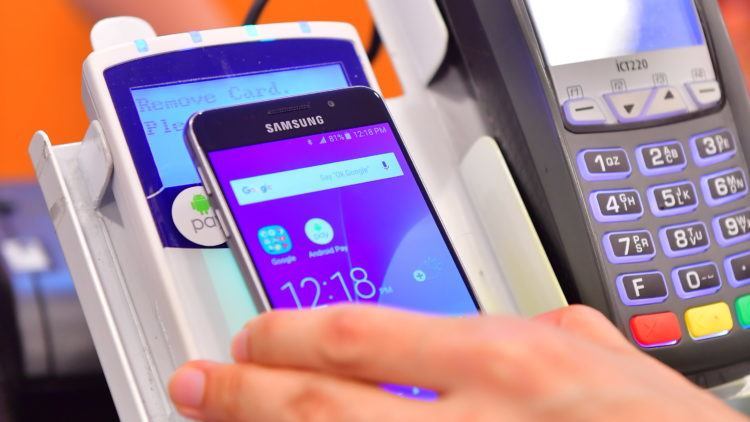
Image credit: Google
Android Pay is late to the mobile payments party. Apple Pay arrived first on Singapore shores, followed by Samsung Pay.
But in the tech world, being first isn’t worth a cent. It’s about being the best.
So what does Android Pay bring to the table? It’s pretty plain actually. Like Apple Pay, it stores your credit cards, works with any contactless payments terminal, and competes with PayPal for digital payments. It’s available for customers of major banks in Singapore.
![[Infographic] Android Pay - How it works](https://cdn.techinasia.com/wp-content/uploads/2016/06/Infographic-Android-Pay-How-it-works-750x517.png)
Android Pay’s key advantage is market share. You can download it to Android handsets, which account for about 60 percent of the phones shipped to Singapore – more if you look at worldwide market share.
But that advantage may be a smokescreen. That’s because a merchant only needs to install a contactless payments terminal to accept Apple Pay, Android Pay, Samsung Pay, or the good ol’ Visa and MasterCard.
This has created a level playing field, and a study shows all three are neck and neck. It means you can win in the short run even though you’re a smartphone brand with a diminishing share of the market. Like Samsung.
In addition, Samsung Pay has a key feature Apple and Android Pay don’t have. It’s called “magnetic secure transmission,” which allows Samsung Pay to work even with old-fashioned swipey credit card terminals.
The real winners
Yet what none of these tech companies want to admit is that Visa, MasterCard, and the banks are the real winners in the current state of affairs.
Apple, Android, and Samsung tout their payment systems as the future, but they’re still reliant on the existing banking infrastructure to work. Heck, the reason they exist is to facilitate credit card payments. As a result, the margins are razor-thin.
However, if we peer a few years down the road, things could get interesting. Android Pay, for example, could be a trojan horse for an all-digital payment system. Imagine Android phones sporting Android Pay supported by a Google Bank.
This is no fantasy: it’s starting to happen in China thanks to Alibaba, and the rest of the world could catch up soon.





Stay updated on the go with our mobile app.
Get latest insights with smoother, more personalized experience through TIA mobile app.










📅 Upcoming Events
22 October 2026
Payoneer x CSPN Summit 2026