 Malavika Velayanikal · · 3 min read
Amazon gets set for ecommerce fireworks in India with 7 new fulfillment centers
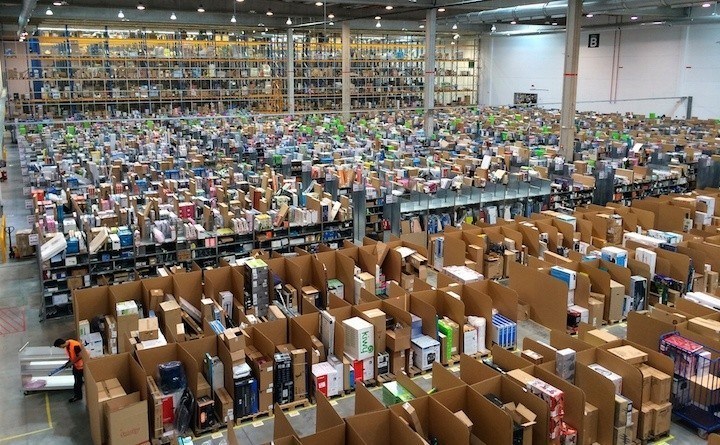
The ecommerce battle in India is being fought on many fronts. Discounts, personalization, onboarding sellers, and so on. But the real race is in logistics. The winner will be the one who gives consistently better experiences to both buyers and sellers – with efficient warehousing, smart inventory management, and most of all, faster delivery.
Today, the multinational behemoth in this space announced seven new fulfilment centers (FCs) or warehouses in Ahmedabad, Delhi, Kolkata, Nagpur, Gurgaon, Pune, and Mumbai. Amazon now has 20 FCs across 10 Indian states, covering an area of over 1.6 million square feet with a storage capacity of nearly four million cubic feet.
What these FCs do is bring warehousing closer to sellers, and therefore, their goods closer to buyers. Transport is a huge bottleneck in India. So, right from June 2013 when it entered India, Amazon began investing in infrastructure to tackle the problem.
Amazon was forced to adopt a 100 percent open marketplace in India because of restrictions on foreign direct investment (FDI) in online retail. Its Indian ecommerce rivals Flipkart and Snapdeal also adopted the marketplace model which has proved to be a big factor in scaling up fast.
$2 billion to burn in India

Last year, Amazon founder Jeff Bezos visited India and wrote a US$2 billion check for the firm’s local arm. A big portion of that is going into the warehousing infrastructure which is a vital puzzle piece in the overall Amazon strategy.
The 20 FCs not only enable faster and quicker deliveries, they also allow Amazon to offer its Fulfilment by Amazon (FBA) service to more small and medium businesses in the 10 states where they’re located. FBA saves sellers the hassles of storage, delivery, payments, and returns.
See: Southeast Asia: why the real money is in logistics, not ecommerce
“Sellers on our marketplace have been witnessing exponential growth largely powered by our Fulfilled by Amazon service contributing more than 75 percent of total units,” says Amit Agarwal, VP and country manager of Amazon India.
The launch of the seven new FCs comes before the upcoming shopping season of Diwali, the festival of lights and fireworks. This is a time in India when ecommerce players go all out, often trying to lure customers away from each other as well as traditional brick-and-mortar stores. There was once a time when Diwali shopping meant crowds flocked to shopping malls for great deals, but in recent years, there’s been a large shift to online shopping bonanzas.
Just yesterday, I was at one of the biggest malls in Bangalore, which housed a large outlet of Star Bazaar — a popular hypermarket chain of the Tata Group, among other branded stores. There was a sign outside indicating the once-powerhouse shop was closing its doors. This is just one observable effect of India’s ecommerce boom.
The hypermarket chains wiped out many mom-and-pop stores across India. Now it appears it’s their turn to be disrupted, not just by Amazon, Snapdeal, and Flipkart, but also by hundreds of niche ecommerce players gearing up for Diwali.





Stay updated on the go with our mobile app.
Get latest insights with smoother, more personalized experience through TIA mobile app.











📅 Upcoming Events
22 October 2026
Payoneer x CSPN Summit 2026