Prerna Suri · · 6 min read
After building a billion-dollar business at Citibank, he quit to send rockets into space
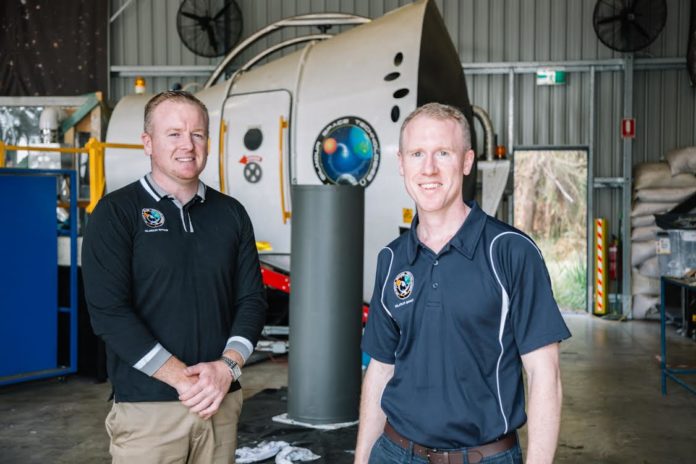
Adam Gilmour (right) and his brother James / Image credit: Gilmour Space Technologies
There’s a boyish glint in Adam Gilmour’s eye as he talks about space and its endless frontiers. “I’ve always been obsessed with space, always been a Star Wars fan. And for the longest time, I’ve always wanted to be an astronaut,” he gushes.
It was the textbook dream. Gilmour grew up in Australia during the post-Apollo Program era, when everyone thought that humans would be living on the moon by 2019 and that a base would be set up on Mars by 2021. But this former banker isn’t just any Star Wars fan who can wax eloquently about rockets and hoverboards for hours.
Instead, Gilmour left his post at Citibank a few years ago to work on his goal of sending rockets up to space. His Australia-headquartered startup, Gilmour Space Technologies, is taking a page out of Elon Musk’s SpaceX: it aims to change the way people think and do business about space.
Gilmour recalls being inspired by a competition in 2004 called the Ansari X Prize, which gave US$10 million to anyone who could send a manned spacecraft into orbit twice in three months. A company with backing from Microsoft co-founder Paul Allen won.
“They basically built a rocket jet for US$20 million. And when I saw that happening, I thought, ‘That’s not billions of dollars. Now that’s in the realm of quite normal people,’” he says.
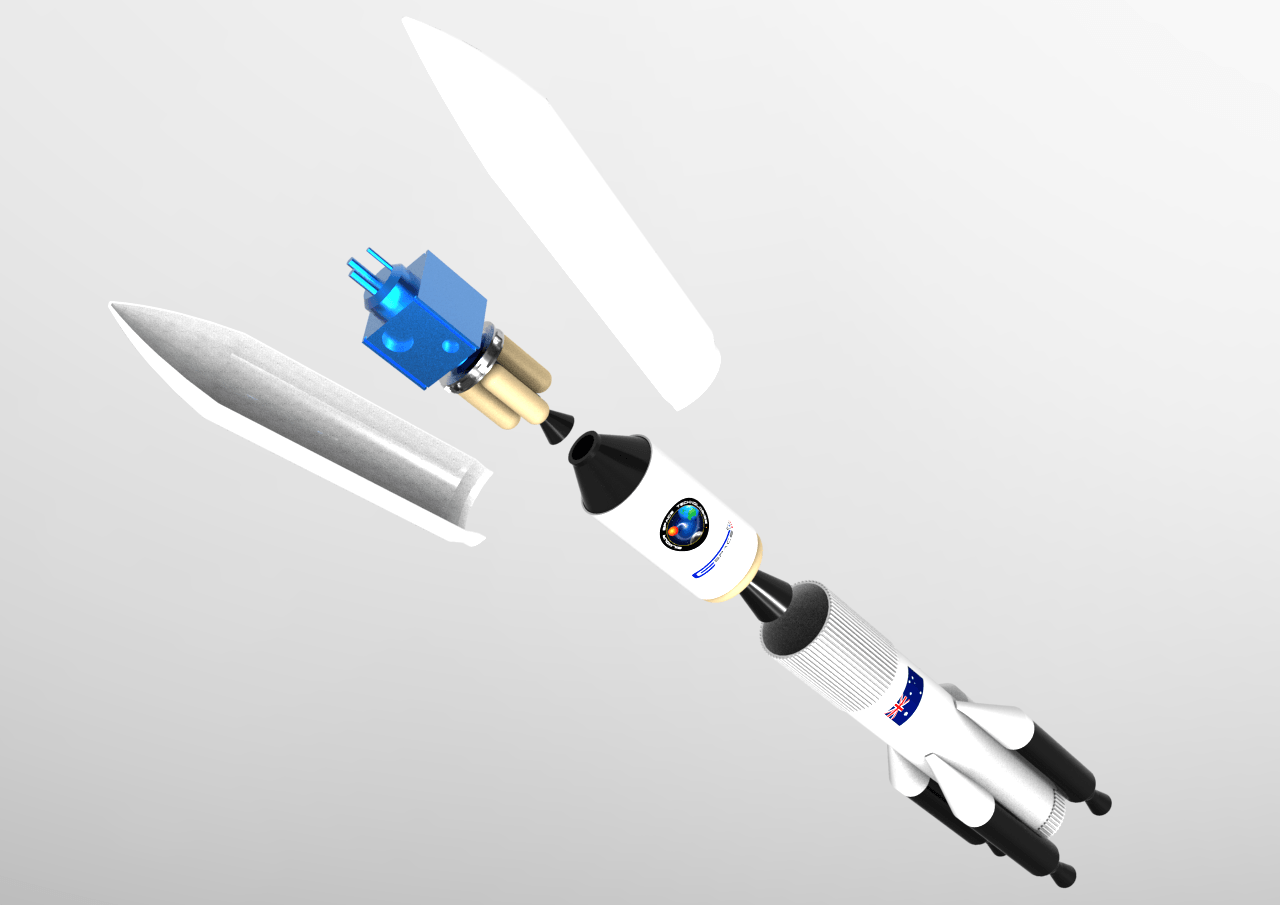
Gilmour Space Technologies is developing the Hyperion small-launch vehicle concept. / Image credit: Gilmour Space Technologies
But it took the global financial crisis of 2008 to make Gilmour – who was then a Citibank managing director – focus on setting up his business. “Up until the crisis at the bank, we used to work on a lot of innovative derivatives and customer products. But then the regulators shut everything down, including the structured products, and went into this very risk-averse mode.”
He continues, “I was always very entrepreneurial, building businesses from US$20 million to US$200 million in revenue and then from US$200 million to a billion in sales revenue. So I did that quite a few times and wanted to use this opportunity to start my own company.”
Banker turned rocketeer
In 2015, Gilmour finally quit his successful day job. His wife, Michelle, who is a director at the startup and accompanied him on this interview, recalls that time.
“When he first told me that he’s starting a company, I was that quintessential frog in the boiling water, where the frog has no idea that it is being cooked until the very last moment,” she shares, laughing at the memory. “He just told me that he wanted to start a company, he wanted to get his brother down to run this company. And before you know it, he quit his job.”
While Michelle resisted at first, her mind changed when she came into an investor meeting and saw how good the feedback was. That made her realize that her husband was on to something big.
“When we first started, we didn’t realize that we would end up working on our technology, which is what is getting us very excited now,” she says.
Investors are not pulling the trigger
Self-taught





Stay updated on the go with our mobile app.
Get latest insights with smoother, more personalized experience through TIA mobile app.