Sign up for the Daily Newsletter, sent exclusively to our premium subscribers. We break down the big and messy topics of Asia’s tech and startup community. Get the newsletter in your inbox everyday with a premium subscription.
Hello reader,
I try not to amass too many possessions – I like the idea that I could pack up my entire life in just a few bags and start over anywhere at the drop of a hat.
But when I visited friends in the UK over Christmas, Temu and all the discounts it offered for gizmos I didn’t need caught my eye. And like many folks, I was tempted by the ridiculous marked-down prices for devices I’d never imagined existed.
However, Temu didn’t just appear on the shores of Blighty out of thin air. Instead, its parent firm PDD Holdings is following the playbook for ecommerce success that it had used for China-based Pinduoduo.
Today’s premium story looks at how PDD surpassed long-time incumbent Alibaba in market capitalization and what Southeast Asia’s ecommerce majors can learn from this.
Today we look at:
- How PDD outstripped Alibaba, by the numbers
- Why payroll automation startup Salarium halted operations
- Other newsy highlights such as Asia Partners closing its second fund at US$474 million and KeeTa grabbing the no. 2 spot in Hong Kong’s food delivery market.
Premium summary
All hail the new king?
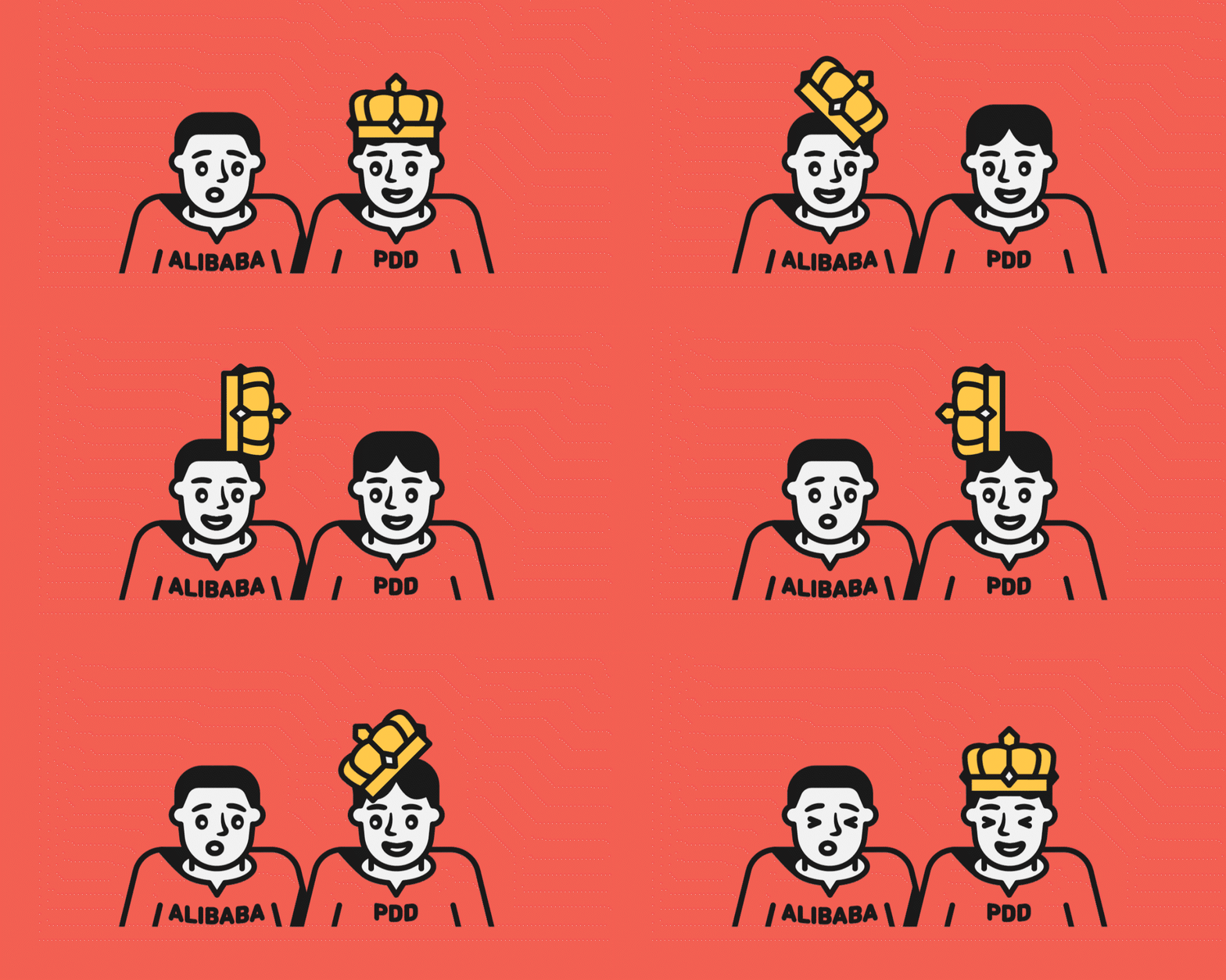
Image credit: Timmy Loen
PDD Holdings is now China’s most valuable ecommerce player after its market capitalization overtook Alibaba’s in December 2023.
It’s a tale of two companies’ value: One fell precipitously while the other climbed slowly and steadily.
- The woes of Alibaba: Alibaba’s market cap hit US$795.4 billion in 2020, but it stands closer to US$192 billion today. Over the last four years, the company has been plagued with a host of issues, from an antitrust investigation to canceled IPOs and leadership changes.
- Upstart rising: PDD Holdings, the company behind Pinduoduo and Temu, has mostly recorded solid, steady growth in its market cap over the same period, partly because it applied the Pinduoduo playbook overseas via Temu. However, consumers don’t seem entirely ready to abandon Alibaba yet – the company still has twice Pinduoduo’s ecommerce revenue.
- Replicate or deviate?: The two firms have approached international expansion differently, providing insights for Southeast Asian brands looking to take either path Alibaba went the costly acquisition route by snapping up Lazada, while PDD has generally launched Temu in new markets organically.
Read more: Tracking PDD’s Temu-fueled rise to surpass Alibaba in market value
Salarium freeze
Join us for this closed-door roundtable and networking dinner on Feb. 1
Quick bytes





Stay updated on the go with our mobile app.
Get latest insights with smoother, more personalized experience through TIA mobile app.