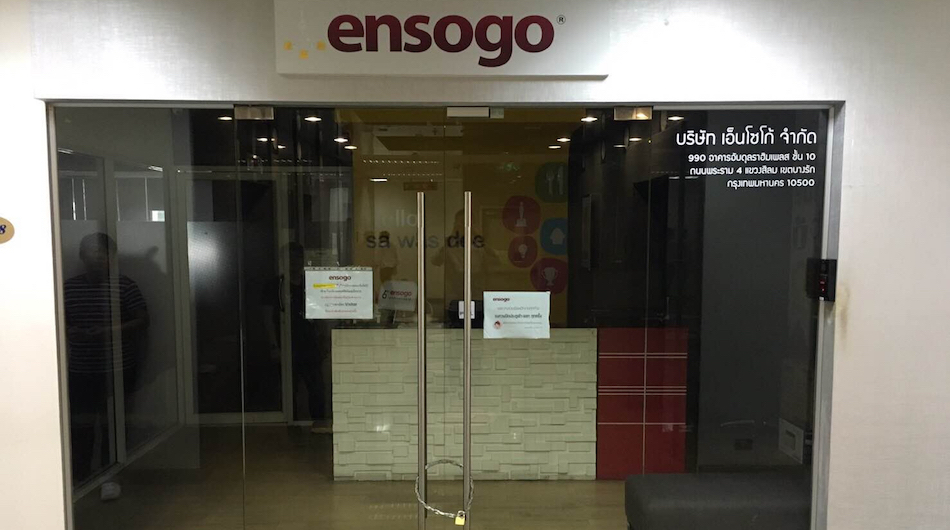
Ensogo’s office in Thailand has been padlocked.
Ensogo – once one of Southeast Asia’s most promising ecommerce firms – yesterday gave up its battle to regain its luster, announcing the shutdown of all of its marketplaces in the region to save whatever money it has left in the bank.
While some couldn’t grasp that a company that belongs to Patrick Grove’s Catcha Group – the same group that gave rise to iProperty and iFlix – would fall, many saw it coming.
The signs were hard to ignore. Here are four likely reasons for Ensogo’s collapse.
1. It held on to daily deals and flash sales for too long
Ensogo launched in Thailand in 2010 as a daily deals site selling vouchers to users for things like a spa visit, a tour, or restaurant dining. Like everyone else doing the same thing, it was a copycat of US-based Groupon, which started the whole craze.

Catcha Group’s Patrick Grove at Tech in Asia Singapore 2016.
In 2011, Ensogo was acquired by Groupon’s arch rival LivingSocial and it soon found itself fast expanding in markets. The number of staff grew and things got expensive.
Industry competition became too stiff. People grew tired of their inboxes flooded with offers from a sheer number of deals sites and fewer than expected users turned into loyal, full-price paying customers at those restaurants and spas.
Suddenly, what was once the darling of the tech world began fizzling out.
The writing was on the wall as early as 2013 when a “deals fatigue” began to emerge in the US.
Perhaps the fatigue took time to spread to Southeast Asia, so Ensogo went about its business.
The company was acquired by flash sales firm iBuy of the Catcha Group in 2014, which persisted with trying to make that model work for a time. Similar to daily deals, flash sales offer steep discounts but for physical products like clothing and accessories. It’s a product retailing business that requires all the infrastructure – inventory, warehousing, and fulfilment services.
It wasn’t until 2015 that Ensogo decided to move away from deals to become a more conventional online store where merchants and brands sold directly to consumers. Like a marketplace, which may not be as capital intensive.
2. It was late in the marketplace game
3. It couldn’t stem its losses and was burning cash
4. It disappointed merchants





Stay updated on the go with our mobile app.
Get latest insights with smoother, more personalized experience through TIA mobile app.