- Premium Content It takes our newsroom weeks - if not months - to investigate and produce stories for our premium content. You can’t find them anywhere else.
 Theodora Sarah Abigail · · 8 min read
The Singapore startup looking to make F&B procurement a piece of cake
When launching a food and beverage (F&B) business, most people think it’s all about entertaining new customers, concocting new dishes, and creating enchanting experiences. The reality, however, is that back-of-the-house administrative work – taking inventory, ordering supplies for the next day – are just as important.
In Singapore, many restaurant owners are struggling with tighter manpower policies, rising rental prices, and complex supply chains. Add the constantly fluctuating prices of ingredients to this mix, and you have a potent slew of challenges.
F&B businesses also have to find affordable suppliers, keep up with inventory, and manage numerous payments per month. And despite their best efforts to juggle these responsibilities, the majority of new restaurants close within five years.
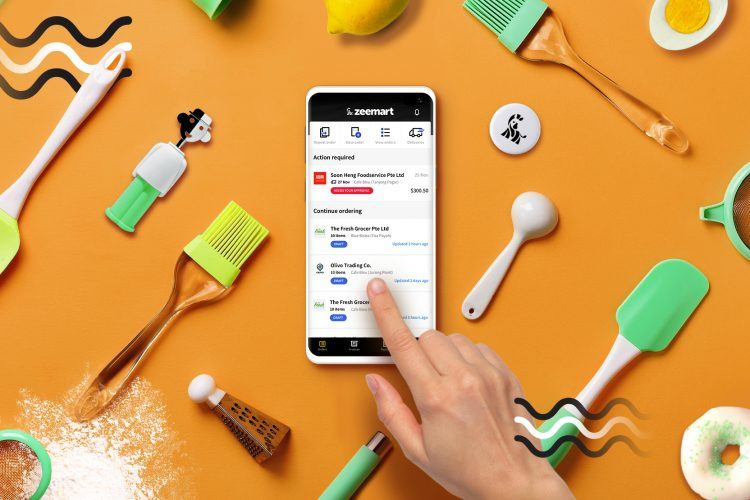
Zeemart is a Singapore-based company that hopes to solve the problems associated with traditional F&B processes. Its app is designed to help food service providers manage their purchases from suppliers. Established in 2017 by Jerry Lim, Steven Seet, Neeraj Sundarajoo, and Keith Tan, the startup wants to enable “horeca” – or hotel, restaurant, and catering – businesses to better manage the procurement of food ingredients.
Growing the idea
Tan and Sundarajoo have known each other for decades. They set up digital agency Comwerks in 2002 and sold it to advertising giant WPP in 2010.
For a time, the pair were with WPP subsidiary Wunderman, with Sundarajoo serving as group managing director while Tan was the company’s executive creative director for Southeast Asia.
While searching for new opportunities after their 2016 departure from Wunderman, Tan and Sundarajoo came to learn about the high closure rates among restaurants.
Together with food service industry veterans Lim and Seet, Zeemart’s founders studied the supply chain to understand how each process – from sourcing to procuring to fulfilling – worked.
“Many restaurants are coordinating with up to 20 or 30 suppliers through multiple channels like phone calls, WhatsApp, text messages, faxes, and emails. But they only track expenses after the fact when the accountant comes in and looks at all the bills and receipts,” Sundarajoo says.
“Then they discover that they’ve over- or under-ordered,” he points out.
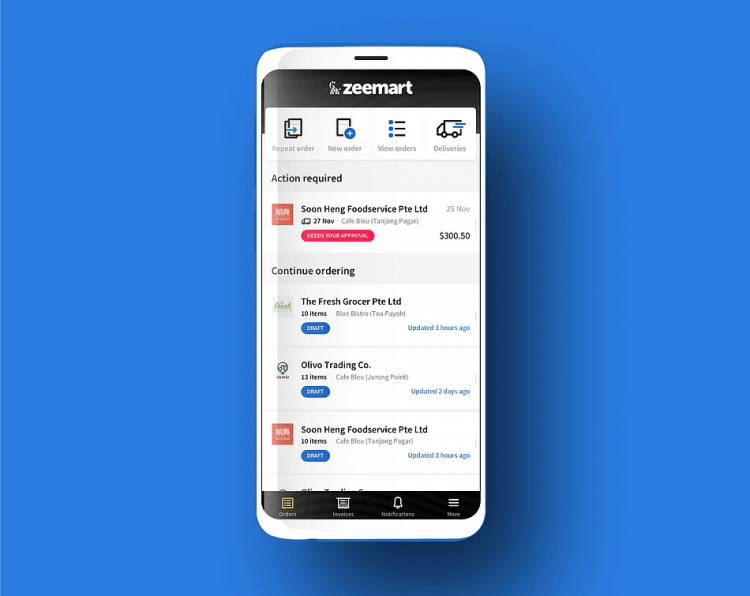
Photo credit: Zeemart
In Singapore, F&B businesses spend about 31% of their operating expenses to buy goods and materials, so inefficient processes can shrink already-slim profit margins.
Free forever
Racing to be first in Southeast Asia
A very traditional industry
Stay ahead in Asia’s tech landscape
This is premium content. Subscribe to read the full story.
The startup expects to end 2019 with a gross merchandise volume of US$88 million.
We know this is not ideal. ⌛ Sign up in 20 seconds. Cancel anytime.
Our subscriber community includes professionals from these companies:





Stay updated on the go with our mobile app.
Get latest insights with smoother, more personalized experience through TIA mobile app.